Overview
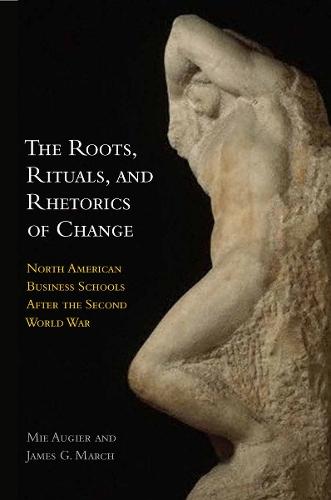
Some rather remarkable changes took place in North American business schools between 1945 and 1970, altering the character of these institutions, the possibilities for their future, and the terms of discourse about them. This period represents a minor revolution, during which business school are reported to have become more academic, more analytic, and more quantitative. The Roots, Rituals, and Rhetorics of Change considers these changes and explores their roots. It traces the origins of this quiet revolution and shows how it shaped discussions about management education, leading to a shift in that weakened the place of business cases and experiential knowledge and strengthened support for a concept of professionalism that applied to management. The text considers how the rhetoric of change was organized around three core questions: Should business schools concern themselves primarily with experiential knowledge or with academic knowledge? What vision of managers and management should be reflected by business schools? How should managerial education connect its teaching to some version of reality?
Full Product Details
Author: Mie Augier ,
James G. March
Publisher: Stanford University Press
Imprint: Stanford Business Books,US
Edition: New edition
Dimensions:
Width: 15.20cm
, Height: 66.10cm
, Length: 22.90cm
Weight: 0.635kg
ISBN: 9780804776165
ISBN 10: 0804776164
Pages: 376
Publication Date: 10 August 2011
Audience:
Professional and scholarly
,
Professional & Vocational
Format: Hardback
Publisher's Status: Active
Availability: In Print

This item will be ordered in for you from one of our suppliers. Upon receipt, we will promptly dispatch it out to you. For in store availability, please contact us.
Reviews
In The Roots, Rituals, and Rhetorics of Change, Augier and March offer us a compelling discussion of the transformations [in education] that follow [the Second World War]. The reform story is a complicated one of course, but in their hands, it is easy to grasp... Augier and March wrote a terrific appraisal of the reformation and its legacy. --James P. Walsh, Administrative Science Quarterly This is a great story that has never been told with such clarity, empirical support, and conceptual breadth. The book draws on the particular strengths and perspectives of each of the authors. Augier is a stunningly accomplished intellectual historian of business school culture. Meanwhile, March is the preeminent organizational theorist, who shares a story only he is fit tell--as story about how risky and foolish change is for organizations, how it happens more through arrogance and ignorance than skill and foresight. --David F. Labaree, Stanford University and author of Someone Has to Fail This book has a distinct sensibility and depth that will make it important. The authors' nuance of ideas and range of perspective is excellent. --Anne S. Miner, University of Wisconsin
This book has a distinct sensibility and depth that will make it important. The authors' nuance of ideas and range of perspective is excellent. --Anne S. Miner, University of Wisconsin
In The Roots, Rituals, and Rhetorics of Change, Augier and March offer us a compelling discussion of the transformations [in education] that follow [the Second World War]. The reform story is a complicated one of course, but in their hands, it is easy to grasp... Augier and March wrote a terrific appraisal of the reformation and its legacy. - James P. Walsh, Administrative Science Quarterly This is a great story that has never been told with such clarity, empirical support, and conceptual breadth. The book draws on the particular strengths and perspectives of each of the authors. Augier is a stunningly accomplished intellectual historian of business school culture. Meanwhile, March is the preeminent organizational theorist, who shares a story only he is fit tell - as story about how risky and foolish change is for organizations, how it happens more through arrogance and ignorance than skill and foresight. - David F. Labaree, Stanford University and author of Someone Has to Fail This book has a distinct sensibility and depth that will make it important. The authors' nuance of ideas and range of perspective is excellent. - Anne S. Miner, University of Wisconsin
Author Information
Mie Augier is a social science research associate at Stanford University and Research Associate Professor at the Naval Postgraduate School where she works on research for the Director of Office of Net Assessment, Office of the Secretary of Defense. James G. March is Professor Emeritus at Stanford University, where he has been on the faculty since 1970. He is best known for his writings on decision making and organizations.