Full Product Details
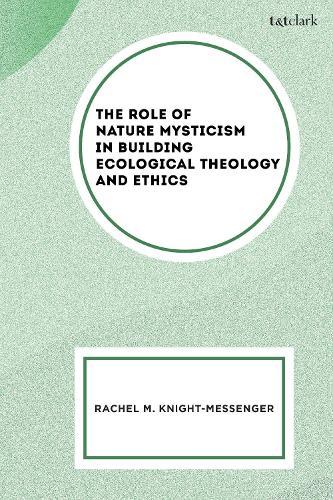
Author: Rachel M. Knight-Messenger
Publisher: Bloomsbury Publishing Plc
Imprint: Rowman & Littlefield
Dimensions:
Width: 15.40cm
, Height: 1.80cm
, Length: 23.20cm
Weight: 0.480kg
ISBN: 9781666974638
ISBN 10: 1666974633
Pages: 232
Publication Date: 19 February 2026
Audience:
Professional and scholarly
,
Professional & Vocational
Format: Hardback
Publisher's Status: Active
Availability: Manufactured on demand

We will order this item for you from a manufactured on demand supplier.
Reviews
Grounded in Thomas Berry's cosmology/cosmogenesis and Bernard McGinn's insight into mysticism, the author probs the life and writings of Teilhard and Thomas Merton to demonstrate how intimacy with creation; experience of Divine immanence; and commitment to an earth-ethic of care and justice offer us a foundation for ecological theology/ethics. Such dialogue between mysticism and theology enables us to confront today's ecological crisis - challenging us to change human behavior and live differently within (not over) creation. * Monica Weis SSJ, Professor Emerita of English, Nazareth University *
Grounded in Thomas Berry's cosmology/cosmogenesis and Bernard McGinn's insight into mysticism, the author probs the life and writings of Teilhard and Thomas Merton to demonstrate how intimacy with creation; experience of Divine immanence; and commitment to an earth-ethic of care and justice offer us a foundation for ecological theology/ethics. Such dialogue between mysticism and theology enables us to confront today's ecological crisis - challenging us to change human behavior and live differently within (not over) creation. * Monica Weis SSJ, Professor Emerita of English, Nazareth University * Against the background of Thomas Berry’s cosmology of cosmogenesis, this book provides an in-depth analysis of the eco-ethical significance of the nature mysticism of Pierre Teilhard de Chardin and Thomas Merton. By doing so the author makes a convincing case that ecotheology has not taken the work of mystics seriously enough. Both Teilhard and Merton’s strong sense of the earth as alive and full of the presence of God has strong ethical implications about how humanity treats the earth. Those curious about what nature mystics might have to say in our current ecological crisis will welcome reading this book. * Celia Deane-Drummond, Director, Laudato Si’ Research Institute, and Senior Research Fellow, Campion Hall, University of Oxford, UK *
Grounded in Thomas Berry's cosmology/cosmogenesis and Bernard McGinn's insight into mysticism, the author probs the life and writings of Teilhard and Thomas Merton to demonstrate how intimacy with creation; experience of Divine immanence; and commitment to an earth-ethic of care and justice offer us a foundation for ecological theology/ethics. Such dialogue between mysticism and theology enables us to confront today's ecological crisis - challenging us to change human behavior and live differently within (not over) creation. * Monica Weis SSJ, Professor Emerita of English, Nazareth University * Against the background of Thomas Berry’s cosmology of cosmogenesis, this book provides an in-depth analysis of the eco-ethical significance of the nature mysticism of Pierre Teilhard de Chardin and Thomas Merton. By doing so the author makes a convincing case that ecotheology has not taken the work of mystics seriously enough. Both Teilhard and Merton’s strong sense of the earth as alive and full of the presence of God has strong ethical implications about how humanity treats the earth. Those curious about what nature mystics might have to say in our current ecological crisis will welcome reading this book. * Celia Deane-Drummond, Director, Laudato Si’ Research Institute, and Senior Research Fellow, Campion Hall, University of Oxford, UK * In this well-organized study, Rachel Knight-Messenger makes a persuasive case for the importance of what she calls “nature mysticism” as an integral dimension of an effective ethical response to the present ecological crisis. Drawing on the work of Thomas Berry, Bernard McGinn, Mark McIntosh and others for a philosophical and theological framework, and providing a detailed examination of the life and thought of two great twentieth-century exemplars of this mystical perception of the divine omnipresence in creation, Pierre Teilhard de Chardin and Thomas Merton, she demonstrates the crucial relevance of an ecological consciousness, an experiential awareness of the unity of all created beings with one another and with their divine Source, for the development of an ecological conscience, a committed advocacy on behalf of the entire natural world and of its human component. This book can serve as an attractive invitation and a challenging summons to its readers to respond to the insights of this pair of prophetic figures by (re)dedicating themselves to preserving, protecting and caring for what Pope Francis has called “our common home. * Patrick F. O’Connell, editor: Thomas Merton, Selected Essays *
Author Information
Rachel M. Knight-Messenger writes and researches Catholic theology and teaches at Humber College (Toronto).