Overview
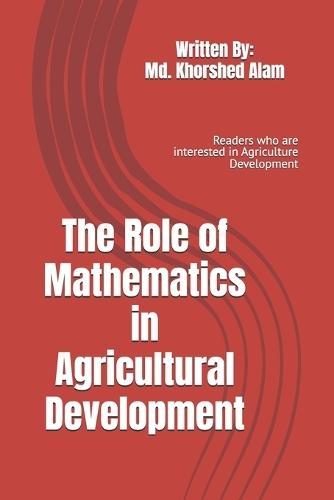
Mathematics forms the backbone of agricultural development, providing the tools to enhance productivity, efficiency, and sustainability across all stages of farming. From the earliest days of cultivation, humans relied on quantitative reasoning to measure land, calculate seed rates, and estimate harvest yields, laying the foundation for systematic agricultural planning. Over time, as agriculture evolved, mathematical principles became integral to scientific research, crop management, and farm economics. Chapters 1 through 10 of the book trace this evolution, emphasizing the role of numbers, measurements, and calculations in basic farming operations such as land assessment, soil testing, irrigation planning, and crop monitoring. Accurate measurements, geometric calculations, and proportional reasoning ensure optimal allocation of resources like water, fertilizers, and labor, while also providing reliable forecasts for expected yield. Early integration of statistics, probability, and basic algebra in field trials allows farmers and researchers to analyze crop performance, compare treatments, and refine practices, bridging traditional knowledge with scientific precision. As agriculture modernized, the application of advanced mathematical tools expanded to areas such as nutrient management, pest and disease control, and yield estimation, forming the focus of Chapters 11 through 20. Fertilizer calculations, pest modeling, and crop rotation planning are driven by linear and non-linear programming, probability models, and simulation techniques, enabling more informed decision-making. Similarly, irrigation scheduling, water resource management, and risk mitigation rely on statistical models and optimization methods to maximize efficiency while minimizing losses. Mathematics also plays a central role in market and financial analysis, where regression, time series forecasting, and cost-benefit calculations help farmers determine pricing strategies, budget management, and investment decisions. By quantifying risk and evaluating resource allocation, these tools allow both smallholder and commercial farmers to plan effectively, reduce uncertainty, and ensure sustainable returns on agricultural production. Chapters 21 through 30 explore the intersection of mathematics with emerging technologies and innovative practices in agriculture. Precision agriculture, smart farming, and climate-adaptive management use mathematical modeling, algorithms, and real-time data analytics to optimize field-level interventions. Decision support systems (DSS) combine statistical analysis, simulation models, and predictive forecasting to guide irrigation, fertilization, and pest management, while AI and machine learning enhance yield predictions, market analysis, and resource efficiency. Agricultural research and education also benefit from quantitative methods, enabling the design of experiments, analysis of complex biological and environmental data, and optimization of new crop varieties, machinery, and farming systems. Technology adoption models, cost-benefit analyses, and scenario simulations ensure that innovations are both effective and economically viable, accelerating the diffusion of modern agricultural practices while supporting sustainability goals. Furthermore, climate change modeling and mitigation strategies rely on probabilistic forecasting, simulation, and optimization to guide adaptive practices, water management, and soil conservation, ensuring long-term agricultural resilience.
Full Product Details
Author: MD Khorshed Alam
Publisher: Independently Published
Imprint: Independently Published
Dimensions:
Width: 15.60cm
, Height: 1.10cm
, Length: 23.40cm
Weight: 0.286kg
ISBN: 9798252931586
Pages: 200
Publication Date: 20 March 2026
Audience:
General/trade
,
General
Format: Paperback
Publisher's Status: Active
Availability: Available To Order

We have confirmation that this item is in stock with the supplier. It will be ordered in for you and dispatched immediately.