|
|
|||
|
||||
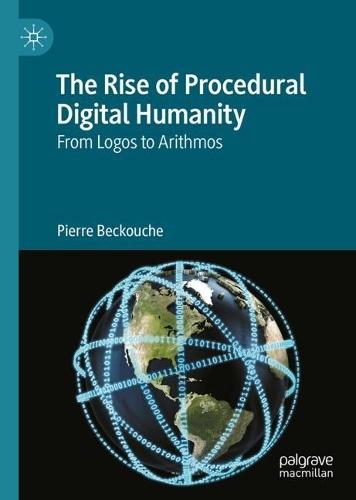
OverviewThis book argues that the digital revolution constitutes an anthropological turning point in human history. It examines the rise of a new procedural humanity—Homo Externatus—born from a profound cultural shift between logos, the symbolic foundation of thought grounded in language, truth, causality, and meaning, and “arithmos”, a procedural, a-semantic metaculture driven by calculation and correlation. Humanity is moving from a culture of differentiation, between true and false, good and evil, man and God, toward one of de-differentiation, where everything becomes calculable and thus comparable. Drawing on psychoanalysis, social theory, and geo-economic analysis, the book explores how digitalization, while seemingly unifying, actually fragments our “society of individuals”; and asks whether it might herald the advent of a new form of totalitarianism. Scholars, researchers, and students in social sciences, digital studies, philosophy and psychoanalysis will find this book invaluable. It offers a unique blend of insights, combining social sciences with psychoanalysis to illuminate the new interplay between the psychic and the social in the digital age. This book is a must-read for anyone seeking to understand the transformative impact of digitalization on human psyche, thought and society. Full Product DetailsAuthor: Pierre BeckouchePublisher: Springer Nature Switzerland AG Imprint: Palgrave Macmillan ISBN: 9783032128102ISBN 10: 3032128102 Pages: 354 Publication Date: 08 April 2026 Audience: College/higher education , Professional and scholarly , Tertiary & Higher Education , Professional & Vocational Format: Hardback Publisher's Status: Forthcoming Availability: Not yet available This item is yet to be released. You can pre-order this item and we will dispatch it to you upon its release. Table of ContentsReviewsAuthor InformationPierre Beckouche is a Professor in the Department of Geography at Paris 1 Panthéon-Sorbonne University, France, where he is a member of the Ladyss laboratory and is affiliated with the Artificial Intelligence Observatory. He co-founded a transdisciplinary research institution, the International College of Territorial Sciences. His research focuses on economic and regional geography, as well as on the impact of the digital revolution on societies and spatial dynamics. Tab Content 6Author Website:Countries AvailableAll regions |
||||