|
|
|||
|
||||
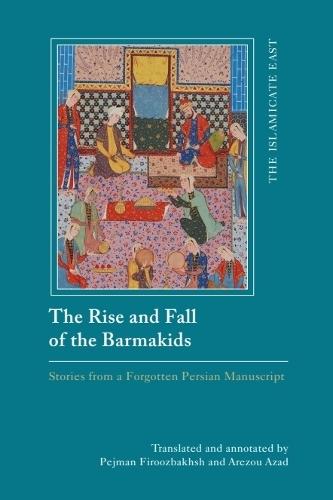
OverviewFull Product DetailsAuthor: Pejman Firoozbakhsh (University of Hamburg) , Arezou Azad (Senior Research Fellow and Director of the Invisible East programme, University of Oxford)Publisher: Edinburgh University Press Imprint: Edinburgh University Press ISBN: 9781399559317ISBN 10: 1399559311 Pages: 344 Publication Date: 28 February 2026 Audience: Professional and scholarly , College/higher education , Professional & Vocational , Postgraduate, Research & Scholarly Format: Hardback Publisher's Status: Active Availability: Not yet available This item is yet to be released. You can pre-order this item and we will dispatch it to you upon its release. Table of ContentsNote on the Invisible East collection Abbreviations Editor’s and translator’s introduction Notes on the translation and annotations Translated text of Akhbār-i Barmakiyān (The Accounts of the Barmakids) Introduction Story 1: Barmak’s meeting with ʿAbd al-Malik b. Marwān; his son Khālid and the construction of a new palace in Baghdad Story 2: Khālid’s mentorship of al-Mahdī and the battle with the Daylamites Story 3: Yaḥyā’s illness and the Christian doctor from Fars Story 4: Yaḥyā and the petitioners Story 5: Faḍl’s generous acts towards Ṣāliḥ al-Anṣārī Story 6: The love affair of Jaʿfar and ʿAbbāsa Story 7: Faḍl b. Yaḥyā and the Sindī visitor Story 8: Faḍl’s squabble with his secretary, and his father’s reaction Story 9: The faultless house of Faḍl Story 10: Yaḥyā and Faḍl in prison without firewood Story 11: Hārūn’s dilemma: to destroy the Barmakids or not Story 12: Hārūn’s remorse and al-Faḍl b. al-Rabīʿ’s poor advice Story 13: Jaʿfar, the poet Ṣarīʿ al-Ghawānī and the courtesan Rayḥāna Story 14: Yaḥyā saves Manṣūr b. Ziyād’s life Story 15: Jaʿfar’s vitiligo and Yaḥyā’s confirmation of his filial piety Story 16: Jaʿfar’s party and ʿAbd al-Malik al-Hāshimī’s requests Story 17: Yaḥyā and the petitioner Aḥmad b. Abī Khālid al-Aḥwal Story 18: Faḍl saves the secretary Musayyib b. Qāsim’s life Story 19: Muʿādh b. Ḥarb’s forgery brings friendship to Yaḥyā and his rival Story 20: Yaḥyā saves Aḥmad from his beautiful but conniving wife Story 21: Faḍl interrupts his drinking and saves the noble man Khalīl al-Kindī Story 22: Jaʿfar convinces the caliph to restore Saʿīd b. Salām Story 23: Yaḥyā builds a grand house for Isḥāq b. Ibrāhīm al-Mawṣilī Story 24: Jaʿfar’s skill at judging people’s petitions on behalf of the caliph Story 25: Jaʿfar resolves an intractable legal case from Basra Story 26: ʿAlī b. ʿĪsā b. Māhān’s ruinous rule and Hārūn’s remorse Story 27: Faḍl restores Yaḥyā b. Muʿādh’s wealth and prestige Story 28: Faḍl fears the fires of hell while taking a hot bath Story 29: Faḍl changes the life of a youth on his wedding day Story 30: al-Jāḥiẓ’s endorsement of Jaʿfar’s erudition Story 31: Hārūn’s acrimony and his obstinate suppression of the Barmakids’ legacy Story 32: ʿAlī b. Hishām’s stinginess towards his teacher Isḥāq al-Mawṣilī Story 33: An Abbasid family member asks Faḍl for a loan Story 34: A youth doubts the truth of the accounts about the Barmakids’ generosity Story 35: Faḍl corrects his error by reinstating the commander of Khurasan Story 36: The loyalty of Jaʿfar’s Byzantine slave in defiance of Hārūn’s ban Story 37: The astrologers’ prediction of Yaḥyā’s disgrace Story 38: Yaḥyā and the blind fortune teller Abū Yaʿqūb Story 39: The impertinent poet who became Faḍl’s most trusted companion Story 40: Hārūn breaks his oath to protect Jaʿfar Story 41: Yaḥyā’s plea for advice on how to save his family Story 42: The Barmakids’ kindness to others while mourning their own demise Story 43: Yaḥyā’s last-ditch attempt to save the Barmakids Story 44: Hārūn’s greed and desire for the Barmakids’ estate Story 45: Jaʿfar explains his expenditures on charity and beauty Story 46: Jaʿfar’s astrological predictions of his misfortune Story 47: Jaʿfar and the eloquent beggar Story 48: Yaḥyā counsels Jaʿfar on respecting one’s neighbours Story 49: Faḍl’s helps the poor doctor who treated him in prison Story 50: Abū al-Ḥasan recites accounts about the Barmakids to Faḍl in prison Story 51: The man who called the Barmakids heretics and whom Faḍl forgave Story 52: The Barmakid generosity extends to their knowledge and wisdom Story 53: Hārūn releases Yaḥyā and his family on the way to al-Raqqa Story 54: An Arab commander mourns Jaʿfar’s death and Hārūn writes to the Barmakid women Story 55: Jaʿfar’s brothers mourn his death, Hārūn asks the guards to be good to the Barmakids and an uncle disregards their plight Story 56: Hārūn aids some members of the Barmakid family and punishes others Story 57: Hārūn’s suspicions and the integrity of Yaḥyā and Faḍl in prison Story 58: A few short anecdotes about Yaḥyā’s generosity Story 59: Yaḥyā and the ascetic, and his abandonment of astrology Story 60: Yaḥyā vows to abondon his faith in omens Story 61: Yaḥyā’s rancid sweets and the petitioners who had to wait Story 62: The superiority of Jaʿfar in debating al-Faḍl b. al-Rabīʿ Story 63: Jaʿfar judges petitioners’ requests at the request of the caliph Story 64: The caliph and Jaʿfar trade places to teach Ḥārith a lesson Story 65: Jaʿfar hears a song about death when his executioner arrives Story 66: Hārūn’s and Faḍl’s identical horoscopes, Hārūn’s wish to reinstate Faḍl as vizier and Hārūn’s death Story 67: The loyalty of Jaʿfar towards Hārūn and of ʿĪsā b. Shāh Fīrūz towards Jaʿfar Story 68: The restoration of the Barmakids by the caliphs Amīn and al-Maʾmūn Story 69: Yaḥyā helps Faḍl donate money to all the poor people of Baghdad Story 70: Al-Maʾmūn revives the Barmakids’ glory in a new generation Appendices Bibliography Acknowledgements Photo credits IndexReviewsPart of Indo-Persian culture, but with deep Arabic roots, this saga of a family “whose good name would endure until the Day of Judgement” belongs to world literature. Its seventy tales are a message to rulers to always act rationally. The beautifully direct translation has a lucid historical introduction, full scholarly apparatus and delightful illustrations. -- Julia Bray, University of Oxford Author InformationPejman Firoozbakhsh is a Research Associate at the University of Hamburg and a former member of the Invisible East programme at the University of Oxford. He is a linguist interested in the formation and development of early New Persian, West Iranian dialects, Persian codicology and textual criticism. Pejman Firoozbakhsh’s recent publications include “Manuscript of a Persian Qaṣīda from about the Year 400/1007”, in Bi yād-i Īraj Afshār, edited by Jawād Basharī (vol. 2. Tehran: Duktur Maḥmūd Afshār, 1402/2024, 661–72) (In Persian) and ‘The Story of Rustam and Suhrāb,’ by Abu al-Qāsim Firdawsī, edited by Jalal Khaleqi Motlaq (Tehran: Sokhan 2014; rev. 2020). He has also contributed to a book by Arezou Azad The Warehouse of Bamiyan: Economic Life in Medieval Afghanistan (Edinburgh University Press, 2025). Arezou Azad is Senior Research Fellow and Director of the Invisible East programme at the Department of Continuing Education at the University of Oxford. She is also Professor and Chair of the Arts and Heritage of Afghanistan at the Institut national des langues et civilisations orientales (Inalco) in Paris. She has authored four other peer-reviewed books: The Rise and Fall of the Barmakids (Edinburgh University Press, 2026), The Warehouse of Bamiyan: Economic Life in Medieval Afghanistan (Edinburgh University Press, 2025), Faḍāʾil-i Balkh or “The Merits of Balkh”, an annotated translation of a 13th-century history of Balkh (Edinburgh University Press, 2021) and Sacred Landscape in Medieval Afghanistan (Oxford University Press, 2013). Tab Content 6Author Website:Countries AvailableAll regions |
||||