Overview
Muslim marriage is a union where there exists a set of rights offered or agreed as a whole. This study explores the woman's right to marry as a paramount element in contracting marriage. It details the role of the Muslim woman in concluding and negotiating her marriage through related issues, inter alia: the marriage guardian, the virgin's legal capacity to give consent and how that consent is to be given or understood. The doctrine of kafa'a (equality) between the spouses is also discussed. The concept of wilayah (male guardianship) is a desire of control position for the man and the idea of kafa'a limits the woman's choice in marriage. Both these are the result of jurists' analogical reasoning. As such, both concepts are used in a bid to keep the man's upper hand in the marriage. The woman's right to dissolve the marriage is also analysed. The Shari'ah, as well as law in Pakistan, permits both husbands and wives to initiate divorce at different channels. The study, stresses on honourable exit route from marriage and assesses the divorce process as initiated by the wife, like in khul' (ransom), khiyar-ul-bulugh (option of puberty) and talaqe-tafwid (delegated divorce). What emerges out of this exposition is that these are absolute, unqualified and legally enforceable rights of hers. Based on androcentric interpretations of primary sources of Shari'ah, in Pakistan, a strongly patriarchal society, the making and breaking of the marriage is left almost solely to the males' discretion. Here, this authoritative view is weighed against the Muslim family laws applicable in the country. This research reveals a significant gap between women's de jure rights and the de facto exercise of their rights in Pakistan. For this reason, despite landmark laws enacted, and the reforms made so far to protect women's marital rights, women continue to be confronted by profound disadvantages in marriage and divorce regimes, hoping that one day things will take a positive turn. In this study, at every stage, the author states the position of classical Islamic law and it's interpretations that has given rise to the issues in modern times and then explains how courts through fresh interpretations have resolved these issues.
Full Product Details
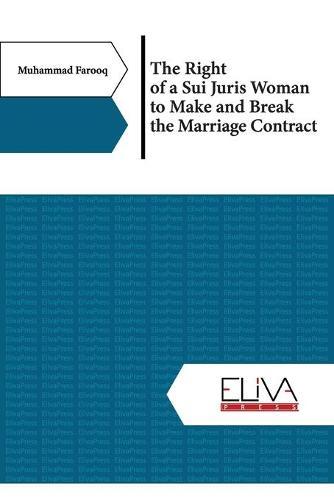
Author: Muhammad Farooq
Publisher: Eliva Press
Imprint: Eliva Press
Dimensions:
Width: 15.20cm
, Height: 1.90cm
, Length: 22.90cm
Weight: 0.476kg
ISBN: 9781636484341
ISBN 10: 1636484344
Pages: 356
Publication Date: 04 December 2021
Audience:
General/trade
,
General
Format: Paperback
Publisher's Status: Active
Availability: Available To Order

We have confirmation that this item is in stock with the supplier. It will be ordered in for you and dispatched immediately.