Overview
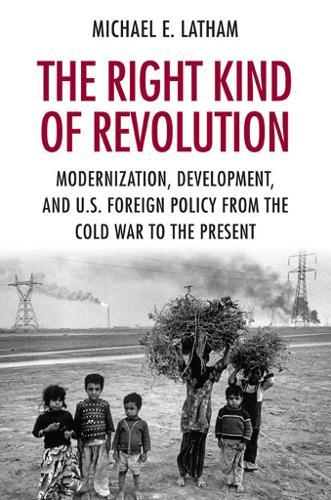
After World War II, a powerful conviction took hold among American intellectuals and policymakers: that the United States could profoundly accelerate and ultimately direct the development of the decolonizing world, serving as a modernizing force around the globe. By accelerating economic growth, promoting agricultural expansion, and encouraging the rise of enlightened elites, they hoped to link development with security, preventing revolutions and rapidly creating liberal, capitalist states. In The Right Kind of Revolution, Michael E. Latham explores the role of modernization and development in U.S. foreign policy from the early Cold War through the present. The modernization project rarely went as its architects anticipated. Nationalist leaders in postcolonial states such as India, Ghana, and Egypt pursued their own independent visions of development. Attempts to promote technological solutions to development problems also created unintended consequences by increasing inequality, damaging the environment, and supporting coercive social policies. In countries such as Guatemala, South Vietnam, and Iran, U.S. officials and policymakers turned to modernization as a means of counterinsurgency and control, ultimately shoring up dictatorial regimes and exacerbating the very revolutionary dangers they wished to resolve. Those failures contributed to a growing challenge to modernization theory in the late 1960s and 1970s. Since the end of the Cold War the faith in modernization as a panacea has reemerged. The idea of a global New Deal, however, has been replaced by a neoliberal emphasis on the power of markets to shape developing nations in benevolent ways. U.S. policymakers have continued to insist that history has a clear, universal direction, but events in Iraq and Afghanistan give the lie to modernization's false hopes and appealing promises.
Full Product Details
Author: Michael E. Latham
Publisher: Cornell University Press
Imprint: Cornell University Press
Dimensions:
Width: 15.50cm
, Height: 1.60cm
, Length: 23.50cm
Weight: 0.454kg
ISBN: 9780801477263
ISBN 10: 0801477263
Pages: 256
Publication Date: 15 January 2011
Recommended Age: From 18 years
Audience:
General/trade
,
General
Format: Paperback
Publisher's Status: Active
Availability: In Print

This item will be ordered in for you from one of our suppliers. Upon receipt, we will promptly dispatch it out to you. For in store availability, please contact us.
Reviews
<p> Michael Latham's The Right Kind of Revolution begins with the bungled aftermath of the 2003 Iraq war, which he presents as the most recent in a long line of failed efforts at nation building reaching as far back as the end of the nineteenth century. The litany of failure is both long and depressing, with few efforts achieving the economic or political objectives of their usually well-intentioned advocates. Latham tells the story in this extremely useful and interesting overview of U.S. development polic and its sometimes complex and contradictory relationship with U.S. security policy. . . . Case after case across the globe and throughout the century reinforce Latham's central argument that policies approaching foreign societies as malleable entities to be steered through some process of modernization and nation building are likely to be both chimerical and disastrous. It is an argument well made. -Keith L. Shimko, Political Science Quarterly
<p> Michael E. Latham has provided a very interesting and useful synthesis of the rise and decline (and eventual reappearance) of modernization theory in the United States, exploring both its intellectual roots and its deep connections to the country's foreign policy. Michele Alacevich, Technology and Culture (July 2012)
<p> Combining theory, diplomacy, domestic politics, and development, the concept of 'modernization' is a powerful tool for critically analyzing America's past and present encounters with the world. The Right Kind of Revolution is the best illustration yet of how 'modernization' can serve as a synthetic theme useful in studying America's encounter with developing societies during and after the Cold War. Topics such as land reform, agricultural technology, and development consortiums appear in this book within a single frame. The disastrous results of modernization in some countries offer a powerful indictment of an authoritarian orientation completely at odds with Americans' stated ideals. -Nathan J. Citino, Colorado State University, author of From Arab Nationalism to OPEC: Eisenhower, King Sa'ud, and the Making of U.S.-Saudi Relations
Author Information
Michael E. Latham is Professor of History at Fordham University and Dean of Fordham College at Rose Hill. He is the author of Modernization as Ideology: American Social Science and ""Nation Building"" in the Kennedy Era and coeditor of Staging Growth: Modernization, Development, and the Global Cold War and Knowledge and Postmodernism in Historical Perspective.