|
|
|||
|
||||
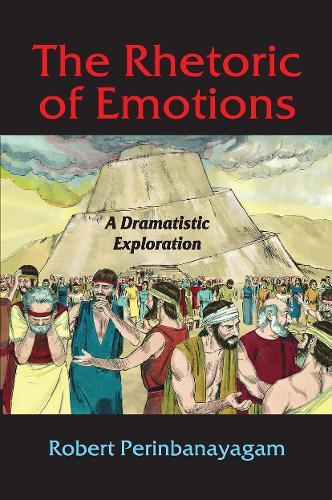
OverviewKenneth Burke, founder of the critical method of dramatism, believed that motives and attitudes are constantly generated by individuals as they encounter social situations and material objects in the course of their everyday lives. In The Rhetoric of Emotions, Robert Perinbanayagam proposes that by analysing individuals' experiences, especially through their interaction with creative outlets, we can come to a deeper understanding of how the human mind systematically approaches the emotive process. The author maintains that individuals use spoken language, and all other forms of symbolism, including art and literature, to elicit social cooperation and emotional understanding, both in regard to the world around them and within themselves. Rhetoric and culture are mechanisms for managing values, behaviour, and emotions. In order to ground this philosophical viewpoint, Perinbanayagam strategically discusses famous novels and paintings to show how individuals construct emotional responses to the rhetorical objects at their disposal. In addition to the ideas of Burke and George Herbert Mead, the ideas of Max Weber, Georg Simmel, Charles Sanders Peirce, Edmund Husserl, Alfred Schutz, and Erving Goffman are also reflected in this provocative analysis. Full Product DetailsAuthor: Robert PerinbanayagamPublisher: Taylor & Francis Ltd Imprint: Routledge Weight: 0.453kg ISBN: 9781032923697ISBN 10: 1032923695 Pages: 286 Publication Date: 14 October 2024 Audience: Professional and scholarly , Professional & Vocational Format: Paperback Publisher's Status: Active Availability: In Print This item will be ordered in for you from one of our suppliers. Upon receipt, we will promptly dispatch it out to you. For in store availability, please contact us. Table of ContentsReviews'The author writes on a grander scale and has achieved considerable respect within the symbolic interaction-ist community by doing so...I am in fact enthusiastic about this fasci-nating work, and I hope that others will not only read it, but also explore more deeply the enchantments within the grand interhuman caverns where Perinbanayagam, in this and many other volumes, has scattered the light of his imagination.' Robert Wade Kenny, University of Pittsburgh, Symbolic Interaction Author InformationTab Content 6Author Website:Countries AvailableAll regions |
||||