Overview
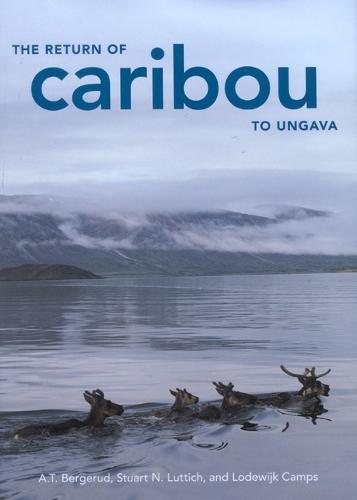
The George River caribou herd increased from 15,000 animals in 1958 to 700,000 in 1988 - the largest herd in the world at the time. The authors trace the fluctuations in this caribou population back to the 1700s, detail how the herd escaped extinction in the 1950s, and consider current environmental threats to its survival. In an examination of the life history and population biology of the herd, The Return of Caribou to Ungava offers a synthesis of the basic biological traits of the caribou, a new hypothesis about why they migrate, and a comparison to herd populations in North America, Scandinavia, and Russia. The authors conclude that the old maxim, ""Nobody knows the way of the caribou,"" is no longer valid. Based on a study in which the caribou were tracked by satellite across Ungava, they find that caribou are able to navigate, even in unfamiliar habitats, and to return to their calving ground, movement that is central to the caribou's cyclical migration. The Return of Caribou to Ungava also examines whether the herd can adapt to global warming and other changing environmental realities.
Full Product Details
Author: A. T. Bergerud ,
Stuart N. Luttich ,
Lodewijk Camps ,
Stuart N. Luttich
Publisher: McGill-Queen's University Press
Imprint: McGill-Queen's University Press
Dimensions:
Width: 16.50cm
, Height: 5.10cm
, Length: 24.80cm
Weight: 1.417kg
ISBN: 9780773540774
ISBN 10: 0773540776
Pages: 656
Publication Date: 31 July 2012
Audience:
Professional and scholarly
,
Professional & Vocational
Format: Paperback
Publisher's Status: Active
Availability: Out of stock

The supplier is temporarily out of stock of this item. It will be ordered for you on backorder and shipped when it becomes available.
Reviews
The Return of Caribou to Ungava should be read by everyone with even a passing interest in northern ecology, caribou management, or predator-prey relationships. It should be read by historians, anthropologists, and archaeologists. Charles E. Kay, Utah State University Bergerud et al have gifted us with an intimate gaze on a natural wonder of the world ... If you wish to learn about the caribou, read this book. The book is mammoth, an opus magnum, chock full of data and insight into the lives of the iconic wanderer of the north. It is a rare type of work. John McCarthy, The Canadian Field-Naturalist
Bergerud et al have gifted us with an intimate gaze on a natural wonder of the world ... If you wish to learn about the caribou, read this book. The book is mammoth, an opus magnum, chock full of data and insight into the lives of the iconic wanderer of the north. It is a rare type of work. John McCarthy, The Canadian Field-Naturalist The Return of Caribou to Ungava should be read by everyone with even a passing interest in northern ecology, caribou management, or predator-prey relationships. It should be read by historians, anthropologists, and archaeologists. Charles E. Kay, Utah State University
Bergerud et al have gifted us with an intimate gaze on a natural wonder of the world ... If you wish to learn about the caribou, read this book. The book is mammoth, an opus magnum, chock full of data and insight into the lives of the iconic wanderer of the north. It is a rare type of work. John McCarthy, The Canadian Field-Naturalist The Return of Caribou to Ungava should be read by everyone with even a passing interest in northern ecology, caribou management, or predator-prey relationships. It should be read by historians, anthropologists, and archaeologists. Charles E. Kay, Utah S
Author Information
A.T. Bergerud is former chief biologist of Newfoundland. He has been a population ecologist involved in research on caribou populations in North America since 1955. Stuart N. Luttich, a provincial biologist in Labrador, monitored the caribou herd from 1974 to 1993. Lodewijk Camps studied the George River caribou herd from 1988 to 1992.