Overview
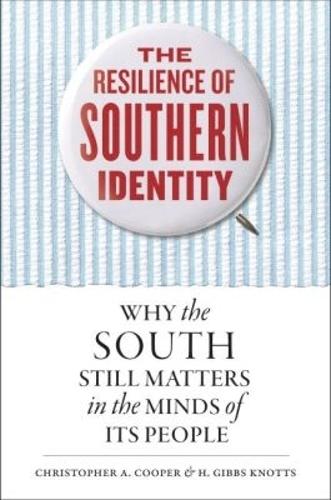
The American South has experienced remarkable change over the past half century. Black voter registration has increased, the region's politics have shifted from one-party Democratic to the near-domination of the Republican Party, and in-migration has increased its population manyfold. At the same time, many outward signs of regional distinctiveness have faded--chain restaurants have replaced mom-and-pop diners, and the interstate highway system connects the region to the rest of the country. Given all of these changes, many have argued that southern identity is fading. But here, Christopher A. Cooper and H. Gibbs Knotts show how these changes have allowed for new types of southern identity to emerge. For some, identification with the South has become more about a connection to the region's folkways or to place than about policy or ideology. For others, the contemporary South is all of those things at once-a place where many modern-day southerners navigate the region's confusing and omnipresent history. Regardless of how individuals see the South, this study argues that the region's drastic political, racial, and cultural changes have not lessened the importance of southern identity but have played a key role in keeping regional identification relevant in the twenty-first century.
Full Product Details
Author: Christopher A. Cooper ,
H. Gibbs Knotts
Publisher: The University of North Carolina Press
Imprint: The University of North Carolina Press
Dimensions:
Width: 19.90cm
, Height: 1.00cm
, Length: 24.00cm
Weight: 0.238kg
ISBN: 9781469652160
ISBN 10: 1469652161
Pages: 152
Publication Date: 28 February 2019
Audience:
Professional and scholarly
,
Professional & Vocational
Format: Paperback
Publisher's Status: Active
Availability: Manufactured on demand

We will order this item for you from a manufactured on demand supplier.
Reviews
Cooper and Knotts aptly demonstrate that regional identification remains one of the central ways that most residents of the American South think about their place in the world, as somewhat distinct from that of their immediate and more distant neighbors. --The Journal of Southern History
"Cooper and Knotts aptly demonstrate that regional identification remains one of the central ways that most residents of the American South think about their place in the world, as somewhat distinct from that of their immediate and more distant neighbors."""" - The Journal of Southern History"
Cooper and Knotts aptly demonstrate that regional identification remains one of the central ways that most residents of the American South think about their place in the world, as somewhat distinct from that of their immediate and more distant neighbors."""" - The Journal of Southern History
Author Information
Christopher A. Cooper is professor of political science and public affairs at Western Carolina University. H. Gibbs Knotts is a professor of political science at the College of Charleston.