Overview
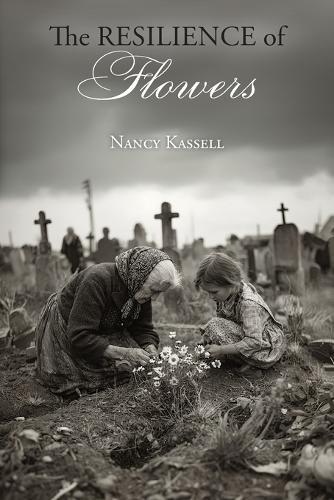
They were little girls, the age of flowers, said their mother Asma, who found and buried them herself after the bombing To perish so before full bloom Gaza. 2025. Asma does for her daughters the only thing she can do now, bury them. A girl raped in Nigeria, a girl displaced in Ukraine, a woman poet arrested by Nazis in Warsaw 1942. The United States 2025. Recurring cycles of conflict and war seem so alike at times that they become almost ahistorical. It is women, uniquely bonded to nature, who do most of the work of repair and recovery. The work of continuity. But just who are we humans, who ricochet between destroying and creating? In a poem about children's first, stick-figure drawings (Ground) I write, This is how we are made what it is to look human they are telling us... The skeleton shows through. I think a lot about the skeleton of human nature. And so, the arts arm themselves. In what she describes as portraits of people, the painter Alice Neel asks, We are all creatures in a way, aren't we? (Nude Self-Portrait). The quest for a common humanity continues. Meanwhile, historical time, like nature, may be circular, but each individual life is linear, and in this chapbook, I honor two people I have lost, my companion, an historian, and my daughter, a filmmaker. We inhabit time and nature and within these spaces try to know: Who or what needs care and what kind Who gives it, how it is given and received.
Full Product Details
Author: Nancy Kassell
Publisher: DOS Madres Press
Imprint: DOS Madres Press
Dimensions:
Width: 15.20cm
, Height: 0.30cm
, Length: 22.90cm
Weight: 0.086kg
ISBN: 9781962847469
ISBN 10: 1962847462
Pages: 54
Publication Date: 01 March 2026
Audience:
General/trade
,
General
Format: Paperback
Publisher's Status: Active
Availability: Available To Order

We have confirmation that this item is in stock with the supplier. It will be ordered in for you and dispatched immediately.
Reviews
On Nancy Kassell's earlier work: Nancy Kassell's new (and first) collection TEXT(ISLES) is mature, humane, truly learned. The poems, unique, accurate, beautiful, are a model of emotional intelligence. Their context is as multidimensional as life and history itself. They evoke the classical world-Horace, Ovid, Aeneas, myth revisited; they introduce a woman-friendly world especially in their focus on the significance and language of cloth, of sewing, of pattern and texture; they ""translate"" music (Brahms, Bach), painting (Klee, Soutine), art history; they explore sky, earth, water, cellular life; they evoke the centrality of love. Like the title, the poems fragment and reconcile the worlds they create. Myth and metaphor and ""reality"" are interchangeable-and fresh. It is no news, /that we have to reinvent ourselves/ again and again./ Unless we've already given up, / the light over the drawing board/ is always on. (Architecture) There is reassurance in the scope and beauty of TEXT(ISLES), hope in its minutest details. -Sondra Zeidenstein Many a green isle needs must be / In the deep wide sea of Misery, / Or the mariner, worn and wan / Never thus could voyage on -(Shelley) On this remarkable voyage, at once archetypal and deeply personal, every isle and shore is a text to be read, and every text a place to cultivate and dwell. From the opening ""Reading the Georgics"" where the maternal earth and the heavens are read for sowing, followed by ""The Scarf,"" recalling her mother's love of color and design, Nancy Kassell leads us, past ""Exile,"" pilot, scholar, and rhapsode (Gr. rhaptein, to stitch), along the threaded rivers of language from the mythic past to her particular present. At once keenly intellectual and richly sensuous, these text(isles), whether paintings, music, translations, fables or fabrics are woven for our delectation. Here ""words are always on the move"" and ""biology confirms myth."" ""Green. A History"" offers a paean to color. This exquisitely textured book will carry you to many green (text)isles on an amazing journey. -John Anson
Author Information
Nancy Kassell's previous two books of poetry, Text(isles) and Be(longing), were published by Dos Madres Press. Her poems have appeared in journals and anthologies, and her essays in books and the New York Times. She is also the author of a feminist cultural study, The Pythia on Ellis Island. Rethinking the Classical Legacy in America. Kassell was a founder of the Writers' Room of Boston, and in a previous life, a professor of Classics. She lives in Brookline, Massachusetts.