Overview
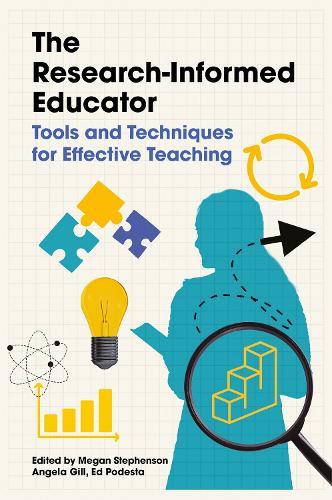
The Research-Informed Educator supports teachers in developing their professional identity and practice through engagement with research and evidence. It helps both new and experienced educators look beyond the pressures of recent policy demands about what teachers should know and do. The book aims to challenge and re-balance the recent “evidence-turn” in teacher training and development. The chapters cover the career path of a teacher, introducing and developing key concepts and issues related to research and practice. Concepts such as the nature of evidence, the role of theory and experience, and the significance of professional identities and values are explored through practical engagement with issues teachers face in their work. Each chapter is written by an experienced teacher now working in teacher education, drawing on shared knowledge of how teachers best engage with research. The book is designed to support practitioners in understanding how their relationship with evidence may change, as they gain experience and take on new professional roles.
Full Product Details
Author: Megan Stephenson (Leeds Trinity University, UK) ,
Angela Gill (Durham University, UK) ,
Ed Podesta (Leeds Trinity University, UK)
Publisher: Emerald Publishing Limited
Imprint: Emerald Publishing Limited
Dimensions:
Width: 13.80cm
, Height: 1.20cm
, Length: 21.60cm
Weight: 0.261kg
ISBN: 9781837082414
ISBN 10: 1837082413
Pages: 210
Publication Date: 17 November 2025
Audience:
Professional and scholarly
,
Professional & Vocational
Format: Paperback
Publisher's Status: Active
Availability: In Print

This item will be ordered in for you from one of our suppliers. Upon receipt, we will promptly dispatch it out to you. For in store availability, please contact us.
Reviews
This book is essential reading for teachers and teacher educators. It assembles a set of carefully argued provocations around the relationship between research, evidence and educational practice, pointing out (for example) that a curriculum for beginning teachers needs to be dialogic and iterative as much as (or more than) it needs to be ‘carefully sequenced’ and ‘cumulative.’ Together the chapters present a compelling case for reflective and successful teachers to engage with educational research in all its methodological diversity, rather than restrict their attention to a narrowly prescribed evidence base. -- David Aldridge, Professor of Teacher Education, Edge Hill University
This book is essential reading for teachers and teacher educators. It assembles a set of carefully argued provocations around the relationship between research, evidence and educational practice, pointing out (for example) that a curriculum for beginning teachers needs to be dialogic and iterative as much as (or more than) it needs to be ‘carefully sequenced’ and ‘cumulative.’ Together the chapters present a compelling case for reflective and successful teachers to engage with educational research in all its methodological diversity, rather than restrict their attention to a narrowly prescribed evidence base. -- David Aldridge, Professor of Teacher Education, Edge Hill University This book is essential reading for teachers and teacher educators. It assembles a set of carefully argued provocations around the relationship between research, evidence and educational practice, pointing out (for example) that a curriculum for beginning teachers needs to be dialogic and iterative as much as (or more than) it needs to be ‘carefully sequenced’ and ‘cumulative.’ Together the chapters present a compelling case for reflective and successful teachers to engage with educational research in all its methodological diversity, rather than restrict their attention to a narrowly prescribed evidence base. -- David Aldridge, Professor of Teacher Education, Edge Hill University
Author Information
Megan Stephenson is an Associate Professor in Primary Education at Leeds Trinity University, with over 20 years of school teaching experience. She has co-authored books for teachers and trainees, focusing on writing, phonics, and professionalism. Angela Gill is an Associate Professor at Durham University and Deputy Director for the Centre for CPD and Outreach. She has over 20 years of primary school teaching experience. Angela has written and edited widely on Primary English and the wider curriculum, presented at national conferences, and organised training events for student teachers. Ed Podesta is an Associate Professor in Secondary Education at Leeds Trinity University. Formerly a secondary History teacher, he has worked in higher education since 2015, leading the Secondary PGCE and teaching at undergraduate and MA levels. He is currently completing a PhD at the University of Leeds on teacher autonomy and curriculum agency.