Overview
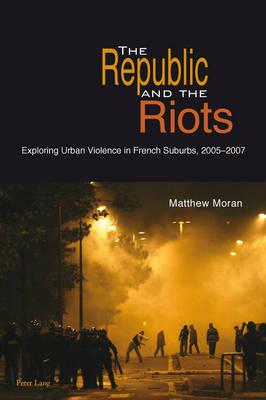
In 2005, the deaths of two teenagers in Clichy-sous-Bois provoked three weeks of rioting in French banlieues. Cars were burned, buildings were damaged and young people clashed with the police in unprecedented scenes of violence. The government declared a state of emergency as the riots spread across France. Two years later, the French public were met with familiar images when riots broke out in the Parisian suburb of Villiers-le-Bel. What were the underlying causes of these episodes of extreme violence? What did the riots signify? What do they tell us about French society? This book takes the reader inside the world of the banlieues and explores the nature and causes of the riots. Drawing on qualitative fieldwork conducted in Villiers-le-Bel, the author offers a unique insight into the motivating factors behind the violence. On a larger scale, the book examines the relationship between the underprivileged suburbs and the French republican model. The author explores a triad of interconnections: between republican ideals and the reality of daily life in the banlieues; between national projections of unity and localized realities of disunity; and between figures of authority and ordinary citizens.
Full Product Details
Author: Matthew Moran
Publisher: Peter Lang AG, Internationaler Verlag der Wissenschaften
Imprint: Peter Lang AG, Internationaler Verlag der Wissenschaften
Edition: New edition
Weight: 0.420kg
ISBN: 9783034307185
ISBN 10: 3034307187
Pages: 288
Publication Date: 28 November 2011
Audience:
Professional and scholarly
,
Professional & Vocational
Format: Paperback
Publisher's Status: Active
Availability: Out of stock

The supplier is temporarily out of stock of this item. It will be ordered for you on backorder and shipped when it becomes available.
Reviews
In contrast to the many security-orientated interpretations that dominated political and media discourse on the riots, this is the first English-language study that penetrates to the underlying social, political and even ideological factors that help explain those violent events. Through meticulous fieldwork and an impressive grasp of the history of immigration in France and its social consequences, Moran elucidates how the links between immigration, identity and citizenship have been used and sometimes misused in dominant political discourse, and how the ideology of French republicanism has not kept pace with the evolution of French society. This is an illuminating book that constitutes a much-needed corrective to the stock interpretations of the riots. (Professor G.G. Raymond, University of Bristol) In this extremely captivating and well-written book, Matthew Moran asks whether the riots of 2005-2007 represented an outright rejection of French society and its underlying republican values, or constituted a desperate plea for social inclusion by the hundreds of people involved. [...] This highly compelling volume (...) succeeds both in deftly relating the recent French riot to what Moran calls the modern 'blind spot of French republicanism' and in elucidating on variations in the propensity to engage in urban disorder. (David Waddington, Modern & Contemporary France)
In contrast to the many security-orientated interpretations that dominated political and media discourse on the riots, this is the first English-language study that penetrates to the underlying social, political and even ideological factors that help explain those violent events. Through meticulous fieldwork and an impressive grasp of the history of immigration in France and its social consequences, Moran elucidates how the links between immigration, identity and citizenship have been used and sometimes misused in dominant political discourse, and how the ideology of French republicanism has not kept pace with the evolution of French society. This is an illuminating book that constitutes a much-needed corrective to the stock interpretations of the riots. (Professor G.G. Raymond, University of Bristol) In this extremely captivating and well-written book, Matthew Moran asks whether the riots of 2005-2007 represented an outright rejection of French society and its underlying republican values, or constituted a desperate plea for social inclusion by the hundreds of people involved. [...] This highly compelling volume (...) succeeds both in deftly relating the recent French riot to what Moran calls the modern 'blind spot of French republicanism' and in elucidating on variations in the propensity to engage in urban disorder. (David Waddington, Modern & Contemporary France April 2012) The book provides an extremely useful insight into the social, political, ideological and religious netherworld of a French society that is experiencing serious fractures on its housing estates. (PBo, Bulletin Quotidien Europe 18/9/2012)
In contrast to the many security-orientated interpretations that dominated political and media discourse on the riots, this is the first English-language study that penetrates to the underlying social, political and even ideological factors that help explain those violent events. Through meticulous fieldwork and an impressive grasp of the history of immigration in France and its social consequences, Moran elucidates how the links between immigration, identity and citizenship have been used and sometimes misused in dominant political discourse, and how the ideology of French republicanism has not kept pace with the evolution of French society. This is an illuminating book that constitutes a much-needed corrective to the stock interpretations of the riots. (Professor G.G. Raymond, University of Bristol) In this extremely captivating and well-written book, Matthew Moran asks whether the riots of 2005-2007 represented an outright rejection of French society and its underlying republican values, or constituted a desperate plea for social inclusion by the hundreds of people involved. [...] This highly compelling volume (...) succeeds both in deftly relating the recent French riot to what Moran calls the modern `blind spot of French republicanism' and in elucidating on variations in the propensity to engage in urban disorder. (David Waddington, Modern & Contemporary France April 2012) The book provides an extremely useful insight into the social, political, ideological and religious netherworld of a French society that is experiencing serious fractures on its housing estates. (PBo, Bulletin Quotidien Europe 18/9/2012)
In contrast to the many security-orientated interpretations that dominated political and media discourse on the riots, this is the first English-language study that penetrates to the underlying social, political and even ideological factors that help explain those violent events. Through meticulous fieldwork and an impressive grasp of the history of immigration in France and its social consequences, Moran elucidates how the links between immigration, identity and citizenship have been used and sometimes misused in dominant political discourse, and how the ideology of French republicanism has not kept pace with the evolution of French society. This is an illuminating book that constitutes a much-needed corrective to the stock interpretations of the riots. (Professor G.G. Raymond, University of Bristol) In this extremely captivating and well-written book, Matthew Moran asks whether the riots of 2005-2007 represented an outright rejection of French society and its underlying republican values, or constituted a desperate plea for social inclusion by the hundreds of people involved. [...] This highly compelling volume (...) succeeds both in deftly relating the recent French riot to what Moran calls the modern `blind spot of French republicanism' and in elucidating on variations in the propensity to engage in urban disorder. (David Waddington, Modern & Contemporary France April 2012) The book provides an extremely useful insight into the social, political, ideological and religious netherworld of a French society that is experiencing serious fractures on its housing estates. (PBo, Bulletin Quotidien Europe 18/9/2012)
Author Information
Matthew Moran holds a PhD in French Studies from University College London. He is currently a Research Associate at King’s College London.