|
|
|||
|
||||
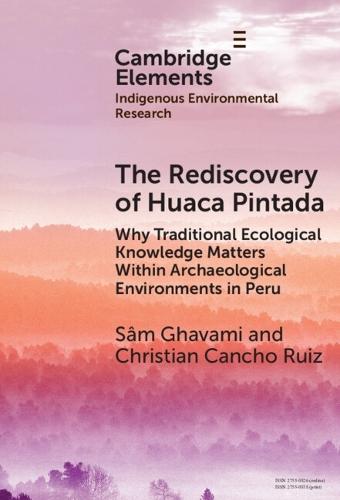
OverviewThis Element presents a case study of the authors' partnership with the Pintada community in their excavation of a pre-Columbian site known as 'Huaca Pintada', a pyramidal mound located in the Lambayeque region on the north coast of Peru. The site, which gained recognition after the fortuitous discovery by looters in 1916 of an exceptional polychrome mural, was somehow 'forgotten' by the scientific community after irreversible damage. However, this was not the case for the local inhabitants, families like the Inoñán or the Chapoñán descendants of ancient muchic traditions, who founded a village named after their illustrious elder. The authors will describe how local actors like shamans or workers were indispensable in finding solutions that led not only to the rediscovery of the treasures of the Huaca Pintada but also to the reconnection of the community with its past. Full Product DetailsAuthor: Sâm Ghavami (University of Fribourg, Switzerland) , Christian Cancho Ruiz (University of Virginia, VA)Publisher: Cambridge University Press Imprint: Cambridge University Press ISBN: 9781009583718ISBN 10: 1009583719 Pages: 86 Publication Date: 05 March 2026 Audience: General/trade , General Format: Hardback Publisher's Status: Forthcoming Availability: Not yet available, will be POD This item is yet to be released. You can pre-order this item and we will dispatch it to you upon it's release. This is a print on demand item which is still yet to be released. Table of Contents1. Introduction. Navigating Tensions: Integrating Indigenous Knowledge and Ownership in Peruvian Archaeology; 2. The Huaca Pintada Archaeological Project; 3. Archaeology, Conservation, and Preservation of Huaca Pintada; 4. Archaeological Sites are Indigenous Anchors in Landscape that Enable the Materialization of Social Memory; 5. Conclusions; Bibliography.ReviewsAuthor InformationTab Content 6Author Website:Countries AvailableAll regions |
||||