Overview
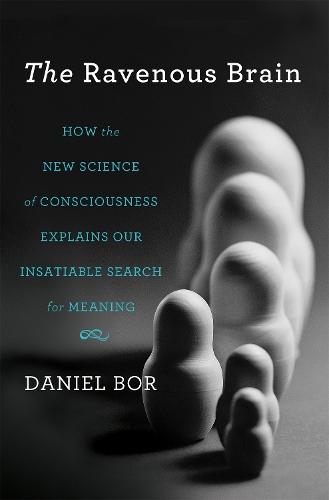
Consciousness is our gateway to experience: it enables us to recognize Van Gogh's starry skies, be enraptured by Beethoven's Fifth, and stand in awe of a snowcapped mountain. Yet consciousness is subjective, personal, and famously difficult to examine: philosophers have for centuries declared this mental entity so mysterious as to be impenetrable to science. In The Ravenous Brain , neuroscientist Daniel Bor departs sharply from this historical view, and builds on the latest research to propose a new model for how consciousness works. Bor argues that this brain-based faculty evolved as an accelerated knowledge gathering tool. Consciousness is effectively an idea factory- that choice mental space dedicated to innovation, a key component of which is the discovery of deep structures within the contents of our awareness. This model explains our brains' ravenous appetite for information- and in particular, its constant search for patterns. Why, for instance, after all our physical needs have been met, do we recreationally solve crossword or Sudoku puzzles? Such behaviour may appear biologically wasteful, but, according to Bor, this search for structure can yield immense evolutionary benefits- it led our ancestors to discover fire and farming, pushed modern society to forge ahead in science and technology, and guides each one of us to understand and control the world around us. But the sheer innovative power of human consciousness carries with it the heavy cost of mental fragility. Bor discusses the medical implications of his theory of consciousness, and what it means for the origins and treatment of psychiatric ailments, including attention-deficit disorder, schizophrenia, manic depression, and autism. All mental illnesses, he argues, can be reformulated as disorders of consciousness- a perspective that opens up new avenues of treatment for alleviating mental suffering. A controversial view of consciousness, The Ravenous Brain links cognition to creativity in an ingenious solution to one of science's biggest mysteries.
Full Product Details
Author: Daniel Bor
Publisher: Basic Books
Imprint: Basic Books
Dimensions:
Width: 16.00cm
, Height: 3.00cm
, Length: 23.80cm
Weight: 0.600kg
ISBN: 9780465020478
ISBN 10: 046502047
Pages: 352
Publication Date: 28 August 2012
Audience:
General/trade
,
General
Format: Hardback
Publisher's Status: Active
Availability: To order

Stock availability from the supplier is unknown. We will order it for you and ship this item to you once it is received by us.
Reviews
<p> Kirkus Reviews <br> [A] lively look at what research is revealing about consciousness and a view of some of the ethical implications of recent findings about the brain's 'ravenous appetite for wisdom.' . . . Bor keeps general readers in mind, making challenging subject matter entertaining by peppering his narrative with personal anecdotes, imaginative thought experiments and probing research studies. . . . An enthusiastic report from the front lines of cognitive science designed to pique the interest of nonscientists. John Duncan, Medical Research Council, Cambridge, and author of How Intelligence Happens In his presentation of the modern science of consciousness, Daniel Bor is luminous, charming and at the same time deep and original. He is that rare combination--a genuine scientist who knows his stuff and a writer in love with words.
Sam Kean, author of The Violinist's Thumb, Wall Street Journal <br> Mr. Bor takes on the oldest, thorniest question in neuroscience--what is consciousness?--and delivers a masterly overview of everything scientists think they think right now. <br> New Scientist <br> In The Ravenous Brain, Bor takes us on a tour of the fascinating world of consciousness research. . . . Bor's engaging and knowledgeable prose, liberally sprinkled with personal vignettes and coupled with a knack for explaining complex concepts in everyday language, make this a book well worth reading. <br> Scientific American Mind <br> Bor manages to pack a great deal of information... into a small book. He presents a sweeping overview of how the brain evolved, from the primordial soup to present day, and argues that consciousness could actually be generated in nonbiological substrates such as computers. . . . [An] intriguing perspective to our growing understanding of how the human mind works. <br> Nature <br> As scientific enterprises go, cracking consciousness is up there with deciphering dark matter. Neuroscientist Daniel Bor dives into the conundrum with relish. . . . Intriguing arguments abound. <br> Science News <br> Bor's knack for bolstering personal examples with laboratory studies makes this a thought-provoking read. His ideas are tantalizing. <br> Times Higher Education Supplement <br> The Ravenous Brain ... offers a meaningful explanation of what we do in trying to find meaning in everything. And what we do mentally (in other words, cerebrally) is what we are: conscious - too conscious - beings.... The Ravenous Brain 's theoretical claims have the potential to escape the popular science box and enter the real world of wet cognitive neuroscience. I hope it happens, and I hope Bor writes more books. <br> Kirkus Reviews <br> [A] lively look at what research is revealing about consciousness and a view of some of the ethical implications of recent findings about
Author Information
Daniel Bor is a research fellow at the Sackler Centre for Consciousness Science and the Department of Informatics at the University of Sussex. Previously he spent more than a decade working as a cognitive neuroscientist in the MRC Cognition and Brain Sciences Unit at the University of Cambridge. Bor lives in Cambridge, England.