Overview
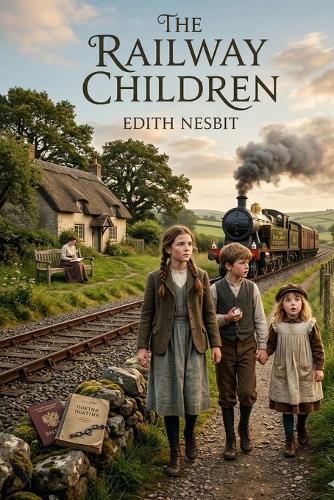
The Railway Children is Edith Nesbit's most well-known and well-loved book for young readers. Since its first book publication in 1906, it has been made into movies, radio plays and television series several times, dramatised in the theatre, performed in actual railway stations, and even turned into a musical.It tells the story of three children: Roberta, Peter and Phyllis, who with their mother are forced to leave their comfortable suburban home and go to live in a small cottage in the country, after their father is taken away from them for what at first seem inexplicable reasons. They live there very quietly, not going to school, whilst their mother writes stories and poems to earn a small income. The children's lives, however, are greatly enlivened by their proximity to a nearby railway line and station, in which they take great interest. They befriend the railway staff and have several adventures in which they demonstrate considerable initiative and courage.One unusual topic touched on by the book is the then-current Russia-Japan war, which divided opinion in England. Nesbit was clearly opposed to the actions of the Tsarist government of Russia, and she introduces into the story a Tolstoy-like Russian writer who has escaped from a prison camp in Siberia, to which he was condemned for publishing a book espousing his liberal views.The Railway Children is Edith Nesbit's most well-known and well-loved book for young readers. Since its first book publication in 1906, it has been made into movies, radio plays and television series several times, dramatised in the theatre, performed in actual railway stations, and even turned into a musical.It tells the story of three children: Roberta, Peter and Phyllis, who with their mother are forced to leave their comfortable suburban home and go to live in a small cottage in the country, after their father is taken away from them for what at first seem inexplicable reasons. They live there very quietly, not going to school, whilst their mother writes stories and poems to earn a small income. The children's lives, however, are greatly enlivened by their proximity to a nearby railway line and station, in which they take great interest. They befriend the railway staff and have several adventures in which they demonstrate considerable initiative and courage.One unusual topic touched on by the book is the then-current Russia-Japan war, which divided opinion in England. Nesbit was clearly opposed to the actions of the Tsarist government of Russia, and she introduces into the story a Tolstoy-like Russian writer who has escaped from a prison camp in Siberia, to which he was condemned for publishing a book espousing his liberal views.
Full Product Details
Author: Edith Nesbit
Publisher: Les Prairies Numeriques
Imprint: Les Prairies Numeriques
Dimensions:
Width: 15.20cm
, Height: 1.30cm
, Length: 22.90cm
Weight: 0.308kg
ISBN: 9791043138508
Pages: 228
Publication Date: 02 March 2026
Recommended Age: From 6 to 12 years
Audience:
Children/juvenile
,
Children / Juvenile
Format: Paperback
Publisher's Status: Active
Availability: Available To Order

We have confirmation that this item is in stock with the supplier. It will be ordered in for you and dispatched immediately.
Reviews
The Railway Children is Edith Nesbit's most well-known and well-loved book for young readers. Since its first book publication in 1906, it has been made into movies, radio plays and television series several times, dramatised in the theatre, performed in actual railway stations, and even turned into a musical.It tells the story of three children: Roberta, Peter and Phyllis, who with their mother are forced to leave their comfortable suburban home and go to live in a small cottage in the country, after their father is taken away from them for what at first seem inexplicable reasons. They live there very quietly, not going to school, whilst their mother writes stories and poems to earn a small income. The children's lives, however, are greatly enlivened by their proximity to a nearby railway line and station, in which they take great interest. They befriend the railway staff and have several adventures in which they demonstrate considerable initiative and courage.One unusual topic touched on by the book is the then-current Russia-Japan war, which divided opinion in England. Nesbit was clearly opposed to the actions of the Tsarist government of Russia, and she introduces into the story a Tolstoy-like Russian writer who has escaped from a prison camp in Siberia, to which he was condemned for publishing a book espousing his liberal views.