Overview
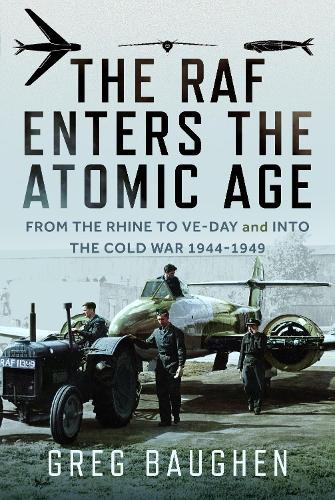
By September 1944 the Western Allies had reached the approximate positions they had held back in September 1939 at the outbreak of war. It had taken more than four years to claw back the territory lost in 1940. It was four years in which the strategic bomber had failed to deliver the victory the bomber advocated had promised. With Allied armies converging on Germany from all directions, they were running out of time to prove that countries could be bombed into defeat. Baughen describes the fierce battles that were fought right up to the German surrender in May 1945. He also explores the equally fierce debates behind the scenes about how air power should be used to complete the Allied victory, and analyses the lessons learned from six years of war. Even before Germany's surrender, thoughts were turning to the new enemy. The wartime alliance between Communist East and Capitalist West had always been one of convenience. Within weeks of the German surrender hostilities between the wartime allies were already a possibility. The seeds for post-war defence policy were already being sown. Meanwhile, in the Far East Hiroshima and Nagasaki had become the victims of the first atomic bombs. Days later Japan surrendered. The bomber advocates appeared to have the proof that bombing could win wars. But how related were the two events? Using contemporary documents, Baughen describes the how British air policy evolved in the late 1940s. Would the atomic bomb change the way wars were fought? Would conventional armies have any role in future wars? In the new atomic age, were there any lessons to be learned from the Second World War? How would the emerging cruise and ballistic missiles and associated guidance systems affect defence policy? Was a conventional defence to Soviet aggression possible? This is the story of the contribution air power made in the final battles of the Second World War, how the lessons of that conflict were misinterpreted and how the policies developed to incorporate the atomic bomb into Cold Wat defence thinking was leading the country into grave danger. AUTHOR: Greg Baughen was educated at Sussex University where he obtained a degree in Mathematics. In a varied teaching career, he has taught Maths and English as a foreign language, to children and adults, in Britain and abroad. His interest in military aviation was sparked at a very early age by curiosity over the defeat of British and French air forces in the Battle of France in 1940. For forty years, he has delved though public archives in Britain and France seeking explanations. The quest has taken him back to the origins of air power in both countries and forwards to what might have been in the Cold War. He then set to work writing a history of air power in both countries. 32 b/w illustrations
Full Product Details
Author: Greg Baughen
Publisher: Pen & Sword Books Ltd
Imprint: Pen & Sword Books Ltd
ISBN: 9781036123642
ISBN 10: 1036123642
Pages: 336
Publication Date: 25 March 2025
Audience:
General/trade
,
General
Format: Hardback
Publisher's Status: Active
Availability: In Print

This item will be ordered in for you from one of our suppliers. Upon receipt, we will promptly dispatch it out to you. For in store availability, please contact us.
Reviews
""I unreservedly recommend this work to any reader with not only a general interest in military affairs but also those with a more in depth interest in strategy, doctrine, tactics and equipment provision."" -- The Wessex Branch of the Western Front Association May 2025 The subtitle 'From the Rhine to VE-Day and into the Cold War 1944-1949' sums up well the author's aims and the coverage… Baughen examines the evolution of British defence policy over the five-year period of the title, and how atomic weapons changed the equation. His text is thought provoking and well-argued, and the 16-page photo section wide-ranging and nicely reproduced. -- (Aeroplane Monthly, July 2025)
""I unreservedly recommend this work to any reader with not only a general interest in military affairs but also those with a more in depth interest in strategy, doctrine, tactics and equipment provision."" -- The Wessex Branch of the Western Front Association May 2025
Author Information
GREG BAUGHEN was educated at Sussex University where he obtained a degree in Mathematics. In a varied teaching career, he has taught Maths and English as a foreign language, to children and adults, in Britain and abroad. His interest in military aviation was sparked at a very early age by curiosity over the defeat of British and French air forces in the Battle of France in 1940. For forty years, he has delved though public archives in Britain and France seeking explanations. The quest has taken him back to the origins of air power in both countries and forwards to what might have been in the Cold War. He then set to work writing a history of air power in both countries. Facebook:. www.facebook.com/gregbaughen Youtube: https://www.youtube.com/channel/UCPz0iSL1mOP570A0vWvtQ