Overview
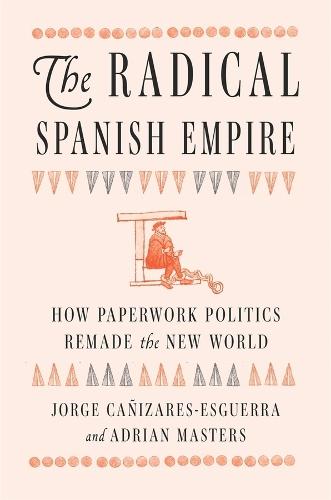
As Spanish conquistadors swept through the New World, the Crown envisioned that a rigidly hierarchical aristocratic order would flourish in their wake. At first, this vision seemed to be within reach: the great conquistadors ruled as noblemen over millions. Yet contrary to all expectations, the Spanish empire in the New World quickly became a hotbed of radical efforts to overturn the emerging order. With the conquistadors in retreat, new enclaves controlled by powerful friars and native lords arose. But they too collapsed, again to the surprise of many. As Jorge Cañizares-Esguerra and Adrian Masters show, these social orders broke down thanks to the challenges mounted by countless individuals across the Spanish Americas-including non-elite Spanish and Indigenous people, women, and the enslaved. To achieve their goals, they turned not only to outright violence but also to massive amounts of paperwork: petitions, complaints, lawsuits, and secret testimonies. Through this grassroots ""lawfare,"" vassals undercut the emerging seigneurial dynasties of the conquistadors, stripped the friars of theocratic authority, and curtailed the might of native lords. Collectively, they spearheaded movements against tyranny and slavery, proposed and challenged laws, produced new types of knowledge, created archives and historical accounts, and questioned the nature of truth itself. In the process, however, these actors also gradually co-created a lasting new society of orders-one that would solidify in the 1570s with viceroys, bishops, and inquisitors at its apex. Dramatically recasting a pivotal era in colonial history, The Radical Spanish Empire illuminates how the power of paperwork forever transformed the New World.
Full Product Details
Author: Jorge Cañizares-Esguerra ,
Adrian Masters
Publisher: Harvard University Press
Imprint: Harvard University Press
Dimensions:
Width: 15.60cm
, Height: 3.30cm
, Length: 23.50cm
Weight: 0.890kg
ISBN: 9780674986640
ISBN 10: 0674986644
Pages: 472
Publication Date: 10 March 2026
Audience:
College/higher education
,
Postgraduate, Research & Scholarly
Format: Hardback
Publisher's Status: Forthcoming
Availability: Awaiting stock

Reviews
A century of scholarly shibboleths fall with the publication of this book. Advancing their innovative research and synthesizing recent scholarship on the Spanish imperial state, Cañizares-Esguerra and Masters force us to, well, radically rethink our interpretation of the Catholic Empire, to understand it as a territorially enormous experiment in representation and governance. A masterpiece that will change the way scholars study the relationship of Spanish colonialism and political modernity. -- Greg Grandin, author of <i>America, América</i> An explosive, myth-busting, and revelatory book. Cañizares-Esguerra and Masters portray the sixteenth-century Spanish Americas as they really were: dominated by Indigenous political initiatives and changing in favor of those who leveraged paperwork to wage 'lawfare' against elites. -- Felipe Fernández-Armesto, author of <i>1492: The Year the World Began</i> Cañizares-Esguerra and Masters shatter the myth of Spanish absolutism, revealing that radical social upheaval in the sixteenth century was driven by Indigenous commoners and enslaved people through petitions, lawsuits, and 'paperwork riots.' This bold thesis is a true paradigm shift—one that this and future generations of historians must contend with. The gauntlet is thrown down not only to scholars of Latin America but to all who study tyranny, democracy, and the early modern world. -- S. Elizabeth Penry, author of <i>The People Are King: The Making of an Indigenous Andean Politics</i> This book is a bomb waiting to go off in our field, and I am here for it. Fundamentally, it will force many people to rethink important questions about ethnogenesis, liberal and decolonial narratives of sixteenth-century Spanish America, the role of law in colonial social hierarchies, and paperwork itself. The mind-blowing scope of the research is something to behold. -- Martin Austin Nesvig, author of <i>The Women Who Threw Corn: Witchcraft and Inquisition in Sixteenth-Century Mexico</i> A creative and engaging history of political struggle in the New World. It has long been known that lawyers and notaries made possible—or rendered impossible—the aspirations of conquistadors, colonizers, and even the colonized. But until now, nobody has thought to place paperwork at the center of a new scholarly vision of the early Spanish American Empire. -- Matthew Restall, author of <i>The Nine Lives of Christopher Columbus</i> An original and provocative history, illuminating the creation of Spain’s American empire from the bottom up. As Cañizares-Esguerra and Masters show, both native peoples and Spanish commoners strategically employed Spanish law to defend their interests against elites. This innovative and erudite book demonstrates how radical challenges to the existing social order ultimately initiated a new kind of colonial society. -- Stuart B. Schwartz, author of <i>Blood and Boundaries: The Limits of Religious and Racial Exclusion in Early Modern Latin America</i>
A creative and engaging history of political struggle in the New World. It has long been known that lawyers and notaries made possible—or rendered impossible—the aspirations of conquistadors, colonizers, and even the colonized. But until now, nobody has thought to place paperwork at the center of a new scholarly vision of the early Spanish American Empire. -- Matthew Restall, author of <i>The Nine Lives of Christopher Columbus<i> An original and provocative history, illuminating the creation of Spain’s American empire from the bottom up. As Cañizares-Esguerra and Masters show, both native peoples and Spanish commoners strategically employed Spanish law to defend their interests against elites. This innovative and erudite book demonstrates how radical challenges to the existing social order ultimately initiated a new kind of colonial society. -- Stuart B. Schwartz, author of <i>Blood and Boundaries: The Limits of Religious and Racial Exclusion in Early Modern Latin America</i>
A creative and engaging history of political struggle in the New World. It has long been known that lawyers and notaries made possible—or rendered impossible—the aspirations of conquistadors, colonizers, and even the colonized. But until now, nobody has thought to place paperwork at the center of a new scholarly vision of the early Spanish American Empire. -- Matthew Restall, author of <i>The Nine Lives of Christopher Columbus</i> An original and provocative history, illuminating the creation of Spain’s American empire from the bottom up. As Cañizares-Esguerra and Masters show, both native peoples and Spanish commoners strategically employed Spanish law to defend their interests against elites. This innovative and erudite book demonstrates how radical challenges to the existing social order ultimately initiated a new kind of colonial society. -- Stuart B. Schwartz, author of <i>Blood and Boundaries: The Limits of Religious and Racial Exclusion in Early Modern Latin America</i> A century of scholarly shibboleths fall with the publication of this book. Advancing their innovative research and synthesizing recent scholarship on the Spanish imperial state, Cañizares-Esguerra and Masters force us to, well, radically rethink our interpretation of the Catholic Empire, to understand it as a territorially enormous experiment in representation and governance. A masterpiece that will change the way scholars study the relationship of Spanish colonialism and political modernity. -- Greg Grandin, author of <i>America, América</i>
Author Information
Jorge Cañizares-Esguerra is Alice Drysdale Sheffield Professor of History at the University of Texas at Austin. He is the author of How to Write the History of the New World, Puritan Conquistadors, and Nature, Empire, and Nation. Adrian Masters is Project Leader in the Department of History at Trier University and the author of We, the King: Creating Royal Legislation in the Sixteenth-Century Spanish New World.