Overview
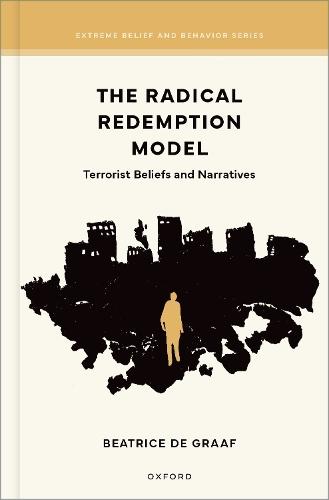
What do convicted terrorists really believe when they say they committed their acts in the name of a higher authority? Combining oral history, social psychology, and historical research, Beatrice de Graaf explores the belief systems that underlie acts of religious terrorism. From interviews with terrorist detainees from the Netherlands, Syria, Pakistan, and IndonesiaDLmostly jihadists and some right-wing extremistsDLde Graaf reconstructs life stories of surrender, struggle, sacrifice, and redemption. She unravels the nexus between extreme beliefs and terrorist activity, presenting a grounded theory of radical redemption, in which people commit acts of violence as personal, psychological quests for significance. De Graaf's analysis examines how these beliefs developed in individual cases, and what happened when the hoped-for redemption was not fulfilled. Ultimately, by focusing on the extreme beliefs of individuals, The Radical Redemption Model offers a new understanding of the elusive and perennial connection between religion and violence, and between radical beliefs and terrorism.
Full Product Details
Author: Beatrice de Graaf (Distinguished Professor and Chair in the History of International Relations, Distinguished Professor and Chair in the History of International Relations, Utrecht University)
Publisher: Oxford University Press Inc
Imprint: Oxford University Press Inc
Dimensions:
Width: 16.50cm
, Height: 2.60cm
, Length: 23.20cm
Weight: 0.649kg
ISBN: 9780197792469
ISBN 10: 0197792464
Pages: 360
Publication Date: 22 April 2025
Audience:
Professional and scholarly
,
Professional & Vocational
Format: Hardback
Publisher's Status: Active
Availability: To order

Stock availability from the supplier is unknown. We will order it for you and ship this item to you once it is received by us.
Reviews
The Radical Redemption Model offers readers a rare peek into the minds of young men who are willing to die for causes greater than themselves. This is a welcome addition to our current understanding of modern terrorism. * C. C. Lovett, Choice *
The Radical Redemption Model offers readers a rare peek into the minds of young men who are willing to die for causes greater than themselves. This is a welcome addition to our current understanding of modern terrorism. * C. C. Lovett, Choice * De Graaf's book provides a basis for encouraging researchers and institutions to conduct more primary research with extremists without prejudice, to understand the stories that they tell themselves and how those stories intersect with motivations and (violent) actions. * Charlotte Plews, International Affairs *
Author Information
Beatrice de Graaf is Distinguished Professor and holds the Chair of History of International Relations at Utrecht University. She has authored and edited several books such as Fighting Terror after Napoleon, for which she received the Arenberg Prize for the Best Book in European History in 2022. She won the Stevin Prize in 2018, which is widely regarded as one of the highest academic distinctions in the Netherlands. She is also an editor of the Journal of Modern European History and of Terrorism and Political Violence.