Overview
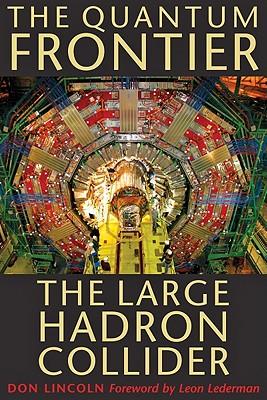
The highest-energy particle accelerator ever built, the Large Hadron Collider runs under the border between France and Switzerland. It leapt into action on September 10, 2008, amid unprecedented global press coverage and widespread fears that its energy would create tiny black holes that could destroy the earth. By smashing together particles smaller than atoms, the LHC recreates the conditions hypothesized to have existed just moments after the big bang. Physicists expect it to aid our understanding of how the universe came into being and to show us much about the standard model of particle physics-even possibly proving the existence of the mysterious Higgs boson. In exploring what the collider does and what it might find, Don Lincoln explains what the LHC is likely to teach us about particle physics, including uncovering the nature of dark matter, finding micro black holes and supersymmetric particles, identifying extra dimensions, and revealing the origin of mass in the universe. Thousands of physicists from around the globe will have access to the LHC, none of whom really knows what outcomes will be produced by the 7.7 billion project. Whatever it reveals, the results arising from the Large Hadron Collider will profoundly alter our understanding of the cosmos and the atom and stimulate amateur and professional scientists for years to come.
Full Product Details
Author: Don Lincoln (Fermilab) ,
Leon M. Lederman
Publisher: Johns Hopkins University Press
Imprint: Johns Hopkins University Press
Dimensions:
Width: 15.20cm
, Height: 1.90cm
, Length: 22.90cm
Weight: 0.408kg
ISBN: 9780801891441
ISBN 10: 0801891442
Pages: 192
Publication Date: 05 May 2009
Recommended Age: From 18
Audience:
General/trade
,
College/higher education
,
General
,
Undergraduate
Format: Hardback
Publisher's Status: Active
Availability: Out of stock

The supplier is temporarily out of stock of this item. It will be ordered for you on backorder and shipped when it becomes available.
Reviews
[A] practical attitude is typical of The Quantum Frontier... a useful experimental companion to the many theory-oriented books on particle physics. Physics World 2010 What Lincoln does brilliantly is dispel the popular myth that the LHC was built solely to discover the Higgs boson, or 'God particle'. This is a project with a far wider reach... His fresh analogies and insights make this book very readable. -- Valerie Jamieson New Scientist 2009 I deeply enjoyed Lincoln's very accessible discussions of antimatter and Cerenkov radiation. And the in-depth explanations of what the different calorimeters and solenoids do inside the LHC's vast underground accelerator are fascinating. -- Sally Adee IEEE Spectrum Magazine 2009 The Quantum Frontier: The Large Hadron Collider should be in every physics library: it offers an exciting assessment of the Large Haldron Collider, which runs between France and Switzerland, and surveys just why its opening is so significant. You needn't be a physicist to appreciate its importance, and the clear explorations in layman's terms imparts excitement. Perfect for any general lending library strong in science. Midwest Book Review 2009 A Fermilab scientist conveys the excitement surrounding the LHC. Science News 2009 The Quantum Frontier... prepares readers with what they can anticipate when the LHC becomes operational. -- John S. Rigden and Roger H. Stuewer Physics in Perspective 2009 Don Lincoln's playful, energetic style took me from the fundamentals of contemporary physics through to the extremely complex and sophisticated guts of the LHC experiments, touching on everything from the Earth's 'inevitable' destruction by black holes to speculated future physics experiements in a post-LHC era. Cracking it open for the first time, I was worried that a book taking under 200 pages to cover such an ambitious topic would be riddled with sterile facts listed on after the other. But the contrary is what I found. -- Jordan Juras CERN Courier 2009 The book is written in a very readable and entertaining style, and I can warmly recommend it to anyone with more than a passing interest in science. -- John L. Hutchison infocus 2010
Don Lincoln's book should be in the hands of everyone interested in physics - even if only vaguely. It conveys the excitement particle physicists feel - and everyone else should feel - about the start of the Large Hadron Collider. - Gabor Domokos, The Johns Hopkins University
Author Information
Author Website: http://drdonlincoln.fnal.gov/
Don Lincoln is a scientist with the Fermi National Accelerator Laboratory. He is the author of Understanding the Universe: From Quarks to the Cosmos.