Overview
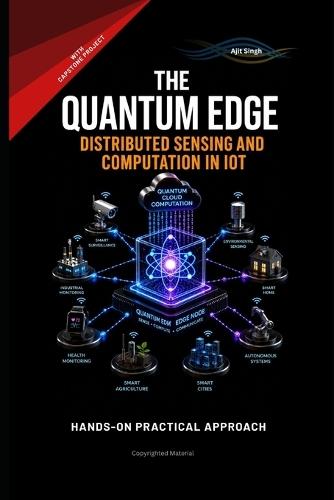
This book is written to be a definitive, practical guide for building the next generation of intelligent Internet of Things (IoT) systems. It operates from a simple but powerful thesis: the future of IoT lies not in the cloud, but at the network's edge, enhanced with sensing and computational capabilities far beyond what is considered standard today. ""The Quantum Edge: Distributed Sensing and Computation in IoT"" is your blueprint for designing and deploying these advanced systems. Philosophy The core philosophy of this book is pragmatic implementation over abstract theory. It serves as an accessible bridge to these advanced technologies, not a barrier. I demystified the term ""quantum"" by treating it from a practical engineer's perspective. A quantum sensor is a component with a data sheet and an output; a quantum-inspired algorithm is a powerful software tool you can code in Python. My focus is relentlessly on the ""how""-how to architect a system for high-fidelity data, how to write the code to process it, and how to implement optimization logic on a resource-constrained device. The skills taught here represent the convergence of IoT, Edge AI, and applied Quantum Technologies, enabling you to build systems that are inherently more perceptive, efficient, and intelligent. Key Features 1. Practical Focus: A relentless emphasis on implementation, with over 80% of the content geared towards hands-on development of solutions and applications. 2. Beginner to Advanced: Starts with foundational principles, making it accessible to newcomers, but progresses to advanced topics and a complex capstone project that will challenge and engage experienced developers. 3. Quantum Sensing Integration: Provides a unique, practical guide on how to architect IoT systems to ingest and process data from next-generation quantum sensors. 4. Quantum-Inspired Edge Computation: A clear, step-by-step guide to implementing powerful optimization algorithms (like simulated annealing) on resource-constrained edge devices for tasks like power management and data routing. 5. End-to-End Project-Based Learning: The final chapter is a complete, working DIY capstone project, including hardware lists, wiring diagrams, fully explained code, and deployment instructions. 6. Architectural Blueprints: Provides clear design patterns, models, and frameworks for building robust, scalable, and secure distributed IoT systems. Key Takeaways Upon completing this book, you will be able to: 1. Design and Architect modern, distributed IoT systems using edge and fog computing principles. 2. Understand the Principles of quantum sensing and know how to integrate and process data from high-precision sensors. 3. Implement Quantum-Inspired Algorithms on edge devices to solve real-world optimization problems. 4. Develop, Deploy, and Manage a complete, end-to-end Quantum Edge application. 5. Secure the Communication Fabric of a distributed IoT network using protocols like MQTT over TLS. 6. Gain a Competitive Advantage by mastering the convergence of IoT, edge computing, and applied quantum technologies. Disclaimer: Earnest request from the Author. Kindly go through the table of contents and refer kindle edition for a glance on the related contents. Thank you for your kind consideration!
Full Product Details
Author: Ajit Singh
Publisher: Independently Published
Imprint: Independently Published
Dimensions:
Width: 15.20cm
, Height: 1.40cm
, Length: 22.90cm
Weight: 0.367kg
ISBN: 9798197020956
Pages: 272
Publication Date: 15 May 2026
Audience:
General/trade
,
General
Format: Paperback
Publisher's Status: Active
Availability: Available To Order

We have confirmation that this item is in stock with the supplier. It will be ordered in for you and dispatched immediately.