|
|
|||
|
||||
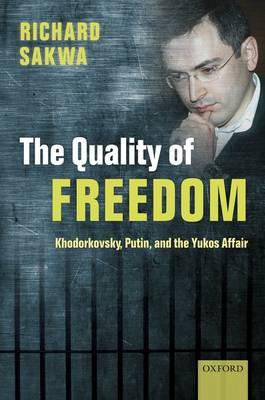
OverviewMikhail Khodorkovsky, the head of the Yukos oil company, was arrested on 25 October 2003. This event proved a turning point for post-communist Russia and for Vladimir Putin's presidency. By that time Khodorkovsky had become one of the world's richest and most powerful men, while Yukos had been transformed into a vertically-integrated oil company that was set to go global. On all counts, this looked like a success story for Russia, but it was precisely at this moment that the authorities struck, and Khodorkovsky was later sentenced to eight years in jail. This book explains why all of this occurred. It provides some theoretical discussion as well as detailed analysis of the rise and fall of Yukos, and with it the development of the Russian oil industry. It also examines the relationship between the state and big business during Russia's traumatic shift from the Soviet planned economy to the market system, as well as Russia's emergence as an 'energy superpower'. The attack on Khodorkovsky had far-reaching political and economic consequences but it also raised fundamental questions about the quality of freedom in contemporary Russia as well as in the world at large. Full Product DetailsAuthor: Richard SakwaPublisher: Oxford University Press Imprint: Oxford University Press Dimensions: Width: 15.60cm , Height: 2.80cm , Length: 23.40cm Weight: 0.820kg ISBN: 9780199211579ISBN 10: 0199211574 Pages: 448 Publication Date: 01 May 2009 Audience: College/higher education , Professional and scholarly , Undergraduate , Postgraduate, Research & Scholarly Format: Hardback Publisher's Status: Active Availability: To order Stock availability from the supplier is unknown. We will order it for you and ship this item to you once it is received by us. Table of ContentsAcknowledgements; Preface; 1. Introduction: freedom and property; 2. The birth and transformation of Yukos; 3. The state and the oligarchs; 4. Why Yukos?; 5. The assault against Yukos; 6. Khodorkovsky goes to jail; 7. There will be blood; 8. From oligarch to 'dissident'; 9. Propaganda and public opinion; 10. Political and moral economy; 11. Polity and power; 12. Conclusion: a question of interpretation?; Bibliography; IndexReviewsAuthor InformationProfessor Richard Sakwa is Professor of Russian and European Politics. He lectured at the University of Essex and the University of California, Santa Cruz, before joining the University of Kent in 1987. He has published widely on Soviet and Russian politics and history and on broader questions of international affairs and comparative democratisation. Tab Content 6Author Website:Countries AvailableAll regions |
||||