Overview
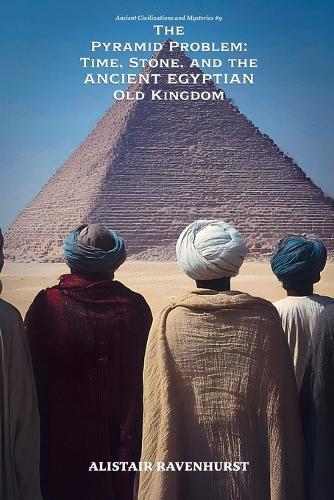
For more than four thousand years, the pyramids of Egypt have stood as the most extraordinary monuments ever created by human hands. Rising from the desert plateau, these colossal structures continue to inspire awe, admiration, and endless debate. Yet behind their beauty lies a deeper question-how did an ancient civilization move millions of tons of stone and assemble them with remarkable precision thousands of years ago? And how did they accomplish it within the timeframes traditionally assigned to the Old Kingdom? The Pyramid Problem explores the engineering realities behind Egypt's most famous monuments. Moving beyond legend and speculation, this book examines the pyramids as construction projects-analyzing the logistics of quarrying, transport, workforce organization, and the relentless mathematics of building at monumental scale. Drawing on archaeology, engineering analysis, and the historical record, it reveals how the pyramid age emerged, how rapidly it developed, and why these ancient achievements still challenge modern understanding. For readers fascinated by ancient Egypt, archaeology, and the limits of human ingenuity, this book offers a compelling new way to look at the world's greatest monuments.
Full Product Details
Author: Alistair Ravenhurst
Publisher: Ancient Civilization
Imprint: Ancient Civilization
Volume: 9
Dimensions:
Width: 15.20cm
, Height: 1.40cm
, Length: 22.90cm
Weight: 0.363kg
ISBN: 9798233259081
Pages: 270
Publication Date: 13 March 2026
Audience:
General/trade
,
General
Format: Paperback
Publisher's Status: Active
Availability: Available To Order

We have confirmation that this item is in stock with the supplier. It will be ordered in for you and dispatched immediately.
Author Information
Alistair Ravenhurst is an independent author and researcher whose work sits at the intersection of comparative mythology, ancient history, and archaeological interpretation. Trained in the close reading of mythic texts and historical traditions-and informed by archaeological method, site formation theory, and paleoenvironmental research-he investigates how human societies encode upheaval, migration, and cultural rupture into enduring narrative forms. His writing is characterized by a disciplined, evidence-minded approach: distinguishing between primary sources, scholarly consensus, and responsible inference while tracing the long-term continuity of motifs that appear across widely separated civilizations. Ravenhurst's research interests include catastrophe memory and oral tradition, coastal settlement and submerged landscapes, early monumentality and calendrical systems, and the ways political authority is shaped by sacred time and ancestral origins. Drawing on scholarship in Quaternary climate history, geoarchaeology, and myth studies, he examines how environmental shocks can fragment material evidence while preserving cultural remembrance through story, ritual, and symbol. He writes for readers seeking academically grounded exploration with narrative momentum-books that treat the ancient past as a field of inquiry where the most enduring questions are not merely what happened, but how humanity remembered it, transmitted it, and rebuilt after it.