Overview
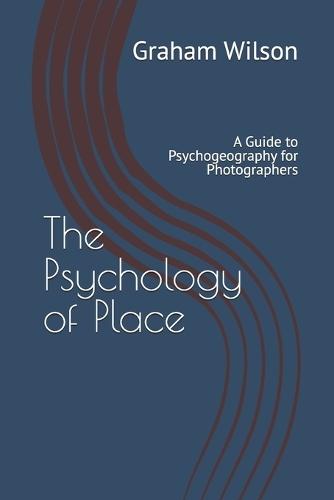
The Psychology of Place - A Guide to Psychogeography for Photographers explores how urban environments shape perception, emotion, and behaviour, and how photography can investigate these relationships. Drawing on Guy Debord and the Situationist International, it introduces psychogeography as a way to understand the emotional contours of cities through exploratory wandering. The book weaves in later insights from sociology, geography, and photographic practice to build a practical, reflective framework for contemporary image-making. It argues that the city is not a neutral backdrop but an active force influencing how people feel and act. Streets, buildings, infrastructure, and public spaces guide movement, attention, and social interaction. Referencing thinkers such as Henri Lefebvre and Pierre Bourdieu, the text shows how power, social relations, and cultural histories become embedded in space, giving urban environments layers of meaning beyond their physical form. A central method is the dérive, or drift, in which individuals move through the city guided by curiosity rather than purpose. This mode of walking disrupts habitual routes and reveals overlooked spaces, transitions between districts, and subtle shifts in atmosphere. It encourages heightened attention to light, sound, texture, and spatial arrangement. Through repeated exploration, patterns emerge in how environments shape emotional responses. Photography functions as both observation and interpretation. The camera records fragments of urban experience, from architectural details to traces of daily life. Psychogeographic photography has no fixed style: some images follow documentary clarity, while others use reflections, layering, or weather to evoke sensory experience. What matters is the relationship between image and place rather than adherence to aesthetic conventions. The book also examines how photographers construct meaning through selection, framing, and sequencing. Individual images rarely stand alone; sequences reveal movement, changing atmospheres, and contrasts across the city. Photography thus becomes a form of inquiry into urban structure and experience. Ethical and political concerns run throughout. Urban spaces reflect inequalities of wealth, access, and power, and photographic representation shapes how these spaces are understood. The book encourages reflexivity, asking photographers to consider how their background influences what they see and how they depict it. Issues such as surveillance, public space, and responsibilities toward communities are addressed. Across its chapters, the text moves from theory to practice. It explores how perception is shaped by social experience, how urban form influences behaviour, and how walking can serve as research. It then develops photographic strategies for documenting and interpreting place, including mapping, sequencing, and reflective practice. The final sections emphasise psychogeography as an ongoing process rather than a fixed method. Cities change continually, and repeated exploration reveals new relationships between environment, memory, and experience. Photography becomes part of this evolving engagement, offering a way to record and reflect on encounters with the urban world. Overall, the book positions psychogeographic photography as both a way of seeing and a way of thinking. It invites photographers to move beyond surface description and engage critically with the spaces they inhabit, allowing the city to emerge as a dynamic field of meaning shaped by structure and lived experience.
Full Product Details
Author: Graham Wilson
Publisher: Independently Published
Imprint: Independently Published
Dimensions:
Width: 15.20cm
, Height: 1.00cm
, Length: 22.90cm
Weight: 0.263kg
ISBN: 9798255711390
Pages: 190
Publication Date: 09 April 2026
Audience:
General/trade
,
General
Format: Paperback
Publisher's Status: Active
Availability: Available To Order

We have confirmation that this item is in stock with the supplier. It will be ordered in for you and dispatched immediately.