Overview
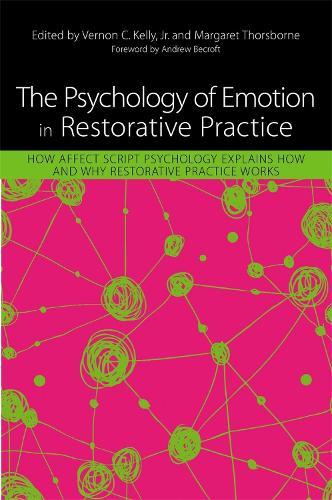
How and why does restorative practice (RP) work? This book presents the biological theory, affect script psychology (ASP), behind RP, and shows how it works in practice in different settings. ASP explains how the central nervous system triggers 'affects' which are the basis of all human motivation and emotion. The book presents a clear explanation of what ASP is, how it relates to RP, and how ASP helps practitioners to understand relationships, emotions and dynamics in their work. The chapters are based around case studies which demonstrate RP in criminal justice, organizational and education settings. They show how theory links to practice, and how having a deep understanding of the theory has helped practitioners to be successful in their work. Providing an accessible explanation of how RP works, this book will be invaluable to all RP practitioners in any setting, as well as RP students and academics.
Full Product Details
Author: William Hansberry , Vernon Kelly , Siân Williams , John Bruce Lennox
Publisher: Jessica Kingsley Publishers
Imprint: Jessica Kingsley Publishers
Dimensions:
Width: 15.00cm
, Height: 1.80cm
, Length: 22.80cm
Weight: 0.405kg
ISBN: 9781849059749
ISBN 10: 1849059748
Pages: 272
Publication Date: 21 May 2014
Audience:
Professional and scholarly
,
College/higher education
,
Professional & Vocational
,
Postgraduate, Research & Scholarly
Format: Paperback
Publisher's Status: Active
Availability: Available To Order 
We have confirmation that this item is in stock with the supplier. It will be ordered in for you and dispatched immediately.
Table of Contents
Foreword, Judge Andrew Becroft. Preface. Section 1. The Theory Underpinning Restorative Justice. 1. Caring, Restorative Practice and the Biology of Emotion. Vernon C. Kelly, Jr, Chairman, The Tomkins Institute, USA. 2. Interpersonal Caring, Social Disciple and a Blueprint for Restorative Healing. Vernon C. Kelly, Jr. Section 2. The Theory in Action in Communities and the Criminal Justice System. 3. Being Emotional, Being Human: Creating Healthy Communities and Institutions by Honoring our Biology. Lauren Abramson, Founding Director, Community Conferencing Center, Baltimore, Maryland, USA. 4. Restorative Practice in a Policing Environment: Understanding Affect Will Help. John Lennox, Director, Restorative Practices International, Australia. 5. Forgiveness. Katy Hutchison, restorative justice advocate, author and professional speaker, Canada. 6. A Necessary Discovery: Why the Theory is Important. Matthew W. Casey, Counselor and Restorative Practice Consultant, Goulburn Family Support Service and Matt Casey Counselling, Australia, Bill Curry, Counselor, Goulburn Family Support Service, Australia, Anne Burton, Service Coordinator, Goulburn Family Support Service, Australia and Katherine Gribben, Counselor, Goulburn Family Support Service, Australia. Section 3. The Theory in Action in Organizational Settings. 7. Keep Calm and Carry On: From Fear to Fun Over Two Years in a British Youth Arts Organization. Sian Williams, Principal Consultant, Thorsborne and Associates, UK. 8. Drama Queens. Margaret Thorsborne, Director, Margaret Thorsborne and Associates, Australia and UK. Section 4. The Theory in Action in Education. 9. Affect and Emotion in a Restorative School. Graeme George, teacher and trainer, RPforSchools.net, Australia. 10. They Suck, School Sucks, I Suck: The Secret Emotional Life of a Child with a Brain that Learns Differently. Bill Hansberry, teacher, counselors and mentor, Fullarton House, Australia. List of Contributors. Index.
Reviews
This is an impressive, thought-provoking and well-written book. It is a valuable contribution on the theory of Restorative thinking, justice and practice. The way in which the authors have cleverly translated theory into practice is both authentic and informative. This really comes alive through the sharing of real inspiring case studies, which allows us to access the theory in a way that translates into every day practice. I would recommend this book to all those wanting to understand Restorative Practice and its true value in society today and the future. -- Mark Finnis, Director, Mark Finnis Training and Consultancy and Trustee of Restorative Justice Council, UK This is a splendid contribution to clarifying what we know and what we do not yet understand about what makes restorative justice fail or succeed. While much research and reflective practice remains to be done to fill great voids in our understanding, this book takes big steps forward. It is at once theoretically sophisticated and practically useful. -- John Braithwaite, Distinguished Professor, Australian National University
This is an impressive, thought-provoking and well-written book. It is a valuable contribution on the theory of Restorative thinking, justice and practice. The way in which the authors have cleverly translated theory into practice is both authentic and informative. This really comes alive through the sharing of real inspiring case studies, which allows us to access the theory in a way that translates into every day practice. I would recommend this book to all those wanting to understand Restorative Practice and its true value in society today and the future. -- Mark Finnis, Director, Mark Finnis Training and Consultancy and Trustee of Restorative Justice Council, UK This is a splendid contribution to clarifying what we know and what we do not yet understand about what makes restorative justice fail or succeed. While much research and reflective practice remains to be done to fill great voids in our understanding, this book takes big steps forward. It is at once theoretically sophisticated and practically useful. -- John Braithwaite, Distinguished Professor, Australian National University This books sets out to provide a theory to underpin restorative practice from a biological and evolutionary perspective. It also aims to illustrate the application of this theory in a number of contexts. This book demonstrates how the theory links to practice and how practitioners have used the theory in their work with offenders... This book gives a clear rationale for why restorative practice can reduce harm... We learn about how and when to respond through scripts learnt by repeated experiences of stimulus-affect-response patterns with support from our cognitive systems... This book address the important role of facilitating emotional expression and sharing the theoretical underpinning of the process with clients... I feel the book's greatest impact could be for those working with young people in schools for difficulties such as attachment disorders, mental health difficulties and learning difficulties in order to give the students and those working with them the skills they need to manage their emotional and promote relationship building and act as prevention for further destructive behaviour patterns. It is therefore fitting that it is with this context that the book concludes -- Nina Robinson, Trainee Educational Psychologist SEBDA This is far one of the most interesting books I have read on restorative justice recently. I recommend it to anyone with an open mind to the many possibilities that restorative justice can bring both in relation to how we resolve criminal conflicts, but also conflicts within ourselves, between our friends and families... between our mind an soul. Internet Journal of Restorative Justice (IJRJ)
This is an impressive, thought-provoking and well-written book. It is a valuable contribution on the theory of Restorative thinking, justice and practice. The way in which the authors have cleverly translated theory into practice is both authentic and informative. This really comes alive through the sharing of real inspiring case studies, which allows us to access the theory in a way that translates into every day practice. I would recommend this book to all those wanting to understand Restorative Practice and its true value in society today and the future. -- Mark Finnis, Director, Mark Finnis Training and Consultancy and Trustee of Restorative Justice Council, UK This is a splendid contribution to clarifying what we know and what we do not yet understand about what makes restorative justice fail or succeed. While much research and reflective practice remains to be done to fill great voids in our understanding, this book takes big steps forward. It is at once theoretically sophisticated and practically useful. -- John Braithwaite, Distinguished Professor, Australian National University This books sets out to provide a theory to underpin restorative practice from a biological and evolutionary perspective. It also aims to illustrate the application of this theory in a number of contexts. This book demonstrates how the theory links to practice and how practitioners have used the theory in their work with offenders... This book gives a clear rationale for why restorative practice can reduce harm... We learn about how and when to respond through scripts learnt by repeated experiences of stimulus-affect-response patterns with support from our cognitive systems... This book address the important role of facilitating emotional expression and sharing the theoretical underpinning of the process with clients... I feel the book's greatest impact could be for those working with young people in schools for difficulties such as attachment disorders, mental health difficulties and learning difficulties in order to give the students and those working with them the skills they need to manage their emotional and promote relationship building and act as prevention for further destructive behaviour patterns. It is therefore fitting that it is with this context that the book concludes -- Nina Robinson, Trainee Educational Psychologist SEBDA
Author Information
Margaret Thorsborne is the Managing Director of Transformative Justice Australia (Queensland) and Thorsborne and Associates in London, UK, a company committed to improving the way people relate to each other in the workplace, schools and other communities. With Peta Blood, Margaret co-founded Restorative Practices International (RPI), the world's first international membership organization for restorative practitioners. Margaret lives on the Sunshine Coast in Australia.
Tab Content 6
Author Website:
Countries Available
All regions
|