Overview
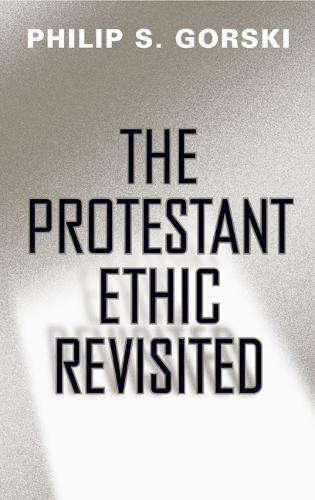
Essays on the contradictory resurgence of religion and liberalism in the twenty-first century by one of the most important voices in the study of the sociology of religion
Full Product Details
Author: Philip S. Gorski
Publisher: Temple University Press,U.S.
Imprint: Temple University Press,U.S.
Dimensions:
Width: 15.20cm
, Height: 2.80cm
, Length: 22.90cm
Weight: 0.567kg
ISBN: 9781439901892
ISBN 10: 1439901899
Pages: 342
Publication Date: 14 October 2011
Audience:
College/higher education
,
Postgraduate, Research & Scholarly
Format: Hardback
Publisher's Status: Active
Availability: In Print

This item will be ordered in for you from one of our suppliers. Upon receipt, we will promptly dispatch it out to you. For in store availability, please contact us.
Reviews
[R]eligion, and especially ascetic Protestantism, was a very real difference maker in early modern European society. While most historians of the period need no persuading on this score, Gorski's book would be instructive to, for example, certain camps of sociologists that have overlooked religion in their calculations...The introduction [is] stimulating. --The Sixteenth Century Journal, Winter 2012 [A] gracefully executed book. Its author, Philip S. Gorski, is one of the most important voices in the historical sociology of religion today... [Gorski] demonstrates an ability to furnish smooth presentations of dense historical data and lucid accounts of complex social processes... Not only are some of the essays by now 'veritable classics'...their juxtaposition heightens the sense that the attentive reader derives of Gorski's project and the skill with which he has pursued it. --Sociology of Religion, Summer 2013
An excellent set of essays, among which some are veritable classics. Gorski has established himself as one of the leading sociologists of his generation, and his essays in the sociology of religion have contributed greatly to his high international reputation. He has developed a wide-ranging comparative approach to religious sociology, not to mention some much-needed analytic sophistication, and has helped to reintegrate the area with already vibrant subfields such as historical and comparative sociology, political sociology, and sociological theory. The essays in The Protestant Ethic Revisited are important milestones in the recent transformation of the field. Gorski's work is no flash in the pan. It is enduringly valuable scholarship. <br>--Mustafa Emirbayer, Professor of Sociology at the University of Wisconsin-Madison
Author Information
Philip S. Gorski is Professor of Sociology and Religious Studies and Codirector of the Center for Comparative Research at Yale University. He is the author of The Disciplinary Revolution: Calvinism and the Rise of the State in Early Modern Europe.