Overview
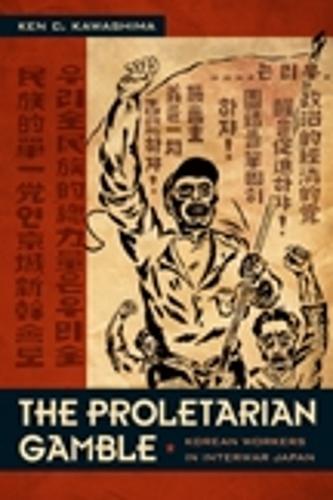
Koreans constituted the largest colonial labor force in imperial Japan during the 1920s and 1930s. Caught between the Scylla of agricultural destitution in Korea and the Charybdis of industrial depression in Japan, migrant Korean peasants arrived on Japanese soil amid extreme instability in the labor and housing markets. In The Proletarian Gamble, Ken C. Kawashima maintains that contingent labor is a defining characteristic of capitalist commodity economies. He scrutinizes how the labor power of Korean workers in Japan was commodified, and how these workers both fought against the racist and contingent conditions of exchange and combated institutionalized racism.Kawashima draws on previously unseen archival materials from interwar Japan as he describes how Korean migrants struggled against various recruitment practices, unfair and discriminatory wages, sudden firings, racist housing practices, and excessive bureaucratic red tape. Demonstrating that there was no single Korean “minority,” he reveals how Koreans exploited fellow Koreans and how the stratification of their communities worked to the advantage of state and capital. However, Kawashima also describes how, when migrant workers did organize-as when they became involved in Rōsō (the largest Korean communist labor union in Japan) and in Zenkyō (the Japanese communist labor union)-their diverse struggles were united toward a common goal. In The Proletarian Gamble, his analysis of the Korean migrant workers' experiences opens into a much broader rethinking of the fundamental nature of capitalist commodity economies and the analytical categories of the proletariat, surplus populations, commodification, and state power.
Full Product Details
Author: Ken C. Kawashima
Publisher: Duke University Press
Imprint: Duke University Press
Dimensions:
Width: 15.50cm
, Height: 2.30cm
, Length: 23.60cm
Weight: 0.572kg
ISBN: 9780822343998
ISBN 10: 0822343991
Pages: 312
Publication Date: 17 April 2009
Audience:
Professional and scholarly
,
Professional & Vocational
Format: Hardback
Publisher's Status: Active
Availability: In Print

This item will be ordered in for you from one of our suppliers. Upon receipt, we will promptly dispatch it out to you. For in store availability, please contact us.
Reviews
The Proletarian Gamble provides students of modern Japanese-Korean history with a meticulously researched window into the lives of Korean labor migrants to Japan. Kawashima's efforts will prove invaluable to students of Korean-Japanese affairs, but also to those interested in labor and migration issues, as well. This book should be required reading for all who enjoy the convenience of Japan's extensive railway network, given the critical role that the Koreans described within played in laying much of its foundation. - Mark E. Caprio, Acta Koreana [F]irst-rate, indispensible reading on Korean workers in the Japanese empire... - Jinhee Lee, Journal of Asian Studies Ken Kawashima's book The Proletarian Gamble is a much needed and long overdue contribution to the fields of labor history and zainichi (resident-Korean) studies in Japan... Kawashima offer[s] his readers a highly nuanced, eye-opening account of the experience of Korean day labor, and the role that particular institutions played in shaping that experience. - Samuel Perry, International Journal of Asian Studies [T]his book struck me not only for its stimulating methodologies, but also for its careful empirical observation. This seems to me to be a relatively rare and praiseworthy combination in any academic setting. - Jae-Won Sun, Pacific Affairs This book is at once refreshingly old-fashioned and innovative... Kawashima's study is generally persuasive, in places brilliant... [I]n foregrounding contingency and offering a careful theoretical grounding for his analysis, Kawashima has achieved a great deal. - Andrew Gordon, Journal of Social History Kawashima has delivered a well-researched social history that should be added to the reading list of all serious students of modern Korea and Japan. - Christopher Gerteis, American Historical Review This book establishes Ken C. Kawashima not simply as one of the best students of modern Japanese history in the world, but as one with a rare facility for effective use of theory amid a plethora of primary sources in Japanese and Korean. This book illustrates at once a very detailed daily life of Korean day workers in various Japanese cities, a study thoroughly at home with both modern Japanese and Korean history, and an author who is fully versed in a wide body of theory-Marx, Benjamin, Althusser, Foucault, Zizek, and many others. It is simply the best book in East Asian history that I have read in many years. -Bruce Cumings, University of Chicago The Proletarian Gamble provides students of modern Japanese-Korean history with a meticulously researched window into the lives of Korean labor migrants to Japan. Kawashima's efforts will prove invaluable to students of Korean-Japanese affairs, but also to those interested in labor and migration issues, as well. This book should be required reading for all who enjoy the convenience of Japan's extensive railway network, given the critical role that the Koreans described within played in laying much of its foundation. -- Mark E. Caprio, Acta Koreana [F]irst-rate, indispensible reading on Korean workers in the Japanese empire... -- Jinhee Lee, Journal of Asian Studies [T]his book struck me not only for its stimulating methodologies, but also for its careful empirical observation. This seems to me to be a relatively rare and praiseworthy combination in any academic setting. -- Jae-Won Sun, Pacific Affairs Kawashima has delivered a well-researched social history that should be added to the reading list of all serious students of modern Korea and Japan. -- Christopher Gerteis, American Historical Review Ken Kawashima's book The Proletarian Gamble is a much needed and long overdue contribution to the fields of labor history and zainichi (resident-Korean) studies in Japan... Kawashima offer[s] his readers a highly nuanced, eye-opening account of the experience of Korean day labor, and the role that particular institutions played in shaping that experience. -- Samuel Perry, International Journal of Asian Studies This book is at once refreshingly old-fashioned and innovative... Kawashima's study is generally persuasive, in places brilliant... [I]n foregrounding contingency and offering a careful theoretical grounding for his analysis, Kawashima has achieved a great deal. -- Andrew Gordon, Journal of Social History
This book establishes Ken C. Kawashima not simply as one of the best students of modern Japanese history in the world, but as one with a rare facility for effective use of theory amid a plethora of primary sources in Japanese and Korean. This book illustrates at once a very detailed daily life of Korean day workers in various Japanese cities, a study thoroughly at home with both modern Japanese and Korean history, and an author who is fully versed in a wide body of theory--Marx, Benjamin, Althusser, Foucault, i ek, and many others. It is simply the best book in East Asian history that I have read in many years. --Bruce Cumings, University of Chicago The Proletarian Gamble is the most penetrating analysis of Japanese discrimination against the Koreans that I know of; its scope goes well beyond the confines of Japanese social history or Marxist historiography. Ken C. Kawashima shows how state agencies sought to fulfill the humanistic claims of Japanese colonialism by individualizing the Korean workers and integrating them into the multiethnic nation: they took advantage of the workers' contingent life conditions. By viewing racism as an aspect of the micropolitics of individualization and totalization, Kawashima criticizes the foundational premises of liberalism and the institutionalized framework in which much of area studies is still conducted. --Naoki Sakai, author of Translation and Subjectivity: On Japan and Cultural Nationalism
"""This book establishes Ken C. Kawashima not simply as one of the best students of modern Japanese history in the world, but as one with a rare facility for effective use of theory amid a plethora of primary sources in Japanese and Korean. This book illustrates at once a very detailed daily life of Korean day workers in various Japanese cities, a study thoroughly at home with both modern Japanese and Korean history, and an author who is fully versed in a wide body of theory--Marx, Benjamin, Althusser, Foucault, eiuek, and many others. It is simply the best book in East Asian history that I have read in many years.""--Bruce Cumings, University of Chicago ""The Proletarian Gamble is the most penetrating analysis of Japanese discrimination against the Koreans that I know of; its scope goes well beyond the confines of Japanese social history or Marxist historiography. Ken C. Kawashima shows how state agencies sought to fulfill the humanistic claims of Japanese colonialism by individualizing the Korean workers and integrating them into the multiethnic nation: they took advantage of the workers' contingent life conditions. By viewing racism as an aspect of the micropolitics of individualization and totalization, Kawashima criticizes the foundational premises of liberalism and the institutionalized framework in which much of area studies is still conducted.""--Naoki Sakai, author of Translation and Subjectivity: On ""Japan"" and Cultural Nationalism"
This book establishes Ken C. Kawashima not simply as one of the best students of modern Japanese history in the world, but as one with a rare facility for effective use of theory amid a plethora of primary sources in Japanese and Korean. This book illustrates at once a very detailed daily life of Korean day workers in various Japanese cities, a study thoroughly at home with both modern Japanese and Korean history, and an author who is fully versed in a wide body of theory--Marx, Benjamin, Althusser, Foucault, eiuek, and many others. It is simply the best book in East Asian history that I have read in many years. --Bruce Cumings, University of Chicago The Proletarian Gamble is the most penetrating analysis of Japanese discrimination against the Koreans that I know of; its scope goes well beyond the confines of Japanese social history or Marxist historiography. Ken C. Kawashima shows how state agencies sought to fulfill the humanistic claims of Japanese colonialism by individualizing the Korean workers and integrating them into the multiethnic nation: they took advantage of the workers' contingent life conditions. By viewing racism as an aspect of the micropolitics of individualization and totalization, Kawashima criticizes the foundational premises of liberalism and the institutionalized framework in which much of area studies is still conducted. --Naoki Sakai, author of Translation and Subjectivity: On Japan and Cultural Nationalism
Author Information
Ken C. Kawashima is Associate Professor of East Asian Studies at the University of Toronto.