Overview
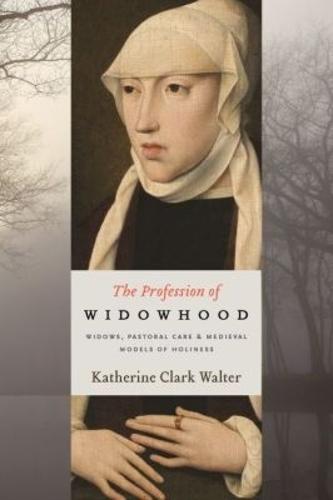
The Profession of Widowhood explores how the idea of ‘true’ widowhood was central to pre-modern ideas concerning marriage and of female identity more generally. The medieval figure of the Christian vere vidua or “good” widow evolved from and reinforced ancient social and religious sensibilities of chastity, loyalty and grief as gendered ‘work.’ The ideal widow was a virtuous woman who mourned her dead husband in chastity, solitude, and most importantly, in perpetuity, marking her as “a widow indeed” (1 Tim 5:5). The widow who failed to display adequate grief fulfilled the stereotype of the ‘merry widow’ who forgot her departed spouse and abused her sexual and social freedom. Stereotypes of widows ‘good’ and ‘bad’ served highly-charged ideological functions in pre-modern culture, and have remained durable even in modern times, even as Western secular society now focuses more on a woman’s recovery from grief and possible re-coupling than the expectation that she remain forever widowed. The widow represented not only the powerful bond created by love and marriage, but also embodied the conventions of grief that ordered the response when those bonds were broken by premature death. This notion of the widow as both a passive memorial to her husband and as an active ‘rememberer’ was rooted in ancient traditions, and appropriated by early Christian and medieval authors who used “good” widowhood to describe the varieties of female celibacy and to define the social and gender order. A tradition of widowhood characterized by chastity, solitude, and permanent bereavement affirmed both the sexual mores and political agenda of the medieval Church. Medieval widows—both holy women recognized as saints and ‘ordinary women’ in medieval daily life—recognized this tradition of professed chastity in widowhood not only as a valuable strategy for avoiding remarriage and protecting their independence, but as a state with inherent dignity that afforded opportunities for spiritual development in this world and eternal merit in the next.
Full Product Details
Author: Katherine Clark Walter
Publisher: The Catholic University of America Press
Imprint: The Catholic University of America Press
Dimensions:
Width: 16.20cm
, Height: 3.80cm
, Length: 23.60cm
Weight: 0.878kg
ISBN: 9780813230191
ISBN 10: 0813230195
Pages: 277
Publication Date: 30 September 2018
Audience:
Professional and scholarly
,
Professional & Vocational
Format: Hardback
Publisher's Status: Active
Availability: Out of stock

The supplier is temporarily out of stock of this item. It will be ordered for you on backorder and shipped when it becomes available.
Reviews
The Profession of Widowhood is grounded in the most recent scholarship and provides a thorough discussion of the evolution of the ideal of pious widowhood within Western Christian Europe from the late antique period through the early modern period. --Sharon Farmer, University of California Santa Barbara Katherine Clark Walter's The Profession of Widowhood represents women after spousal loss across a broad swath of the Christian past from antiquity to early modernity. Her work explores the spiritual meaning and lived experience of a social and religious category neglected in prior scholarship. This author investigates gender, marital status, and celibacy as overlapping frames of women's lives, offering a compelling contribution to the study of women in historical cultures. --Carol Neel, Colorado College Medieval widows are the most visible group of medieval women and have attracted a great deal of scholarly attention. For contemporaries, these unmarried women with sexual experience constituted a potentially disruptive and problematic population. They received special attention from the church, including the opportunity to take vows of chastity that often allowed more freedom than nuns enjoyed but required abstinence and clerical oversight. Katherine Clark Walter gathers together many scattered hints on the vocation of religious widowhood from hagiography, sermon literature, liturgical manuscripts, and canon law. She clearly outlines the theological and cultural issues for widows who sought to adopt a religious life rather than remarrying. This study will be fundamental reading for scholars seeking to understand the church's complex relationship with widows, and with women, during the Middle Ages. --Susan M. Steuer, Western Michigan University
"""The Profession of Widowhood is grounded in the most recent scholarship and provides a thorough discussion of the evolution of the ideal of pious widowhood within Western Christian Europe from the late antique period through the early modern period.""--Sharon Farmer, University of California Santa Barbara""Katherine Clark Walter's The Profession of Widowhood represents women after spousal loss across a broad swath of the Christian past from antiquity to early modernity. Her work explores the spiritual meaning and lived experience of a social and religious category neglected in prior scholarship. This author investigates gender, marital status, and celibacy as overlapping frames of women's lives, offering a compelling contribution to the study of women in historical cultures.""--Carol Neel, Colorado College ""Medieval widows are the most visible group of medieval women and have attracted a great deal of scholarly attention. For contemporaries, these unmarried women with sexual experience constituted a potentially disruptive and problematic population. They received special attention from the church, including the opportunity to take vows of chastity that often allowed more freedom than nuns enjoyed but required abstinence and clerical oversight. Katherine Clark Walter gathers together many scattered hints on the vocation of religious widowhood from hagiography, sermon literature, liturgical manuscripts, and canon law. She clearly outlines the theological and cultural issues for widows who sought to adopt a religious life rather than remarrying. This study will be fundamental reading for scholars seeking to understand the church's complex relationship with widows, and with women, during the Middle Ages.""--Susan M. Steuer, Western Michigan University"
Author Information
Katherine Clark Walter is professor of history at SUNY Brockport.