Overview
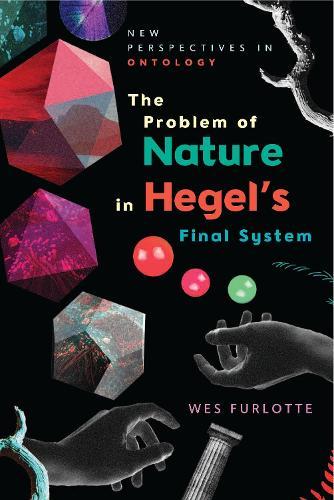
Wes Furlotte critically evaluates Hegel's philosophy of human freedom in terms of his often-disregarded conception of nature. In doing so, he gives us a new portrait of Hegel's final system that is surprisingly relevant for our contemporary world, connecting it with recent work in speculative realism and new materialism. Furlotte offers a sophisticated sense of the fundamental materialism permeating Hegel's concept of freedom and how the former serves as the inescapable precondition of subjectivity and social history. He also reveals how material nature and culture's reactions to it problematize human freedom even threaten it with utter annihilation. This book forces us to reconsider accepted accounts of Hegel's system and to re-evaluate what Hegel, and German Idealism, might still offer us today.
Full Product Details
Author: Wes Furlotte (Professor of Philosophy, University of Ottawa)
Publisher: Edinburgh University Press
Imprint: Edinburgh University Press
Weight: 0.565kg
ISBN: 9781474435536
ISBN 10: 147443553
Pages: 280
Publication Date: 01 August 2018
Audience:
College/higher education
,
Postgraduate, Research & Scholarly
Format: Hardback
Publisher's Status: Active
Availability: Manufactured on demand

We will order this item for you from a manufactured on demand supplier.
Reviews
With clarity and rigor, Wes Furlotte provides a fundamental and sweeping reassessment of Hegel’s intellectual itinerary as well as his mature philosophical project. He convincingly recasts Hegelian Naturphilosophie as absolutely central to Hegel’s larger framework. What is more, Furlotte’s depiction of the situation of human mindedness and culture within the broader expanse of natural reality renders the Hegelian Philosophy of Nature strikingly timely - a live theoretical option for the early-twenty-first century. This book makes crucial contributions to the ongoing reassessment of Hegel’s enduring significance * Professor Adrian Johnston, University of New Mexico *
"With clarity and rigor, Wes Furlotte provides a fundamental and sweeping reassessment of Hegel's intellectual itinerary as well as his mature philosophical project. He convincingly recasts Hegelian Naturphilosophie as absolutely central to Hegel's larger framework. What is more, Furlotte's depiction of the situation of human mindedness and culture within the broader expanse of natural reality renders the Hegelian Philosophy of Nature strikingly timely - a live theoretical option for the early-twenty-first century. This book makes crucial contributions to the ongoing reassessment of Hegel's enduring significance-- ""Professor Adrian Johnston, University of New Mexico"""
With clarity and rigor, Wes Furlotte provides a fundamental and sweeping reassessment of Hegel's intellectual itinerary as well as his mature philosophical project. He convincingly recasts Hegelian Naturphilosophie as absolutely central to Hegel's larger framework. What is more, Furlotte's depiction of the situation of human mindedness and culture within the broader expanse of natural reality renders the Hegelian Philosophy of Nature strikingly timely - a live theoretical option for the early-twenty-first century. This book makes crucial contributions to the ongoing reassessment of Hegel's enduring significance-- ""Professor Adrian Johnston, University of New Mexico""
Author Information
Wes Furlotte is Professor of Philosophy at Dominican University College and part-time Professor of Philosophy at the University of Ottawa. Specialising in German idealism and 19th- and 20th-century European thought, he has published on problems in ontology, epistemology and socio-political philosophy.