Overview
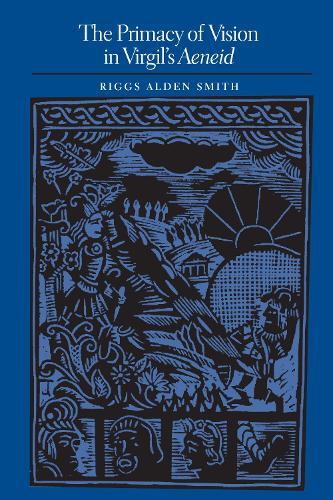
One of the masterpieces of Latin and, indeed, world literature, Virgil's Aeneid was written during the Augustan ""renaissance"" of architecture, art, and literature that redefined the Roman world in the early years of the empire. This period was marked by a transition from the use of rhetoric as a means of public persuasion to the use of images to display imperial power. Taking a fresh approach to Virgil's epic poem, Riggs Alden Smith argues that the Aeneid fundamentally participates in the Augustan shift from rhetoric to imagery because it gives primacy to vision over speech as the principal means of gathering and conveying information as it recounts the heroic adventures of Aeneas, the legendary founder of Rome. Working from the theories of French phenomenologist Maurice Merleau-Ponty, Smith characterizes Aeneas as a voyant-visible, a person who both sees and is seen and who approaches the world through the faculty of vision. Engaging in close readings of key episodes throughout the poem, Smith shows how Aeneas repeatedly acts on what he sees rather than what he hears. Smith views Aeneas' final act of slaying Turnus, a character associated with the power of oratory, as the victory of vision over rhetoric, a triumph that reflects the ascendancy of visual symbols within Augustan society. Smith's new interpretation of the predominance of vision in the Aeneid makes it plain that Virgil's epic contributes to a new visual culture and a new mythology of Imperial Rome.
Full Product Details
Author: Riggs Alden Smith
Publisher: University of Texas Press
Imprint: University of Texas Press
Dimensions:
Width: 15.20cm
, Height: 1.90cm
, Length: 22.90cm
Weight: 0.454kg
ISBN: 9780292726222
ISBN 10: 0292726228
Pages: 271
Publication Date: 15 January 2006
Audience:
Professional and scholarly
,
Professional & Vocational
Format: Paperback
Publisher's Status: Active
Availability: In Print

This item will be ordered in for you from one of our suppliers. Upon receipt, we will promptly dispatch it out to you. For in store availability, please contact us.
Reviews
"""In sum, this book makes an important contribution to the analysis of the Aeneid... It deserves the close attention and lively interest of all scholars of the Aeneid."" Bryn Mawr Classical Review"
In sum, this book makes an important contribution to the analysis of the Aeneid.... It deserves the close attention and lively interest of all scholars of the Aeneid. * Bryn Mawr Classical Review *
In sum, this book makes an important contribution to the analysis of the Aeneid... It deserves the close attention and lively interest of all scholars of the Aeneid. Bryn Mawr Classical Review
Author Information
Riggs Alden Smith is Associate Professor of Classics and Associate Dean of the Honors College at Baylor University.