Overview
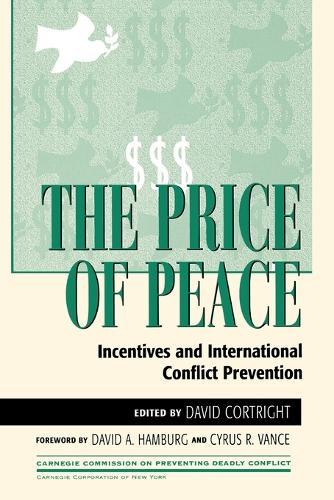
Carrots and sticks have always been used in combination in diplomatic affairs, but scholars and policymakers have focused more on the sticks than the carrots. In this provocative study, policy-savvy scholars examine a wide range of cases—from North Korea to South Africa to El Salvador and Bosnia—to demonstrate the power of incentives to deter nuclear proliferation, prevent armed conflict, defend civil and human rights, and rebuild war-torn societies. The book addresses the 'moral hazard' of incentives, the danger that they can be construed as bribes, concessions, or appeasement. Incentives can take many forms—economic and political, as palpable as fuel oil and as intangible, yet powerful, as diplomatic recognition and 'constructive engagement.' The cases demonstrate that incentives can sometimes succeed when traditional methods—threats, sanctions, or force—fail or are too dangerous to apply.
Full Product Details
Author: David Cortright ,
David A. Hamburg, MD ,
Cyrus R. Vance Jr. ,
Nicole Ball
Publisher: Bloomsbury Publishing Plc
Imprint: Rowman & Littlefield
Dimensions:
Width: 14.90cm
, Height: 2.00cm
, Length: 22.70cm
Weight: 0.485kg
ISBN: 9780847685578
ISBN 10: 0847685578
Pages: 362
Publication Date: 20 November 1997
Audience:
College/higher education
,
Professional and scholarly
,
Undergraduate
,
Postgraduate, Research & Scholarly
Format: Paperback
Publisher's Status: Active
Availability: Manufactured on demand

We will order this item for you from a manufactured on demand supplier.
Reviews
The many excellent case studies in this volume demonstrate that positive inducements of an economic, political, or security character can often be effective in deterring nuclear proliferation, preventing armed conflict, and defending civil and human rights. The study fills an important gap in the scholarly literature. It offers significant help and encouragement to policymakers who must increasingly turn to positive incentive strategies in the post-Cold War era instead of relying on economic coercion and military force, options which are often no longer available or effective.--George, Alexander L.
The focus of this lucidly written and cogently argued edited volume is on the use of incentives in international conflict prevention and resolution. Through case studies, the contributors convincingly demonstrate how political and economic incentives have resulted in the successful resolution of some of the most intractable international conflict of recent decades... This well-informed and sober book is highly recommended for upper-division undergraduate and graduate students, scholars, and practitioners of international relations and diplomacy. -- N. Entessar CHOICE, Spring Hill College The contributions to the volume nicely demonstrate that the effectiveness of incentives is likely to vary, depending on the particular circumstances in which they are applied... Policy makers will benefit from some of the insights generated by the array of case studies. -- Dan Reiter, Emory University Ethnic Conflict Research Digest, September 1998 This is the seminal book on incentives in foreign policy that has been long overdue. The Price of Peace is an important book and well conceived. It is very strong in developing discussions about incentives on which policy recommendations and analysis can be based. The case studies have been thoughtfully chosen to give a realistic assessment of the impact of incentives, and the concluding chapter is a tour de force that summarizes well the current state of knowledge on incentives and rightly suggests that they can become more powerful instruments of foreign policy in the global community. -- I William Zartman, The Paul H. Nitze School of Advanced International Studies, The Johns Hopkins University DIS .40 The many excellent case studies in this volume demonstrate that positive inducements of an economic, political, or security character can often be effective in deterring nuclear proliferation, preventing armed conflict, and defending civil and human rights. The study fills an important gap in the scholarly literature. It offers significant help and encouragement to policymakers who must increasingly turn to positive incentive strategies in the post-Cold War era instead of relying on economic coercion and military force, options which are often no longer available or effective. -- Alexander L. George, Stanford University
The focus of this lucidly written and cogently argued edited volume is on the use of incentives in international conflict prevention and resolution. Through case studies, the contributors convincingly demonstrate how political and economic incentives have resulted in the successful resolution of some of the most intractable international conflict of recent decades... This well-informed and sober book is highly recommended for upper-division undergraduate and graduate students, scholars, and practitioners of international relations and diplomacy. -- N. Entessar CHOICE, Spring Hill College The contributions to the volume nicely demonstrate that the effectiveness of incentives is likely to vary, depending on the particular circumstances in which they are applied... Policy makers will benefit from some of the insights generated by the array of case studies. -- Dan Reiter, Emory University Ethnic Conflict Research Digest, September 1998 This is the seminal book on incentives in foreign policy that has been long overdue. The Price of Peace is an important book and well conceived. It is very strong in developing discussions about incentives on which policy recommendations and analysis can be based. The case studies have been thoughtfully chosen to give a realistic assessment of the impact of incentives, and the concluding chapter is a tour de force that summarizes well the current state of knowledge on incentives and rightly suggests that they can become more powerful instruments of foreign policy in the global community. -- I. William Zartman, The Paul H. Nitze School of Advanced International Studies, The Johns Hopkins University DIS .40 The many excellent case studies in this volume demonstrate that positive inducements of an economic, political, or security character can often be effective in deterring nuclear proliferation, preventing armed conflict, and defending civil and human rights. The study fills an important gap in the scholarly literature. It offers significant help and encouragement to policymakers who must increasingly turn to positive incentive strategies in the post-Cold War era instead of relying on economic coercion and military force, options which are often no longer available or effective. -- Alexander L. George, Stanford University
Author Information
David Cortright is president of the Fourth Freedom Forum and visiting faculty fellow at the Institute for International Peace Studies, University of Notre Dame.