Overview
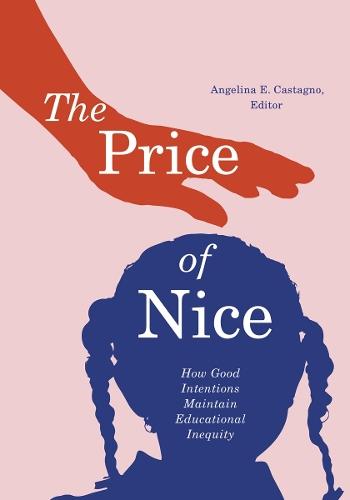
How being ""nice"" in school and university settings works to reinforce racialized, gendered, and (dis)ability-related inequities in education and society Being nice is difficult to critique. Niceness is almost always portrayed and felt as a positive quality. In schools, nice teachers are popular among students, parents, and administrators. And yet Niceness, as a distinct set of practices and discourses, is not actually good for individuals, institutions, or communities because of the way it maintains and reinforces educational inequity. In The Price of Nice, an interdisciplinary group of scholars explores Niceness in educational spaces from elementary schools through higher education to highlight how this seemingly benign quality reinforces structural inequalities. Grounded in data, personal narrative, and theory, the chapters show that Niceness, as a raced, gendered, and classed set of behaviors, functions both as a shield to save educators from having to do the hard work of dismantling inequity and as a disciplining agent for those who attempt or even consider disrupting structures and ideologies of dominance. Contributors: Sarah Abuwandi, Arizona State U; Colin Ben, U of Utah; Nicholas Bustamante, Arizona State U; Aidan/Amanda J. Charles, Northern Arizona U; Jeremiah Chin, Arizona State U; Sally Campbell Galman, U of Massachusetts; Frederick Gooding Jr., Texas Christian U; Deirdre Judge, Tufts U; Katie A. Lazdowski; Roman Liera, U of Southern California; Sylvia Mac, U of La Verne; Lindsey Malcolm-Piqueux, California Institute of Technology; Giselle Martinez Negrette, U of Wisconsin-Madison; Amber Poleviyuma, Arizona State U; Alexus Richmond, Arizona State U; Frances J. Riemer, Northern Arizona U; Jessica Sierk, St. Lawrence U; Bailey B. Smolarek, U of Wisconsin-Madison; Jessica Solyom, Arizona State U; Megan Tom, Arizona State U; Sabina Vaught, U of Oklahoma; Cynthia Diana Villarreal, U of Southern California; Kristine T. Weatherston, Temple U; Joseph C. Wegwert, Northern Arizona U; Marguerite Anne Fillion Wilson, Binghamton U; Jia-Hui Stefanie Wong, Trinity College; Denise Gray Yull, Binghamton U.
Full Product Details
Author: Angelina E. Castagno
Publisher: University of Minnesota Press
Imprint: University of Minnesota Press
Edition: 1
Dimensions:
Width: 17.80cm
, Height: 3.80cm
, Length: 25.40cm
ISBN: 9781517905668
ISBN 10: 1517905664
Pages: 312
Publication Date: 22 October 2019
Audience:
Professional and scholarly
,
Professional and scholarly
,
Professional & Vocational
,
Professional & Vocational
Format: Hardback
Publisher's Status: Active
Availability: Temporarily unavailable

The supplier advises that this item is temporarily unavailable. It will be ordered for you and placed on backorder. Once it does come back in stock, we will ship it out to you.
Reviews
"""Niceness compels educators to focus on the dream, the possibility, and the effort of each individual student. Niceness deters educators from grappling with the red flags that consistently emerge in achievement, behavioral, and other data. Niceness, in other words, both enables avoidance and shields educators from doing the hard work of confronting inequity.""—from the Introduction"
""Niceness compels educators to focus on the dream, the possibility, and the effort of each individual student. Niceness deters educators from grappling with the red flags that consistently emerge in achievement, behavioral, and other data. Niceness, in other words, both enables avoidance and shields educators from doing the hard work of confronting inequity.""—from the Introduction
Niceness compels educators to focus on the dream, the possibility, and the effort of each individual student. Niceness deters educators from grappling with the red flags that consistently emerge in achievement, behavioral, and other data. Niceness, in other words, both enables avoidance and shields educators from doing the hard work of confronting inequity. -from the Introduction
""Niceness compels educators to focus on the dream, the possibility, and the effort of each individual student. Niceness deters educators from grappling with the red flags that consistently emerge in achievement, behavioral, and other data. Niceness, in other words, both enables avoidance and shields educators from doing the hard work of confronting inequity.""-from the Introduction
Author Information
Angelina E. Castagno is professor of Educational Leadership and Foundations at Northern Arizona University. She is author of Educated in Whiteness: Good Intentions and Diversity in Schools (Minnesota, 2014) and coeditor of The Anthropology of Education Policy: Ethnographic Inquiries into Policy as Sociocultural Process.