Overview
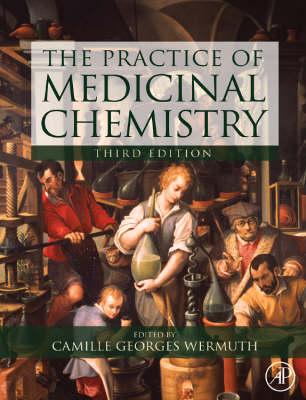
The Practice of Medicinal Chemistry fills a gap in the list of available medicinal chemistry literature. It is a single-volume source on the practical aspects of medicinal chemistry. Considered """"the Bible"""" by medicinal chemists, the book emphasizes the methods that chemists use to conduct their research and design new drug entities. It serves as a practical handbook about the drug discovery process, from conception of the molecules to drug production. The first part of the book covers the background of the subject matter, which includes the definition and history of medicinal chemistry, the measurement of biological activities, and the main phases of drug activity. The second part of the book presents the road to discovering a new lead compound and creating a working hypothesis. The main parts of the book discuss the optimization of the lead compound in terms of potency, selectivity, and safety. The Practice of Medicinal Chemistry can be considered a """"first-read"""" or """"bedside book"""" for readers who are embarking on a career in medicinal chemistry.
Full Product Details
Author: Camille Georges Wermuth (Professor of Organic Chemistry and Medicinal Chemistry at the Faculty of Pharmacy, Louis Pasteur University, Strasbourg, France) ,
Camille Georges Wermuth (Prestwick Chemical, Illkirch, France) ,
Camille Georges Wermuth (Prestwick Chemical, Illkirch, France) ,
Camille Georges Wermuth (Prestwick Chemical, Illkirch, France)
Publisher: Elsevier Science Publishing Co Inc
Imprint: Academic Press Inc
Edition: 3rd edition
Dimensions:
Width: 21.60cm
, Height: 4.10cm
, Length: 27.60cm
Weight: 2.220kg
ISBN: 9780123741943
ISBN 10: 0123741947
Pages: 982
Publication Date: 28 July 2008
Audience:
Professional and scholarly
,
Professional & Vocational
Replaced By: 9780124172050
Format: Hardback
Publisher's Status: Out of Print
Availability: Awaiting stock

Reviews
A useful, authoritative discussion of the principles and practice of medicinal chemistry... the volume has a useful index, is well produced and is very reasonably priced. - JOURNAL OF MEDICINAL CHEMISTRY
The third edition of this book, useful to seasoned medicinal chemists as well as to chemists entering the academic or industrial laboratories, provides a hands-on overview of the drug discovery process. This edition differs from the previous two editions by having been updated to reflect developments in the past 5 years, and it includes 11 new chapters. I found this book to be unique, well organized, and overall a useful addition to the medicinal chemistry literature. Having favorably reviewed the first edition, I still highly recommend this third edition to all chemists who are involved in the drug discovery process. - John L. Neumeyer, Harvard Medical School, in JOURNAL OF MEDICINAL CHEMISTRY from the American Chemical Society
Having favorably reviewed the first edition, I still highly recommend this third edition to all chemists who are involved in the drug discovery process. - John L. Neumeyer, Harvard Medical School, in JOURNAL OF MEDICINAL CHEMISTRY from the American Chemical Society
Author Information
Camille-Georges Wermuth PhD, Prof. and Founder of Prestwick Chemical, was Professor of Organic Chemistry and Medicinal Chemistry at the Faculty of Pharmacy, Louis Pasteur University, Strasbourg, France from 1969 to 2002. He became interested in Medicinal Chemistry during his two years of military service in the French Navy at the ""Centre d'Etudes Physio-biologiques Appliquees a la Marine"" in Toulon. During this time he worked under the supervision of Dr Henri Laborit, the scientist who invented artificial hibernation and discovered chlorpromazine. Professor Wermuths' main research themes focus on the chemistry and the pharmacology of pyridazine derivatives. The 3-aminopyridazine pharmacophore, in particular, allowed him to accede to an impressive variety of biological activities, including antidepressant and anticonvulsant molecules; inhibitors of enzymes such as mono-amine-oxidases, phosphodiesterases and acetylcholinesterase; ligands for neuro-receptors: GABA-A receptor antagonists, serotonine 5-HT3 receptor antagonists, dopaminergic and muscarinic agonists. More recently, in collaboration with the scientists of the Sanofi Company, he developed potent antagonists of the 41 amino-acid neuropeptide CRF (corticotrophin-releasing factor) which regulates the release of ACTH and thus the synthesis of corticoids in the adrenal glands. Professor Wermuth has also, in collaboration with Professor Jean-Charles Schwartz and Doctor Pierre Sokoloff (INSERM, Paris), developed selective ligands of the newly discovered dopamine D3 receptor. After a three-year exploratory phase, this research has led to nanomolar partial agonists which may prove useful in the treatment of the cocaine-withdrawal syndrome. Besides about 300 scientific papers and about 60 patents, Professor Wermuth is co-author or editor of several books including; Pharmacologie Moleculaire, Masson & Cie, Paris; Medicaments Organiques de Synthese, Masson & Cie, Paris; Medicinal Chemistry for the 21st Century, Bl