|
|
|||
|
||||
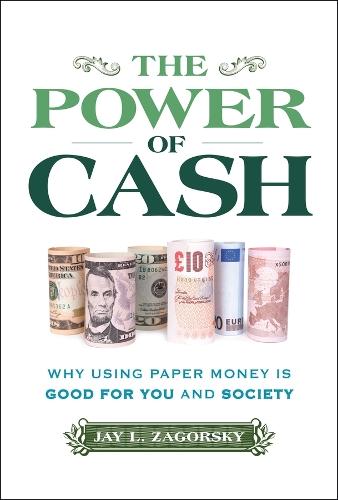
OverviewWhy cash is worth preserving in an increasingly “cashless” society Over the last thirty years, we have witnessed a rapid transformation in the way that people pay for goods and services. Where we used to use cash for all but our largest purchases, many people now prefer credit cards, debit cards, cryptocurrency, and electronic services like Venmo, PayPal, or Alipay. And that's not necessarily a good thing. In The Power of Cash: Why Using Paper Money is Good for You and Society, Professor Jay Zagorsky, former advisor to the Boston Federal Reserve, delivers a startlingly insightful and eye-opening discussion of the harmful and unintended consequences of the demise of paper money. The author convincingly argues that cash is an essential and helpful tool that's worth preserving for the long run. You'll learn why using cash makes it easier to control your spending, secures your anonymity and privacy against bad actors intent on stealing your data, mitigates the chaos of climate change and war, and helps the poor, vulnerable, unbanked, and disenfranchised to navigate society. You'll also discover: When business and governments can refuse to take your paper money How cash maintains your privacy and anonymity from tech companies, hackers, banks, and others How cash ensures companies cannot charge you a high “custom price” The potential dangers of giving governments control and knowledge of your spending How cash controls additional fees and costs associated with electronic purchases Perfect for anyone with an interest in the way we pay for the things we buy each and every day, The Power of Cash is also a must-read for people interested in the implications of a truly “cashless” society on personal finance, technology, politics, and social justice. Full Product DetailsAuthor: Jay L. Zagorsky (Boston University)Publisher: John Wiley & Sons Inc Imprint: John Wiley & Sons Inc Dimensions: Width: 16.00cm , Height: 3.60cm , Length: 23.40cm Weight: 0.590kg ISBN: 9781394299911ISBN 10: 1394299915 Pages: 384 Publication Date: 24 April 2025 Audience: General/trade , General Format: Hardback Publisher's Status: Active Availability: Available To Order We have confirmation that this item is in stock with the supplier. It will be ordered in for you and dispatched immediately. Table of ContentsPreface xv Chapter One Introduction and Overview 1 Shift Away from Cash 3 Why the Shift? 4 Key Question – Is the Shift Good? 5 The Synopsis: A Dozen Reasons Cash Is Powerful 8 Conclusion 13 Section I Is Cash Disappearing? 15 Chapter Two Is Cash Disappearing? The Case of Spending 17 Cash Use Around the World 19 Why Do Some Places Use Cash More Than Others? 20 Trends in Paper Money Use 22 Who Is Leading the US Shift? 23 Is Cash Still Used for Small Payments? 25 Conclusion 26 Chapter Three Is Cash Disappearing? The Case of Savings 29 Trends in Paper Money Holdings 30 Other Countries 32 The Changing Mix 35 What It Means 35 Conclusion 37 Section ii Cash Provides Society with Resilience 41 Chapter Four How Do Cashless Payments Work? 43 Communication Disruptions 48 Electricity Disruptions – Understanding Power Grids 50 Number of Electricity Disruptions 52 Cash is Environmentally Friendly 54 Computer Security 54 Conclusion 57 Chapter Five Natural Disasters Prevent Cashless Payments from Happening 59 Trend in Natural Disasters 62 Floods: An Example from China 64 Hurricanes 65 Fire and Drought 67 Volcanic Eruption 69 Solar Storms 70 Conclusion 72 Chapter Six Paper Money Boosts National Defense 75 Modern Examples 77 Counterfeit Money – Destroying Faith in the Currency 79 Power 82 Moving Money 83 Destroying Faith 87 Are Transactions True? 88 Conclusion 91 Section iii Cash Helps People 93 Chapter Seven Using Cash Helps Control Spending 95 Do People Spend More? 98 Impulse Control 99 Visualization 100 Endowment Effect 101 The Budget Constraint 102 Conclusion 104 Chapter Eight Other Reasons Why Using Cash Helps People 107 Using Cash Saves Money 108 Using Cash Keeps You Healthier 109 Cash and Math Skills 111 Tipping 112 Nickel and Dimed 114 Conclusion 116 Chapter Nine Using Cash Keeps Your Life Private 117 How Private Is Collecting and Distributing Data? 119 Who Needs Data Privacy? 123 Privacy Within Households 123 Spousal and Partner Abuse and Infidelity 125 Privacy Between Households and Businesses 127 Households and Businesses versus the Government 129 Problems of Being Incorrectly Identified 132 Potential Solutions 133 Conclusion 134 Chapter Ten Using Electronic Payments Boosts Prices 135 Merchant Fees 136 How Companies Price 140 Merchant Views 142 Surcharging and Steering 144 Custom Pricing 145 Examples of Custom Pricing 148 Conclusion 150 Section iv Cash Helps the Vulnerable 151 Chapter Eleven Eliminating Cash Hurts the Poor 153 Exclusion from Stores 154 Reduction in Charity 155 Legal and Other Solutions 157 How the Poor Subsidize the Rich 159 Unbanked and Underbanked 161 The Unbanked Pay Extra Fees 163 How Many Unbanked Are in the World? 165 Unable to Pay for a Phone 166 Conclusion 167 Chapter Twelve Cash Helps Immigrants, Refugees, and Tourists 169 Vulnerable Tourists 172 Dynamic Currency Conversion 174 Foreign Exchange Rates and Black Markets 176 Conclusion 180 Chapter Thirteen Cash Puts Limits on Central Banks Hurting the Elderly 181 The Power of Interest Rates 182 Negative Interest Rates 183 Paper Money Is a Brake 186 Savings Problems 187 Cash Limits the Damage of Bank Runs 188 Real Interest Rates 191 Conclusion 195 Section v Cash Is Not Causing Crime, Terrorism, or Tax Evasion 197 Chapter Fourteen Does Cash Make More People and Businesses Victims of Crime? 199 Fraud, Scams, and Identity Theft 201 The Amount of Stolen Cash 203 Cashless Ways to Commit Crimes 204 Credit Card Crime 206 Debit Card Crime 208 Does the Cashless Society Reduce Bank Losses? 209 The Case of Sweden 212 Conclusion: How to Avoid These Types of Crime? 212 Chapter Fifteen Does Cash Facilitate Corruption, Terrorism, or Organized Crime? 215 Corruption 216 Corruption Data 219 The Case of Sweden 222 Terrorism 222 Organized Crime 227 Conclusion 228 Chapter Sixteen Does Eliminating Cash Reduce Tax Evasion? 231 India’s 2016 Elimination of Most Cash 233 The Tax Gap Around the World 235 US Tax Gap 237 Electronic Tax Filing 239 Inflation Tax 240 Can Tax Evasion Be Reduced Without Getting Rid of Paper Money? 242 Conclusion 243 Section vi Control 245 Chapter Seventeen Cash Prevents Government Control 247 Shutting Off Bank Accounts 248 Digital Currency 250 Government Control of the Unbanked 252 Currency Transaction Reports 255 Conclusion 256 Chapter Eighteen Can Businesses and Governments Refuse to Take Cash? 259 Are There Laws Forcing Businesses to Take Cash? 261 Trying to Pay the IRS with Cash 263 Why Does the IRS Not Want Cash? 267 Conclusion 268 Chapter Nineteen Who Is Pushing the World to Go Cashless? 269 Credit and Debit Card Company Incentives 270 Credit and Debit Card Company Growth 273 Smaller Credit Card Companies 275 Banks’ Incentives 276 Government’s Incentive 278 High Technology’s Incentive 280 Retailers’ Incentive 282 Financial Technology Incentives 283 Conclusion 284 Chapter Twenty Conclusion: What to Do to Ensure Cash Does Not Disappear 287 Individual Actions 288 Collective Advocacy 289 Bureaucratic Fixes – ATMs 290 Inflation Adjustment for Currency Transaction Reports 292 Bring Back Large Bills 293 Legislation Designed to Ensure Stores Take Cash 296 Sin Purchases 298 Other Sin or Vice Purchases 299 Year-End Bonuses 301 Military Pay 302 Mandatory Preparedness for Financial Companies 303 The End 304 Acknowledgments 307 Notes 311 Bibliography 329 Index 351ReviewsAuthor InformationJAY L. ZAGORSKY, PHD, is Clinical Associate Professor of Markets, Public Policy, and Law at Boston University. He has published extensively in both peer-reviewed academic journals and the popular press, including the Washington Post, Wall Street Journal, Newsweek, Quartz, and Salon. Tab Content 6Author Website:Countries AvailableAll regions |
||||