|
|
|||
|
||||
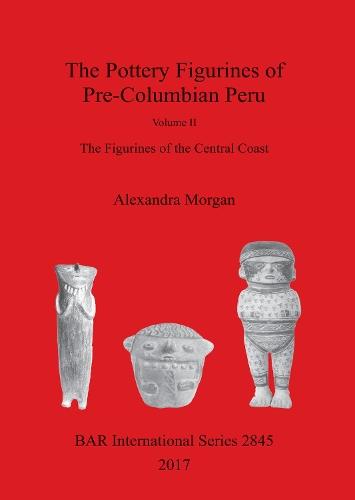
OverviewThis is the last volume of a comprehensive catalogue of Peruvian Pottery Figurines, from their first appearance around 3,500 BC to the Spanish Conquest in the 16th century. The figurines are described in detail and classified by region, chronologically and set within the different cultures to which they belong. Volume I, The Figurines of the North Coast (BAR S1941), was published in 2009; Volume III, The Figurines of South Coast, the Highlands and the Selva (BAR S2441), in 2012. Full Product DetailsAuthor: Alexandra MorganPublisher: BAR Publishing Imprint: BAR Publishing Dimensions: Width: 21.00cm , Height: 3.20cm , Length: 29.70cm Weight: 2.516kg ISBN: 9781407315232ISBN 10: 1407315234 Pages: 631 Publication Date: 28 February 2017 Audience: Professional and scholarly , Professional & Vocational Format: Paperback Publisher's Status: Active Availability: Available To Order We have confirmation that this item is in stock with the supplier. It will be ordered in for you and dispatched immediately. Table of Contents"LIST OF ABBREVIATIONS LIST OF FIGURES LIST OF TABLES LIST OF PLATES LIST OF CHRONOLOGICAL CHARTS LIST OF MAPS ACKNOWLEDGMENTS PREFACE THE GEOGRAPHIC AND CHRONOLOGICAL FRAME CHAPTER 1: THE PRECERAMIC PERIOD ON THE CENTRAL COAST Introduction The Figurines of the Preceramic Period Bandurria El Aspero Rio Seco de Leo El Paraiso Huaca La Florida, Rimac Valley Synopsis CHAPTER 2: THE EARLY AND MIDDLE FORMATIVE PERIOD ON THE CENTRAL COAST Introduction The Chronology of the Early Formative (Initial Period) and Middle Formative (Early Horizon Epochs 1 to 6): Explanatory notes to Chronological Chart 1 The Figurines of the Lower and Middle Formative (Initial Period and Early Horizon) Group 1: Figurines from the Ancon shell middens (Sub-groups 1.1 to 1.4) Group 2: Figurines from Central Coast sites other than Ancon Rimac Valley sites (Garagay, Quebrada Canto Grande, Huachipa) Lurin Valley sites (Malpaso, Cardal, Manchay Bajo) Curayacu Synopsis CHAPTER 3: THE EPIFORMATIVE (LATE FORMATIVE AND EARLY EIP) ON THE CENTRAL COAST Introduction The Chronology of the Epiformative (Late Formative or Early Horizon Epochs 9, 10 and Early Intermediate Period Epochs 1-3/4): Explanatory notes to Chart 2.1 The Figurines of the Epiformative (Late Formative to Early EIP) Synopsis CHAPTER 4: THE EARLY INTERMEDIATE PERIOD ON THE CENTRAL COAST: THE LIMA CULTURE AND ITS SUCCESSORS: NIEVERIA AND MARANGA Introduction The Figurines of the Lima Culture Group 1: Miscellaneous Lima figurines Group 2: Nascoid figurines found in a Lima context and associated figurines Group 3: Figurines belonging to or associated with the Nieveria or Maranga pottery styles Synopsis CHAPTER 5: THE EARLY MIDDLE HORIZON ON THE CENTRAL COAST: EARLY MH GROUPS 1 AND 2 Introduction Group 1: Figurines possibly originating in the South/Central Sierra Group 2: Wari-Pachacamac and related figurines Sub-group 2.1: Figurines belonging or related to Wari-Pachacamac Sub-group 2.2: Figurines related to Wari-Pachacamac and to other local traditions A wooden figurine with ceramic mask from Pachacamac Synopsis CHAPTER 6: THE TRANSITION FROM THE EARLY TO THE LATE MIDDLE HORIZON ON THE CENTRAL COAST: ""TRANSITIONAL"" EARLY-LATE MH FIGURINES GROUPS 1 AND 2 Introduction Group 1: Miscellaneous hybrid figurines Group 2: The Teatino figurines Synopsis CHAPTER 7: THE LATE MIDDLE HORIZON ON THE CENTRAL COAST: ""INNOVATIVE"" FIGURINES GROUPS 1 TO 3 Introduction Group 1: The Supe figurines Group 2: Supe-related hybrids Sub-group 2.1: Supe-Teatino hybrids Sub-group 2.2: Supe-Huaura hybrids A Supe hybrid excavated by Uhle at Pachacamac, Gravefield 1: 1516 Group 3: Anthropo-zoomorphic figurines Sub-group 3.1: ""Cats"" Sub-group 3.2: ""Birds""/""Fish"" Synopsis CHAPTER 8: THE LATE MH AND EARLY PART OF THE LIP IN THE NORTHERN SECTOR (NORTE CHICO) OF THE CENTRAL COAST: THE HUAURA FIGURINES AND UNAFFILIATED FIGURINES Introduction The relationship between the Huaura and Chancay figurines The Huaura Figurines Group 1: Figurines with animal (or mythical?) features and hands placed on the genitals Group 2: Standard figurines Sub-group 2.1: Standard Huaura figurines with folded arms Sub-group 2.2: Standard Huaura figurines with two sets of arms: one set folded, one extended Sub-group 2.3: Standard Huaura figurines with extended arms Group 3: Figurines with elongated head Group 4: Flat, solid figurines (""Slabs"") Synopsis Late MH and Early LIP Unaffiliated Figurines from the Norte Chico Group 1: Unaffiliated figurines related to Supe or Huaura Group 2: Miscellaneous Late MH-Early LIP unaffiliated figurines CHAPTER 9: FROM THE LATE MIDDLE HORIZON TO THE LATE HORIZON PART I: THE FIGURINES OF THE CHANCAY CULTURE AND UNAFFILIATED (CHANCAY-RELATED) FIGURINES Introduction Chronological framework of the Chancay culture Group 1: The Chancay Cuchimilco Sub-group 1.1 (sub-groups 1.1.1-1.1.4): Early Chancay cuchimilcos with folded arms Sub-group 1.2 (sub-groups 1.2.2-1.2.4): Early Chancay cuchimilcos with two sets of arms Sub-group 1.3 (sub-groups 1.3.1-1.3.4): Early Chancay cuchimilcos with extended arms Sub-group 1.4: The classic black-on-white cuchimilco Sub-group 1.4.1: Small black-on-white cuchimilcos (height up to 30 cm) Sub-group 1.4.2: Large black-on-white cuchimilcos (height above 50 cm) Sub-group 1.4.3: ""Baroque"" black-on-white cuchimilcos Sub-group 1.5: Chancay-Huaura cuchimilcos Sub-group 1.5.1: Early Chancay-Huaura cuchimilcos Sub-group 1.5.2: Black-on-white Chancay-Huaura cuchimilcos Sub-group 1.5.3: A Chancay-Huaura variant: cuchimilcos of the Jecuan sub-style Sub-Group 1.6: Chancay cuchimilcos in red or black wares (Phases 3 and 4) Sub-group 1.6.1: Cuchimilcos in miscellaneous red wares Sub-group 1.6.2: Cuchimilcos in black- or black-slipped wares Group 2: Chancay Figurines with Elongated Head Sub-group 2.1: Early figurines with elongated head and folded arms Sub-group 2.2: Early figurines with elongated head and extended arms Sub-group 2.3: Classic black-on-white figurines with elongated head (Phases 3 and 4) Sub-group 2.4: Chancay-Huaura figurines with elongated head (Jecuan sub-style) Sub-group 2.5: Figurines with elongated head in red or black ware (Phases 3 and 4) Sub-group 2.5.1: Figurines with elongated head in red ware Sub-group 2.5.2: Figurines with elongated head in black or black-slipped ware Sub-group 2.6: Special figurines with elongated head Group 3: The Chancay ""Witch"" Sub-group 3.1: The black-on-white ""Witch"" Sub-group 3.2: The ""Witch"" in red or black wares Group 4: The Chancay ""Attendant"" Group 5: Chancay Personage with Helmet Group 6: Small, Crude, Hand-made, Solid Figurines (""Spooks"") Group 7: The Anthropomorphic Monkey Chancay Molds Synopsis Central Coast LIP Unaffiliated Figurines (Probably Chancay-Related) CHAPTER 10: FROM THE LATE MIDDLE HORIZON TO THE LATE HORIZON PART II: THE FIGURINES OF THE YCHSMA CERAMIC STYLE Introduction Chancay versus Ychsma The Ychsma Figurines Group 1: Early Ychsma Figurines Group 2: Late Intermediate and Late Horizon Ychsma Figurines Sub-group 2.1A: Figurines with certain or fairly reliable provenances from the Rimac Valley Sub-group 2.1B: Figurines with undocumented provenances from the Rimac Valley Sub-group 2.2A: Figurines with certain or fairly reliable provenances from the Lurin Valley a. Miscellaneous figurines from Pachacamac Pachacamac: Figurines from the Plaza de los Pelegrinos Figurines from Pueblo Viejo-Pucara c1: Ychsma-style figurines excavated in Pueblo Viejo-Pucara c2: ""Associated"" non-Ychsma figurines excavated in Pueblo Viejo-Pucara d: Figurines from other sites in the Lurin Valley Sub-group 2.2B: Figurines with undocumented provenances from the Lurin Valley Synopsis CHAPTER 11: CENTRAL COAST FIGURINES OF THE LATE HORIZON - CULTURALLY UNASSIGNED Introduction Group 1: Late Horizon ""Standard"" Figurines Sub-group 1.1: Large, hand-made, hollow figurines Sub-group 1.2: Figurines made of one frontal mold Group 2: Late Horizon Figurines with Elongated Head Group 3: Late Horizon ""Specials"" Sub-group 3.1: Five very unusual but similar figurines Sub-group 3.2: Miscellaneous figurines Synopsis CHAPTER 12: FIGURINES ON CERAMIC CRADLES, LITTERS AND ""PALANQUINS"" Introduction Group 1: Figurines on Infant Cradles Group 2: Figurines on Funerary Litters Group 3: Figurines on ""Palanquins"" CHAPTER 13: CONCLUSIONS A. The Function of the Figurines B. Cultural Processes on the Central Coast as Reflected in the Figurines APPENDIX 1: NOTES ON MUSEUM COLLECTIONS APPENDIX 2: NOTES ON SOME CENTRAL COAST SITES APPENDIX 3: GRAVELOTS Tables listing the Gravelots Plates illustrating the Gravelots BIBLIOGRAPHY TABLES Explanations to the Tables The Tables PLATES CHRONOLOGICAL CHARTS MAP"Reviews'Mas que un catalogo razonado, es un formidable instrumento de trabajo. Es el resultado de un largo y notable trabajo de colecta, compilacion y analisis hecho por Alexandra Morgan (doctora en arqueologia precolombina de la University College London), a partir de una muy abundante documentacion publicada o inedita (cerca de 400 titulos en la bibliografia de este volumen), asi como de las referencias a muy numerosos museos (68 museos para este volumen) y colecciones privadas del mundo entero (18 para este volumen).' Vincent Chamussy, Americae, 2, 2017 'More than a reasoned catalog, it is a formidable instrument of work,. . It is the result of a long and remarkable collection, compilation and analysis work done by Alexandra Morgan (doctor in pre-Columbian archeology of the University College London), from a very abundant published or unpublished documentation (about 400 titles in the bibliography of this volume), as well as references to many museums (68 museums for this volume) and private collections from around the world (18 for this volume).' Vincent Chamussy, Americae, 2, 2017 'Más que un catálogo razonado, es un formidable instrumento de trabajo. Es el resultado de un largo y notable trabajo de colecta, compilación y análisis hecho por Alexandra Morgan (doctora en arqueología precolombina de la University College London), a partir de una muy abundante documentación publicada o inédita (cerca de 400 títulos en la bibliografía de este volumen), así como de las referencias a muy numerosos museos (68 museos para este volumen) y colecciones privadas del mundo entero (18 para este volumen).' Vincent Chamussy, Americae, 2, 2017 'More than a reasoned catalog, it is a formidable instrument of work,. . It is the result of a long and remarkable collection, compilation and analysis work done by Alexandra Morgan (doctor in pre-Columbian archeology of the University College London), from a very abundant published or unpublished documentation (about 400 titles in the bibliography of this volume), as well as references to many museums (68 museums for this volume) and private collections from around the world (18 for this volume).' Vincent Chamussy, Americae, 2, 2017 Author InformationAlexandra Morgan lived in Peru for four years in the mid-1970s. Having studied history at Geneva University, she obtained a PhD in Pre-Columbian Archaeology at the Institute of Archaeology, University College, London, with a dissertation on Peruvian Pottery Figurines. Tab Content 6Author Website:Countries AvailableAll regions |
||||