Overview
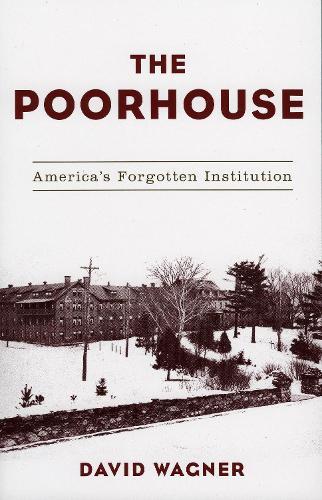
Many of us grew up hearing our parents exclaim ""you are driving me to the poorhouse!"" or remember the card in the ""Monopoly"" game which says ""Go to the Poorhouse! Lose a Turn!"" Yet most Americans know little or nothing of this institution that existed under a variety of names for approximately three hundred years of American history. Surprisingly these institutions variously named poorhouses, poor farms, sometimes almshouses or workhouses, have received rather scant academic treatment, as well, though tens of millions of poor people were confined there, while often their neighbors talked in hushed tones and in fear of their own fate at the ""specter of the poorhouse."" Based on the author's study of six New England poorhouses/poor farms, a hidden story in America's history is presented which will be of popular interest as well as useful as a text in social welfare and social history. While the poorhouse's mission was character reform and ""repressing pauperism,"" these goals were gradually undermined by poor people themselves, who often learned to use the poorhouse for their own benefit, as well as by staff and officials of the houses, who had agendas sometimes at odds with the purposes for which the poorhouse was invented.
Full Product Details
Author: David Wagner
Publisher: Bloomsbury Publishing Plc
Imprint: Rowman & Littlefield
Dimensions:
Width: 15.50cm
, Height: 1.50cm
, Length: 23.20cm
Weight: 0.306kg
ISBN: 9780742529458
ISBN 10: 0742529452
Pages: 200
Publication Date: 17 January 2005
Audience:
General/trade
,
General
Format: Paperback
Publisher's Status: Active
Availability: Manufactured on demand

We will order this item for you from a manufactured on demand supplier.
Reviews
An eye-opener! Wagner carefully and judiciously combs through the data to give us a vivid picture of 19th century institutions for the care of the American poor. There is nothing quite like this, and American social welfare history will never be the same. -- Frances Fox Piven, Distinguished Professor of Political Science and Sociology, CUNY David Wagner's extraordinary journey through the history of 'the poorhouse' in the United States is meticulously researched and brings alive, in eminently readable prose, the lives of those human beings who were both victims and overseers of this much-neglected part of American life. This is an important contribution to our social history. -- Howard Zinn, historian, social activist, and author of A People's History of the United States At a time in which the Social Security Act (1935) itself is under ideological assault, Wagner's informative book is required reading. New England Quarterly This impressively researched history of the poorhouse, a mainstay social welfare resource for 300 years in America, will fascinate and enlighten even a casual reader. Journal Of Religion and Spirituality In Social Work For a small volume, David Wagner's The Poorhouse: Ameica's Forgotten Institution has a hefty agenda. Over seven short chapters, Wagner sketches the story of the fabeled symbol of vulnerability and failure that for generations accumulated America's infirm, superannuated, and dipossessed while birthing specialized institutions for child wellfare, substance abuse treatment, and psychiatric, medical, and geriatric care. Social Service Review The Poorhouse: America's Forgotten Institution takes its place as a thought-provoking, well-researched volume that has no rival in the field. It will be the standard of reference for years to come. Maine Sunday Telegram The Poorhouse turns out to be a most appealing and timely book with much to say about contemporary socail policy. I tis highly recommended for undergraduate and graduate studuents in schools of social work, for social welfare and social policy historians, and for historicans of disability. Journal of American History Based on newspaper accounts, poorhouse records, oral history interviews, and local government records, Wagner provides and rich description of life in six New England poorhouses between the 1830s and the 1940s. Journal of Sociology and Social Welfare
An eye-opener! Wagner carefully and judiciously combs through the data to give us a vivid picture of 19th century institutions for the care of the American poor. There is nothing quite like this, and American social welfare history will never be the same. -- Piven, Frances Fox David Wagner's extraordinary journey through the history of 'the poorhouse' in the United States is meticulously researched and brings alive, in eminently readable prose, the lives of those human beings who were both victims and overseers of this much-neglected part of American life. This is an important contribution to our social history. -- Zinn, Howard At a time in which the Social Security Act (1935) itself is under ideological assault, Wagner's informative book is required reading. New England Quarterly This impressively researched history of the poorhouse, a mainstay social welfare resource for 300 years in America, will fascinate and enlighten even a casual reader. Journal Of Religion and Spirituality In Social Work For a small volume, David Wagner's The Poorhouse: Ameica's Forgotten Institution has a hefty agenda. Over seven short chapters, Wagner sketches the story of the fabeled symbol of vulnerability and failure that for generations accumulated America's infirm, superannuated, and dipossessed while birthing specialized institutions for child wellfare, substance abuse treatment, and psychiatric, medical, and geriatric care. Social Service Review The Poorhouse: America's Forgotten Institution takes its place as a thought-provoking, well-researched volume that has no rival in the field. It will be the standard of reference for years to come. Maine Sunday Telegram The Poorhouse turns out to be a most appealing and timely book with much to say about contemporary socail policy. I tis highly recommended for undergraduate and graduate studuents in schools of social work, for social welfare and social policy historians, and for historicans of disability. The Journal Of American History Based on newspaper accounts, poorhouse records, oral history interviews, and local government records, Wagner provides and rich description of life in six New England poorhouses between the 1830s and the 1940s. Journal Of Sociology and Social Welfare
An eye-opener! Wagner carefully and judiciously combs through the data to give us a vivid picture of 19th century institutions for the care of the American poor. There is nothing quite like this, and American social welfare history will never be the same. -- Frances Fox Piven, Distinguished Professor of Political Science and Sociology, CUNY David Wagner's extraordinary journey through the history of 'the poorhouse' in the United States is meticulously researched and brings alive, in eminently readable prose, the lives of those human beings who were both victims and overseers of this much-neglected part of American life. This is an important contribution to our social history. -- Howard Zinn, author of A People's History of the United States and professor emeritus of Political Science, Boston University At a time in which the Social Security Act (1935) itself is under ideological assault, Wagner's informative book is required reading. The New England Quarterly This impressively researched history of the poorhouse, a mainstay social welfare resource for 300 years in America, will fascinate and enlighten even a casual reader. Journal Of Religion and Spirituality In Social Work For a small volume, David Wagner's The Poorhouse: Ameica's Forgotten Institution has a hefty agenda. Over seven short chapters, Wagner sketches the story of the fabeled symbol of vulnerability and failure that for generations accumulated America's infirm, superannuated, and dipossessed while birthing specialized institutions for child wellfare, substance abuse treatment, and psychiatric, medical, and geriatric care. Social Service Review The Poorhouse: America's Forgotten Institution takes its place as a thought-provoking, well-researched volume that has no rival in the field. It will be the standard of reference for years to come. Maine Sunday Telegram The Poorhouse turns out to be a most appealing and timely book with much to say about contemporary socail policy. I tis highly recommended for undergraduate and graduate studuents in schools of social work, for social welfare and social policy historians, and for historicans of disability. Journal of American History Based on newspaper accounts, poorhouse records, oral history interviews, and local government records, Wagner provides and rich description of life in six New England poorhouses between the 1830s and the 1940s. Journal of Sociology and Social Welfare
An eye-opener! Wagner carefully and judiciously combs through the data to give us a vivid picture of 19th century institutions for the care of the American poor. There is nothing quite like this, and American social welfare history will never be the same. -- Frances Fox Piven, Distinguished Professor of Political Science and Sociology, CUNY David Wagner's extraordinary journey through the history of 'the poorhouse' in the United States is meticulously researched and brings alive, in eminently readable prose, the lives of those human beings who were both victims and overseers of this much-neglected part of American life. This is an important contribution to our social history. -- Howard Zinn, author of A People's History of the United States and professor emeritus of Political Science, Boston University At a time in which the Social Security Act (1935) itself is under ideological assault, Wagner's informative book is required reading. New England Quarterly This impressively researched history of the poorhouse, a mainstay social welfare resource for 300 years in America, will fascinate and enlighten even a casual reader. Journal Of Religion and Spirituality In Social Work For a small volume, David Wagner's The Poorhouse: Ameica's Forgotten Institution has a hefty agenda. Over seven short chapters, Wagner sketches the story of the fabeled symbol of vulnerability and failure that for generations accumulated America's infirm, superannuated, and dipossessed while birthing specialized institutions for child wellfare, substance abuse treatment, and psychiatric, medical, and geriatric care. Social Service Review The Poorhouse: America's Forgotten Institution takes its place as a thought-provoking, well-researched volume that has no rival in the field. It will be the standard of reference for years to come. Maine Sunday Telegram The Poorhouse turns out to be a most appealing and timely book with much to say about contemporary socail policy. I tis highly recommended for undergraduate and graduate studuents in schools of social work, for social welfare and social policy historians, and for historicans of disability. Journal of American History Based on newspaper accounts, poorhouse records, oral history interviews, and local government records, Wagner provides and rich description of life in six New England poorhouses between the 1830s and the 1940s. Journal of Sociology and Social Welfare
An eye-opener! Wagner carefully and judiciously combs through the data to give us a vivid picture of 19th century institutions for the care of the American poor. There is nothing quite like this, and American social welfare history will never be the same.--Piven, Frances Fox
Author Information
David Wagner is professor of social work and sociology at the University of Southern Maine. He is the author of five books, including Checkerboard Square: Culture and Resistance in a Homeless Community, winner of the 1993 C. Wright Mills Book Award.