|
|
|||
|
||||
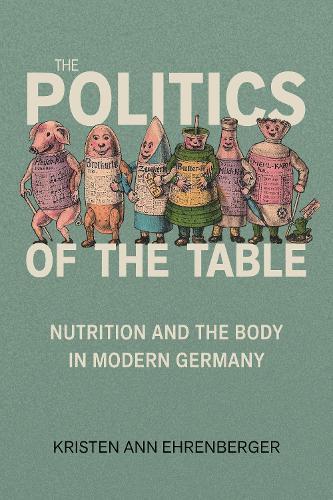
OverviewHow nutrition and the body became matters of national importance in modern Germany. What does it mean to eat well, and why should it matter to the nation? In The Politics of the Table, historian Kristen Ann Ehrenberger uncovers how food became a matter of political concern in modern Germany, tracing the evolution of nutritional science from the laboratory bench to the family dinner table between 1890 and 1935. This compelling study reveals how everyday meals became sites of public policy, scientific authority, and cultural identity. Germans were encouraged to see their bodies not only as private entities but also as integral parts of a larger social organism in matters ranging from calories and vitamins to ration cards and state-sponsored hygiene exhibitions. Ehrenberger introduces the concept of the ""scalar body"" to explain how individuals were imagined as connected to one another through the acts of eating, drinking, and digesting. Using a wide array of sources including cookbooks, popular magazines, medical texts, trade journals, and government archives, the book charts how nutrition was promoted as a means to build healthier citizens and a stronger nation. Whether in kitchens or clinics, during wartime shortages or peacetime reforms, food was imbued with moral, medical, and economic significance. The dining table emerged as a focal point where gender roles, social expectations, and state interests converged. The Politics of the Table illuminates the intimate links between bodily health and national politics in an era of profound social transformation. It challenges readers to reconsider how private habits like eating have long been shaped by public values, and how the politics of food and nutrition continue to resonate today. Full Product DetailsAuthor: Kristen Ann EhrenbergerPublisher: Johns Hopkins University Press Imprint: Johns Hopkins University Press Dimensions: Width: 15.20cm , Height: 2.10cm , Length: 22.90cm Weight: 0.440kg ISBN: 9781421454122ISBN 10: 1421454122 Pages: 312 Publication Date: 17 March 2026 Audience: College/higher education , Postgraduate, Research & Scholarly Format: Paperback Publisher's Status: Forthcoming Availability: Manufactured on demand Table of ContentsList of Illustrations List of Tables Preface: The Menu 1. Introduction: Bodies that Eat and Drink Part I: ""The Kitchen is the Laboratory of the Housewife"": The Circulation of Nutritional Science, 1890–1930 2. From Calories to Vitamins: Nutrition in the Laboratory 3. Feeding the Sick: Nutrition and Authority in the Sick Room and the Clinic 4. Under the Hygiene Eye: Nutrition at the German Hygiene Museum 5. How to Cook Your Vegetables: From the Factory to the Kitchen Part II: ""The Cooking Spoon is the Scepter of the People's Health"": Nutrition & World War I 6. ""More Than Bitter"": The Blockade and Rationing in Saxony and Bavaria 7. ""I Am Not a Taste Barbarian"": Food and the Senses during World War I 8. Cooking Out but Eating In: The Politics of the Family Table during World War I 9. From the Kitchen to the Bedside: Sick Rations in Germany during World War I 10. Conclusion: Nutritional Knowledge and Ignorance in the Third Reich Bibliography IndexReviewsAuthor InformationKristen Ann Ehrenberger is an assistant professor of medicine and pediatrics at the University of Pittsburgh School of Medicine. Tab Content 6Author Website:Countries AvailableAll regions |
||||