Overview
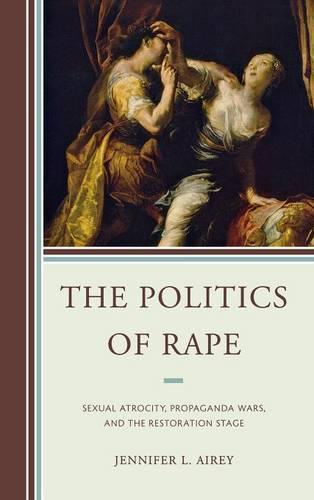
The Politics of Rape: Sexual Atrocity, Propaganda Wars, and the Restoration Stage is the first full-length study to examine representations of sexual violence on the Restoration stage. By reading theatrical depictions of sexual violence alongside political tracts, propaganda pamphlets, and circulating broadsides, this study argues that authors used dramatic representations of rape to respond to and engage with late-century upheavals in British political culture. Beginning with an examination of rape scenes in English Civil War propaganda, The Politics of Rape argues that Roundhead authors described acts of rape and atrocity to demonize their enemies, the Irish, the Catholics, and the Cavaliers. After the Restoration, propagandists and playwrights on each side of every political conflict would follow suit, altering the rhetoric of sexual violence in response to each new moment of political upheaval: The Restoration of Charles II, the Second and Third Anglo-Dutch Wars, the Popish Plot, the Exclusion Crisis, the Glorious Revolution, and the accession of William and Mary. The study offers an intensive look at British propaganda culture, gathering together a wealth of understudied pamphlet texts, and identifying a series of stock figures that recur throughout the century: The demonic Irishman, sexually violent villain of the 1641 Irish Rebellion tracts; the debauched Cavalier, the secretly Catholic royalist rapist; the poisonous Catholic bride, the malignant consort who encourages the rapes of Protestant women; the cannibal father, the evil patriarch who rapes his daughters-in-laws before ingesting his own sons as a symbol of monarchical overreach; and the ravished monarch, the male rape victim whose sexual violation protests his political disenfranchisement. The study also traces the appearance of these figures on the British stage, examining well-known works by Dryden, Rochester, Behn, Lee, and Shadwell, alongside lesser-known plays by Orrery, Howard, Settle, Crowne, Ravenscroft, Pix, Cibber, and Brady. The Politics of Rape thus offers a new method for understanding of the geo-political implications of theatrical sexual violence.
Full Product Details
Author: Jennifer L. Airey
Publisher: Bloomsbury Publishing Plc
Imprint: University of Delaware Press
Dimensions:
Width: 15.90cm
, Height: 2.50cm
, Length: 23.70cm
Weight: 0.531kg
ISBN: 9781611494044
ISBN 10: 1611494044
Pages: 260
Publication Date: 20 September 2012
Audience:
College/higher education
,
Postgraduate, Research & Scholarly
Format: Hardback
Publisher's Status: Active
Availability: In Print

This item will be ordered in for you from one of our suppliers. Upon receipt, we will promptly dispatch it out to you. For in store availability, please contact us.
Reviews
Jennifer Airey's study of plays that use rape as a trope for political and socio-political argument is an outstanding debut for this young scholar...Airey chronologically analyzes a remarkable variety of plays, some by well known authors...which makes the balancing of the five chapters fresh and interesting...The Politics of Rape as a work of scholarship is confidently written, closely argued, and tightly focused. The Eighteenth-Century Intelligencer
Jennifer Airey's study of plays that use rape as a trope for political and socio-political argument is an outstanding debut for this young scholar. ... Airey chronologically analyzes a remarkable variety of plays, some by well known authors...which makes the balancing of the five chapters fresh and interesting. ... The Politics of Rape as a work of scholarship is confidently written, closely argued, and tightly focused. The Eighteenth-Century Intelligencer Theatrical sexual violence and political propaganda are the focus of Jennifer L. Airey's The Politics of Rape: Sexual Atrocity, Propaganda Wars, and the Restoration Stage. Airey argues that dramatic representations of rape responded to developments in British political culture. Constructing a series of stock figures that appeared on stage and off-what Airey terms the demonic Irishman, the debauched Cavalier, the poisonous Catholic bride, the ravished monarch, and the cannibal father-propagandists and dramatists relied upon images of sexually violent atrocity to demonize their enemies. Seventeenth-Century News
Author Information
Jennifer L. Airey is assistant professor of English at the University of Tulsa, where she specializes in Restoration and eighteenth-century British drama.