Overview
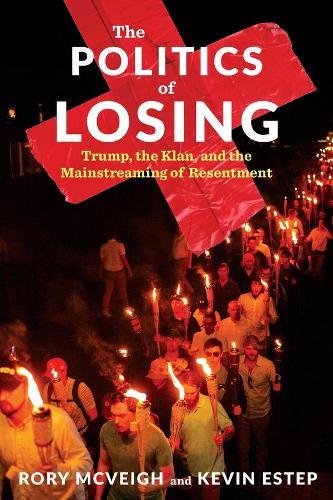
The Ku Klux Klan has peaked three times in American history: after the Civil War, around the 1960s Civil Rights Movement, and in the 1920s, when the Klan spread farthest and fastest. Recruiting millions of members even in non-Southern states, the Klan's nationalist insurgency burst into mainstream politics. Almost one hundred years later, the pent-up anger of white Americans left behind by a changing economy has once again directed itself at immigrants and cultural outsiders and roiled a presidential election. In The Politics of Losing, Rory McVeigh and Kevin Estep trace the parallels between the 1920s Klan and today's right-wing backlash, identifying the conditions that allow white nationalism to emerge from the shadows. White middle-class Protestant Americans in the 1920s found themselves stranded by an economy that was increasingly industrialized and fueled by immigrant labor. Mirroring the Klan's earlier tactics, Donald Trump delivered a message that mingled economic populism with deep cultural resentments. McVeigh and Estep present a sociological analysis of the Klan's outbreaks that goes beyond Trump the individual to show how his rise to power was made possible by a convergence of circumstances. White Americans' experience of declining privilege and perceptions of lost power can trigger a political backlash that overtly asserts white-nationalist goals. The Politics of Losing offers a rigorous and lucid explanation for a recurrent phenomenon in American history, with important lessons about the origins of our alarming political climate.
Full Product Details
Author: Rory McVeigh ,
Kevin Estep
Publisher: Columbia University Press
Imprint: Columbia University Press
ISBN: 9780231190060
ISBN 10: 0231190069
Pages: 320
Publication Date: 19 February 2019
Audience:
Professional and scholarly
,
General/trade
,
Professional & Vocational
,
General
Format: Hardback
Publisher's Status: Active
Availability: Manufactured on demand

We will order this item for you from a manufactured on demand supplier.
Reviews
The tactics of cultural resentment that brought Donald Trump to the White House are not new. As McVeigh and Estep show, eerily similar strategies propelled the explosive rise of the racist, anti-immigrant, and anti-Catholic Ku Klux Klan a century earlier. A brilliant, must-read book on the dangerous appeal of white nationalism in American politics.--Kathleen Blee, University of Pittsburgh McVeigh and Estep's book makes an important contribution to our understanding of white nationalism, its endurance in American politics, and the conditions that brought it back into the mainstream with the election of Donald Trump. Using the 1920s Klan as a reference point, the authors show how declines in the standing of whites (political, economic, and status-based) have often produced sizable populations open to racist appeals, spawning political movements and fracturing enduring electoral coalitions.--Marc Dixon, Dartmouth College A welcome addition to the literature on white supremacy.--Kirkus Reviews The Politics of Losing not only provides an incredibly rich diagnosis for the current troubles within American democracy but also offers a much-needed and well-reasoned exit.--Christian Davenport, University of Michigan In documenting the remarkable parallels between the rebirth of the Ku Klux Klan in the 1920s, and the rise of Trumpian politics today, McVeigh and Estep demonstrate how white nationalism periodically links with economic grievances to shape electoral outcomes. Elegantly written, exquisitely researched, and powerfully argued, The Politics of Losing is essential reading for those who wish to understand the historical origins of our current, racially charged political climate--and how to change it.--Jocelyn Viterna, Harvard University Through a clear and dispassionate comparison of the ascendance of the Klan in the 1920s and Trump in 2016, McVeigh and Estep trace the roots of white nationalism in American politics. They show how opportunistic leaders combined race, economics, culture, and religion to mobilize white resentment. The Politics of Losing is the best book to account for the rise of Trumpism that I have read.--Eduardo Bonilla-Silva, Duke University Erudite and surprisingly evenhanded. . . . A substantial contribution to understanding an increasingly polarized country.--Publishers Weekly
McVeigh and Estep's book makes an important contribution to our understanding of white nationalism, its endurance in American politics, and the conditions that brought it back into the mainstream with the election of Donald Trump. Using the 1920s Klan as a reference point, the authors show how declines in the standing of whites (political, economic, and status-based) have often produced sizable populations open to racist appeals, spawning political movements and fracturing enduring electoral coalitions.--Marc Dixon, Dartmouth University Through a clear and dispassionate comparison of the ascendance of the Klan in the 1920s and Trump in 2016, McVeigh and Estep trace the roots of white nationalism in American politics. They show how opportunistic leaders combined race, economics, culture, and religion to mobilize white resentment. The Politics of Losing is the best book to account for the rise of Trumpism that I have read.--Eduardo Bonilla-Silva, president, American Sociological Association
The tactics of cultural resentment that brought Donald Trump to the White House are not new. As McVeigh and Estep show, eerily similar strategies propelled the explosive rise of the racist, anti-immigrant, and anti-Catholic Ku Klux Klan a century earlier. A brilliant, must-read book on the dangerous appeal of white nationalism in American politics.--Kathleen Blee, University of Pittsburgh A welcome addition to the literature on white supremacy.--Kirkus Reviews McVeigh and Estep's book makes an important contribution to our understanding of white nationalism, its endurance in American politics, and the conditions that brought it back into the mainstream with the election of Donald Trump. Using the 1920s Klan as a reference point, the authors show how declines in the standing of whites (political, economic, and status-based) have often produced sizable populations open to racist appeals, spawning political movements and fracturing enduring electoral coalitions.--Marc Dixon, Dartmouth College The Politics of Losing not only provides an incredibly rich diagnosis for the current troubles within American democracy but also offers a much-needed and well-reasoned exit.--Christian Davenport, University of Michigan In documenting the remarkable parallels between the rebirth of the Ku Klux Klan in the 1920s, and the rise of Trumpian politics today, McVeigh and Estep demonstrate how white nationalism periodically links with economic grievances to shape electoral outcomes. Elegantly written, exquisitely researched, and powerfully argued, The Politics of Losing is essential reading for those who wish to understand the historical origins of our current, racially charged political climate--and how to change it.--Jocelyn Viterna, Harvard University Through a clear and dispassionate comparison of the ascendance of the Klan in the 1920s and Trump in 2016, McVeigh and Estep trace the roots of white nationalism in American politics. They show how opportunistic leaders combined race, economics, culture, and religion to mobilize white resentment. The Politics of Losing is the best book to account for the rise of Trumpism that I have read.--Eduardo Bonilla-Silva, Duke University Erudite and surprisingly evenhanded. . . . A substantial contribution to understanding an increasingly polarized country.--Publishers Weekly
Author Information
Rory McVeigh is the Nancy Reeves Dreux Professor in Sociology and director of the Center for the Study of Social Movements at the University of Notre Dame. He is author of The Rise of the Ku Klux Klan: Right-Wing Movements and National Politics (2009) and coeditor of American Sociological Review. Kevin Estep is assistant professor in the Department of Cultural and Social Studies at Creighton University. His research focuses on the consequences of residential sorting on politics and public health.