|
|
|||
|
||||
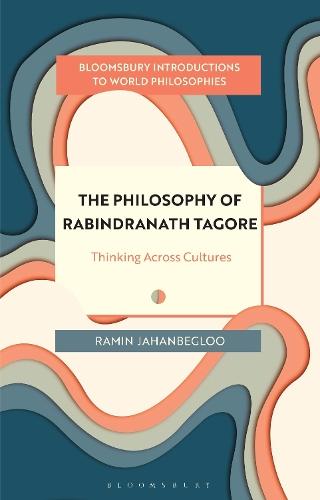
OverviewWhere does the great Bengali poet and philosopher Rabindranath Tagore stand in today’s global world? The legacy of Rabindranath Tagore is vast. No writer in the history of India and Asia in general matches his variety and range of creation. In this book, Ramin Jahanbegloo looks beyond the poetry and literature for which Tagore was awarded the Nobel Prize, showing how his thinking enriches every branch of the humanities – philosophy, pedagogy and the arts. Each chapter is dedicated to one aspect of Tagore’s philosophy: his vision of human nature and its relation to Nature and God; his views on interculturality and dialogue among cultures; the idea of universal education and its influence on modern educative institutions. Reading Tagore as an intercultural thinker, Jahanbegloo seeks to understand how he confronted violent and fanatic orders. He places an emphasis on Tagore’s social and political contributions, his dialogue with Gandhi and his approach to colonialism. Attempting to bring civilisations and cultures closer together, Tagore answered many of the intellectual, moral and spiritual crises of his time. His work has inspired writers and intellectuals from different parts of the world for more than a century. This far-reaching exploration of the many facets of Tagore’s multi-dimensional thoughts allows us to understand why. Full Product DetailsAuthor: Professor Ramin Jahanbegloo (Jindal Global Law School and O.P. Jindal Global University, India)Publisher: Bloomsbury Publishing PLC Imprint: Bloomsbury Academic Dimensions: Width: 13.60cm , Height: 1.40cm , Length: 21.40cm Weight: 0.221kg ISBN: 9781350446137ISBN 10: 1350446130 Pages: 168 Publication Date: 23 January 2025 Audience: College/higher education , Tertiary & Higher Education Format: Paperback Publisher's Status: Active Availability: To order Stock availability from the supplier is unknown. We will order it for you and ship this item to you once it is received by us. Table of ContentsIntroduction: Tagore, Our Contemporary 1. Man, God and Nature in Tagore’s Philosophy 2. Tagore and Dialogue of Cultures 3. Tagore’s Educational Ideas 4. The Crisis in Civilization and Nationalism 5. Tagore and Gandhi: Lessons in Nonviolence Conclusion: The Relevance of Tagore Bibliograhy IndexReviewsAuthor InformationRamin Jahanbegloo is the Executive Director of the Mahatma Gandhi Centre for Nonviolence and Peace Studies and the Vice-Dean of the School of Law at Jindal Global University- Delhi-India. Tab Content 6Author Website:Countries AvailableAll regions |
||||