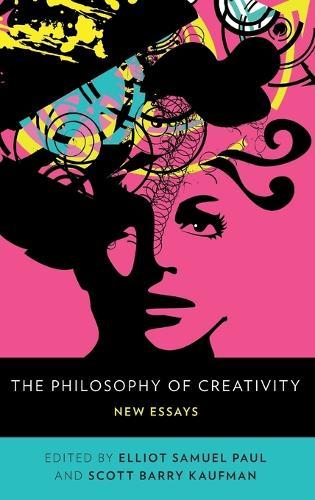
Full Product Details
Author: Elliot Samuel Paul (Assistant Professor of Philosophy, Assistant Professor of Philosophy, Barnard College) ,
Scott Barry Kaufman, Ph.D. (Adjunct Assistant Professor of Psychology, Adjunct Assistant Professor of Psychology, New York University)
Publisher: Oxford University Press Inc
Imprint: Oxford University Press Inc
Dimensions:
Width: 23.60cm
, Height: 3.10cm
, Length: 16.50cm
Weight: 0.607kg
ISBN: 9780199836963
ISBN 10: 0199836965
Pages: 336
Publication Date: 29 May 2014
Audience:
College/higher education
,
Professional and scholarly
,
Tertiary & Higher Education
,
Professional & Vocational
Format: Hardback
Publisher's Status: Active
Availability: Manufactured on demand

We will order this item for you from a manufactured on demand supplier.
Reviews
The editors have done a very good job. It is a good place to start. The anthology is a useful resource to get both familiar with creativity, e.g. for students and researcher, but also to be inspired to raise new questions about this multifaceted concept. Many authors thank the editors, so do I. --Metapsychology Online Reviews
The editors have done a very good job. It is a good place to start. The anthology is a useful resource to get both familiar with creativity, e.g. for students and researcher, but also to be inspired to raise new questions about this multifaceted concept. Many authors thank the editors, so do I Metapsychology Online Reviews
The essays in this anthology explore many of [creativity's] aspects, presenting familiar philosophical issues in less familiar contexts, which is an encouragement to take a fresh look at those issues and perhaps rethink our opinions. Creativity is looked at in relation to literature, music, audience response, character, imagination, the unconscious, and artificial intelligence ... the compilers of the anthology are to be congratulated on its range and variety. Les Reid, Philosophy Now The editors have done a very good job. It is a good place to start. The anthology is a useful resource to get both familiar with creativity, e.g. for students and researcher, but also to be inspired to raise new questions about this multifaceted concept. Many authors thank the editors, so do I Metapsychology Online Reviews
Author Information
Elliot Samuel Paul is Assistant Professor of Philosophy at Barnard College, Columbia University, and is co-founder of The Creativity Post (creativitypost.com), a non-profit web platform that features quality content on creativity, innovation and imagination. Scott Barry Kaufman, Ph.D., is scientific director of the Imagination Institute and investigates the measurement and development of imagination, creativity and well-being in the Positive Psychology Center at the University of Pennsylvania. He has written or edited seven books, including Wired to Create: Unravelling the Mysteries of the Creative Mind (with Carolyn Gregoire) and Ungifted: Intelligence Redefined. He is also co-founder of The Creativity Post, host of The Psychology Podcast, and he writes the blog Beautiful Minds for Scientific American. Kaufman lives in Philadelphia.