Overview
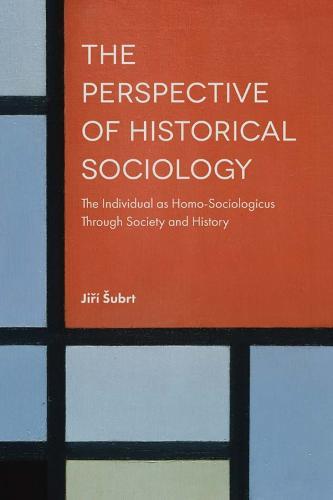
This book provides a comprehensive overview of the range of themes which make up the field of Historical Sociology. Jiri Subrt systematically discusses the main problems of societal development, long term process and changes in the key areas of social life. These include not only temporalized sociology, evolutionary theory, civilizational analysis, societal systems, structures and functions, but also modernization and revolution, risk, crisis, catastrophe and collapse, wars, conflicts and violence, nations, nationalism and collective memory. This study does not ignore the fundamental dichotomy underlying the discipline, which is between individualism and holism. At the heart of this book lies the human individual as related to social and historical development. The key question is who or what is responsible for the process of human history: society or the individual? The author concludes by offering an approach which may help in resolving this dilemma.
Full Product Details
Author: Jiří Šubrt (Charles University in Prague, Czech Republic)
Publisher: Emerald Publishing Limited
Imprint: Emerald Publishing Limited
Dimensions:
Width: 15.20cm
, Height: 2.00cm
, Length: 22.90cm
Weight: 0.520kg
ISBN: 9781787433649
ISBN 10: 1787433641
Pages: 312
Publication Date: 09 November 2017
Audience:
Professional and scholarly
,
Professional & Vocational
Format: Hardback
Publisher's Status: Active
Availability: In Print

This item will be ordered in for you from one of our suppliers. Upon receipt, we will promptly dispatch it out to you. For in store availability, please contact us.
Reviews
The author surveys themes in the field of historical sociology, in terms of the leading figures in the field, the relationship between history and sociology, and how sociology views the human individual in society and history. He considers the interrelationship between sociology and historical science and the perspective historical sociology can offer on humans, society, and history; different theories of social change, including crises, collapses, and disasters; the significance, topicality, and inspirational influence of sociological thinkers like Auguste Comte, Herbert Spencer, Karl Marx, Max Weber, Emile Durkheim, and Maurice Halbwachs; concepts related to social systems, structures, and functions, including structural functionalism, stratification and conflict theory, structuralism and poststructuralism, systems theory, and world-systems theory; ideas about culture and civilization, including the work of Norbert Elias, Jaroslav Krejci, and Shmuel N. Eisenstadt; the problems of modernization, including the paths to modern society, nationalism, totalitarianism, wars and violence, the theory of modernization, the first and second modernities, and the transformations of contemporary societies; and the sociological perspective on the human individual in society and history, with an emphasis on major historical individuals.--Annotation (c)2017 (protoview.com)
The author surveys themes in the field of historical sociology, in terms of the leading figures in the field, the relationship between history and sociology, and how sociology views the human individual in society and history. He considers the interrelationship between sociology and historical science and the perspective historical sociology can offer on humans, society, and history; different theories of social change, including crises, collapses, and disasters; the significance, topicality, and inspirational influence of sociological thinkers like Auguste Comte, Herbert Spencer, Karl Marx, Max Weber, mile Durkheim, and Maurice Halbwachs; concepts related to social systems, structures, and functions, including structural functionalism, stratification and conflict theory, structuralism and poststructuralism, systems theory, and world-systems theory; ideas about culture and civilization, including the work of Norbert Elias, Jaroslav Krejci, and Shmuel N. Eisenstadt; the problems of modernization, including the paths to modern society, nationalism, totalitarianism, wars and violence, the theory of modernization, the first and second modernities, and the transformations of contemporary societies; and the sociological perspective on the human individual in society and history, with an emphasis on major historical individuals.--Annotation (c)2017 (protoview.com)
The author surveys themes in the field of historical sociology, in terms of the leading figures in the field, the relationship between history and sociology, and how sociology views the human individual in society and history. He considers the interrelationship between sociology and historical science and the perspective historical sociology can offer on humans, society, and history; different theories of social change, including crises, collapses, and disasters; the significance, topicality, and inspirational influence of sociological thinkers like Auguste Comte, Herbert Spencer, Karl Marx, Max Weber, Émile Durkheim, and Maurice Halbwachs; concepts related to social systems, structures, and functions, including structural functionalism, stratification and conflict theory, structuralism and poststructuralism, systems theory, and world-systems theory; ideas about culture and civilization, including the work of Norbert Elias, Jaroslav Krejci, and Shmuel N. Eisenstadt; the problems of modernization, including the paths to modern society, nationalism, totalitarianism, wars and violence, the theory of modernization, the first and second modernities, and the transformations of contemporary societies; and the sociological perspective on the human individual in society and history, with an emphasis on major historical individuals. -- Annotation ©2017 * (protoview.com) *
Author Information
Jiří Šubrt is Associate Professor of Historical Sociology at Charles University, Czech Republic, working in the Department of Historical Sociology, which he founded in 2008. His research focuses on modernisation theory and questions of time and memory. He has authored or edited more than twenty books, and has made many contributions to international publications and conferences.