Overview
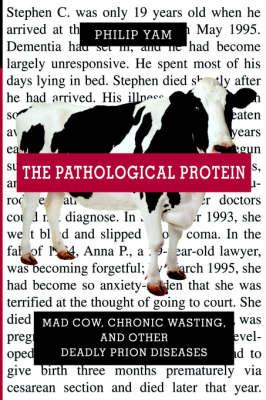
Prions are an entirely new class of pathogens, and scientists are just beginning to understand them. This book tells the strange story of their discovery, and the medical controversies that swirl around them.
Full Product Details
Author: Philip Yam
Publisher: Springer-Verlag New York Inc.
Imprint: Springer-Verlag New York Inc.
Edition: 2003 ed.
Dimensions:
Width: 15.60cm
, Height: 1.90cm
, Length: 23.40cm
Weight: 1.310kg
ISBN: 9780387955087
ISBN 10: 0387955089
Pages: 286
Publication Date: 30 April 2003
Audience:
College/higher education
,
Tertiary & Higher Education
Format: Hardback
Publisher's Status: Active
Availability: In Print

This item will be ordered in for you from one of our suppliers. Upon receipt, we will promptly dispatch it out to you. For in store availability, please contact us.
Reviews
From the reviews: <p> The book is written for a general audience and is not necessarily targeted specifically to those in the medical field, according to the author. a ] This is an excellent book for the person who has a broad interest in prion diseases. It is well written and informative. I was impressed with the quality of the book and how easy it is to read. a ] I would recommend it to both physicians and lay people. (Leah D. Kroger, www.doody.com, February, 2004) <p> Scientists still have more questions than answers about BSE, vCJD and the related scourges which make up the transmissible spongiform encephalopathies (TSEs). Philip Yama (TM)s book, a ~The Pathological Proteina (TM), does an admirable job of exploring them. a ] is full of such sensible observations, a welcome novelty in discussions on this fraught topic. The author is particularly good at explaining the complex and controversial science behind TSEs, as well as the prospects for better diagnosis and treatment a ] . (The Economist a online, March, 2004) <p> Philip Yam, Scientific American writer and editor, has a knack for boiling down complex science and making it palatable to the general public. Yam demonstrates his skills in an important new book, The Pathological Protein. a ] His treatment is thorough, entertaining, and honest. a ] This is definitely a book for decision-makers to read and underline. a ] it is a sourcebook of extremely valuable information about TSEs and a guide to some very suspect areas of farming and meat producing. (James A. Swan, National Review Online, www.nationalreview.com, August, 2003) <p> Yam, a writer and editor for Scientific American since 1989, presents a detailed yetreadable history of the mad cow scare and other prion diseases that affect humans and animals, such as scrapie. a ] Yam gives more coverage to the U.S. reactions to BSE and delves into the problems of chronic wasting disease (CWD) in elk and deer in North America and the research on other prion diseases like fatal familial insomnia (FFI). Recommended for most science collections. (Margaret Henderson, Library Journal, June, 2003) <p> Yam, who has written and edited for the Scientific American has a singularly easy style to read and the story that he tells is of how the family in Devizes in England first found their son had variant CJD. a ] He writes this for a wide audience with it being interesting for everyone from the scientists to the average reader and he includes large amounts of information a ] . A book aimed at a very wide audience but scientifically involving. (Stephen Dealler, priondata.org, August, 2003) <p> When bovine spongiform encephalopathy (BSE) first appeared in 1986 in the UK, many of the worries focused on the countrya (TM)s agricultural industry a ] . Much of the literature on the subject tells the story of how we gradually realized that maybe humans were at risk a ] . In his well-written and easy-to-understand book a ~The Pathological Protein a ] Philip Yam paints a different picture. a ] Anyone who reads Yama (TM)s excellent book will understand how data on TSEs were in fact readily accessible during the past 20years. (Stephen F. Dealler, C&EN - Chemical & Engineering News, November, 2003) <p> It is indisputable that interest in the rare and unusual greatly exceeds that given to the common and mundane. The appearance of yet another book on transmissiblespongiform encephalopathies (TSEs) should not therefore be surprising a ] . All this suggests that writing a book about TSEs should be easy. How was it for Philip Yam? In The Pathological Protein a ] he does a good job. a ] his accounts of technical matters are reader-friendly, but do not dumb down. a ] It is comprehensive, well researched and well referenced. (Hugh Pennington, Times Higher Education Supplement, December, 2003)
From the reviews: The book is written for a general audience and is not necessarily targeted specifically to those in the medical field, according to the author. ! This is an excellent book for the person who has a broad interest in prion diseases. It is well written and informative. I was impressed with the quality of the book and how easy it is to read. ! I would recommend it to both physicians and lay people. (Leah D. Kroger, www.doody.com, February, 2004) Scientists still have more questions than answers about BSE, vCJD and the related scourges which make up the transmissible spongiform encephalopathies (TSEs). Philip Yam's book, 'The Pathological Protein', does an admirable job of exploring them. ! is full of such sensible observations, a welcome novelty in discussions on this fraught topic. The author is particularly good at explaining the complex and controversial science behind TSEs, as well as the prospects for better diagnosis and treatment ! . (The Economist --online, March, 2004) Philip Yam, Scientific American writer and editor, has a knack for boiling down complex science and making it palatable to the general public. Yam demonstrates his skills in an important new book, The Pathological Protein. ! His treatment is thorough, entertaining, and honest. ! This is definitely a book for decision-makers to read and underline. ! it is a sourcebook of extremely valuable information about TSEs and a guide to some very suspect areas of farming and meat producing. (James A. Swan, National Review Online, www.nationalreview.com, August, 2003) Yam, a writer and editor for Scientific American since 1989, presents a detailed yet readable history of the mad cow scare and other prion diseases that affect humans and animals, such as scrapie. ! Yam gives more coverage to the U.S. reactions to BSE and delves into the problems of chronic wasting disease (CWD) in elk and deer in North America and the research on other prion diseases like fatal familial insomnia (FFI). Recommended for most science collections. (Margaret Henderson, Library Journal, June, 2003) Yam, who has written and edited for the Scientific American has a singularly easy style to read and the story that he tells is of how the family in Devizes in England first found their son had variant CJD. ! He writes this for a wide audience with it being interesting for everyone from the scientists to the average reader and he includes large amounts of information ! . A book aimed at a very wide audience but scientifically involving. (Stephen Dealler, priondata.org, August, 2003) When bovine spongiform encephalopathy (BSE) first appeared in 1986 in the UK, many of the worries focused on the country's agricultural industry ! . Much of the literature on the subject tells the story of how we gradually realized that maybe humans were at risk ! . In his well-written and easy-to-understand book 'The Pathological Protein ! Philip Yam paints a different picture. ! Anyone who reads Yam's excellent book will understand how data on TSEs were in fact readily accessible during the past 20years. (Stephen F. Dealler, C&EN - Chemical & Engineering News, November, 2003) It is indisputable that interest in the rare and unusual greatly exceeds that given to the common and mundane. The appearance of yet another book on transmissible spongiform encephalopathies (TSEs) should not therefore be surprising ! . All this suggests that writing a book about TSEs should be easy. How was it for Philip Yam? In The Pathological Protein ! he does a good job. ! his accounts of technical matters are reader-friendly, but do not dumb down. ! It is comprehensive, well researched and well referenced. (Hugh Pennington, Times Higher Education Supplement, December, 2003)
From the reviews: The book is written for a general audience and is not necessarily targeted specifically to those in the medical field, according to the author. ... This is an excellent book for the person who has a broad interest in prion diseases. It is well written and informative. I was impressed with the quality of the book and how easy it is to read. ... I would recommend it to both physicians and lay people. (Leah D. Kroger, www.doody.com, February, 2004) Scientists still have more questions than answers about BSE, vCJD and the related scourges which make up the transmissible spongiform encephalopathies (TSEs). Philip Yam's book, `The Pathological Protein', does an admirable job of exploring them. ... is full of such sensible observations, a welcome novelty in discussions on this fraught topic. The author is particularly good at explaining the complex and controversial science behind TSEs, as well as the prospects for better diagnosis and treatment ... . (The Economist -online, March, 2004) Philip Yam, Scientific American writer and editor, has a knack for boiling down complex science and making it palatable to the general public. Yam demonstrates his skills in an important new book, The Pathological Protein. ... His treatment is thorough, entertaining, and honest. ... This is definitely a book for decision-makers to read and underline. ... it is a sourcebook of extremely valuable information about TSEs and a guide to some very suspect areas of farming and meat producing. (James A. Swan, National Review Online, www.nationalreview.com, August, 2003) Yam, a writer and editor for Scientific American since 1989, presents a detailed yet readable history of the mad cow scare and other prion diseases that affect humans and animals, such as scrapie. ... Yam gives more coverage to the U.S. reactions to BSE and delves into the problems of chronic wasting disease (CWD) in elk and deer in North America and the research on other prion diseases like fatal familial insomnia (FFI). Recommended for most science collections. (Margaret Henderson, Library Journal, June, 2003) Yam, who has written and edited for the Scientific American has a singularly easy style to read and the story that he tells is of how the family in Devizes in England first found their son had variant CJD. ... He writes this for a wide audience with it being interesting for everyone from the scientists to the average reader and he includes large amounts of information ... . A book aimed at a very wide audience but scientifically involving. (Stephen Dealler, priondata.org, August, 2003) When bovine spongiform encephalopathy (BSE) first appeared in 1986 in the UK, many of the worries focused on the country's agricultural industry ... . Much of the literature on the subject tells the story of how we gradually realized that maybe humans were at risk ... . In his well-written and easy-to-understand book `The Pathological Protein ... Philip Yam paints a different picture. ... Anyone who reads Yam's excellent book will understand how data on TSEs were in fact readily accessible during the past 20years. (Stephen F. Dealler, C&EN - Chemical & Engineering News, November, 2003) It is indisputable that interest in the rare and unusual greatly exceeds that given to the common and mundane. The appearance of yet another book on transmissible spongiform encephalopathies (TSEs) should not therefore be surprising ... . All this suggests that writing a book about TSEs should be easy. How was it for Philip Yam? In The Pathological Protein ... he does a good job. ... his accounts of technical matters are reader-friendly, but do not dumb down. ... It is comprehensive, well researched and well referenced. (Hugh Pennington, Times Higher Education Supplement, December, 2003)