Overview
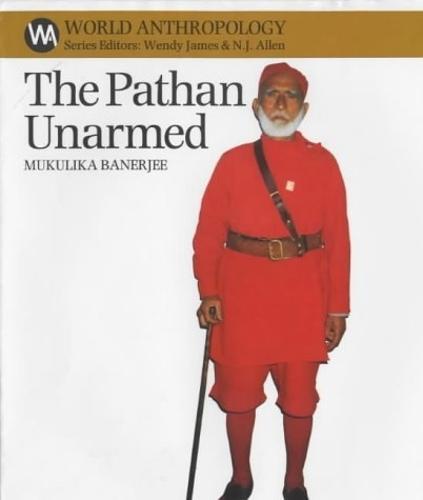
The Pukhtun (Pathan) of the North West Frontier are regarded as a warrior people. Yet in the inter-war years there arose a Muslim movement, the Khudai Khidmatgar (""Servants of God""), which adopted military forms of organizations and dress, but which also drew its inspiration from Gandhian principles of non-violent action and was dedicated to an Indian nationalism rather than communal separatism. Virtually erased from the national historiography of post-partition Pakistan, where they now reside, the ageing veterans of the movement are still highly respected by younger Pukhtun. This is an account of rank and file members of the Khudai Khidmatgar, describing why they joined, what they did, and how they perceived the ethics and aims of the movement. It attempts to answer the questions of how notoriously violent Pukhtun were converted to an ethic of non-violence. It finds the answer rooted in the transformation of older social structures, Islamic revisionism and the redefinition of the traditional code of honour.
Full Product Details
Author: Mukulika Banerjee
Publisher: James Currey
Imprint: James Currey
Dimensions:
Width: 15.60cm
, Height: 1.50cm
, Length: 23.40cm
Weight: 0.386kg
ISBN: 9780852552735
ISBN 10: 0852552734
Pages: 256
Publication Date: 21 December 2000
Audience:
College/higher education
,
Professional and scholarly
,
Undergraduate
,
Postgraduate, Research & Scholarly
Format: Paperback
Publisher's Status: Active
Availability: Out of print, replaced by POD

We will order this item for you from a manufatured on demand supplier.
Reviews
'Mukulika Banerjee's extraordinarily timely study ... sets out to recover a story that has receded from the historical record as well as from popular memory. It is a story that disturbs orientalist stereotypes about the region and its people, and complicates the national narratives of Pakistan and of India. It should also give pause to the policy wonks shuttling between the Beltway and Downing Street, transmuted by the need of the hour into anthropologists and historians as they bone up on Islam and its ways, and on the martial traditions and factional culture of the Afghans. '... Badsha Khan was, for a time, able to make his people believe that the idea of the modern state could be made trustworthy. He was able to forge a movement that tapped the moral repertoire of Islam, and link it into local predispositions, weaving together a distinctive symbolic and practical cloth. This historical episode seems far indeed from the political imagination of Pathans today. But its memory may still have an effect: different futures need alternative pasts. As Haji Chairman Meherban Saha, a veteran Khudai Khidmatgar in his eighties, recalled when talking to Banerjee, Badsha Khan's words seemed sweet to us... Talk to a Pathan sweetly and he will do anything. ' - Sunnil Khilnani in The Times Literary Supplement '... a valuable corrective to orientalist representations , which portray the Pathans as invariably hotheaded and unpredictable. Firmly grounded in anthropological research but with a keen eye for historical nuance, it provides a sober and illuminating insight into a complex society that has long beguiled Western observers and is once again the object of intense Western concern.' - Faranza Shaikh in International Affairs 'This forgotten chapter suggests that Islam is more mutable than either its radical adherents or its Western detractors allow and that Pashtun history offers an extraordinary precedent for peace as well as a legacy of war.' - Karl E. Meyer in the New York Times '... a fine historically informed anthropology of the people of the North West Frontier ... [which] ought to give chauvinists of all colours some food for thought. (I strongly recommend this book to V.S. Naipaul and Murli Manohar Joshi)' - Dilip Simeon in Biblio 'In showing that the ideology of non-violence was not necessarily superimposed, but had to draw upon elements of Pathan culture and Islamic law, the author succeeds in giving voice both to political leaders and to the recipients of their messages, and points to the significant contribution anthropological studies of mass movements can make to the understanding of political processes.' - Cambridge Anthropology 'Banerjee does a fine job of outlining the context, history and inner workings of the [Khudai Khidmatgar] movement. Most important, she demonstrates how Ghaffar Khan...was simultaneously a tribal chief, a religious figure and a nationalist leader. Withstanding much more violent oppression than the Gandhians in India, and much better organised, the Red Shirts demonstrated the potential of the Pathans to redefine their culture and achieve something other than indeterminacy and antagonism. ...It is to Banerjee's great credit that she has salvaged the moving testimonies of these pacifist warriors. Her work...tells a complex and often contradictory story that belies any easy generalisations about the Pathans.' - Charles Lindholm in The Times Higher Educational Supplement 'Unlike previous writers Mukulika Banerjee, while recognising the contribution of its charismatic leader to the [Khudai Khidmatgar] movement's development, gives the story a new dimension by interviewing some 75 surviving KK members. Her book, a blend of historical ethnography and oral history, also makes an important contribution to the history of pacifism and nonviolence.' - Peace News '...this is a gripping tale beautifully written - I found it hard at times to put it down...The KK movement is important for it shows that literacy is not necessary for political involvement and achievements.' - Alan Rogers in International Journal of Educational Development
Mukulika Banerjee's extraordinarily timely study ... sets out to recover a story that has receded from the historical record as well as from popular memory. It is a story that disturbs orientalist stereotypes about the region and its people, and complicates the national narratives of Pakistan and of India. It should also give pause to the policy wonks shuttling between the Beltway and Downing Street, transmuted by the need of the hour into anthropologists and historians as they bone up on Islam and its ways, and on the martial traditions and factional culture of the Afghans. ... Badsha Khan was, for a time, able to make his people believe that the idea of the modern state could be made trustworthy. He was able to forge a movement that tapped the moral repertoire of Islam, and link it into local predispositions, weaving together a distinctive symbolic and practical cloth. This historical episode seems far indeed from the political imagination of Pathans today. But its memory may still have an effect: different futures need alternative pasts. As Haji Chairman Meherban Saha, a veteran Khudai Khidmatgar in his eighties, recalled when talking to Banerjee, 'Badsha Khan's words seemed sweet to us... Talk to a Pathan sweetly and he will do anything.' - Sunnil Khilnani in The TIMES LITERARY SUPPLEMENT ... a valuable corrective to orientalist representations, which portray the Pathans as invariably hotheaded and unpredictable. Firmly grounded in anthropological research but with a keen eye for historical nuance, it provides a sober and illuminating insight into a complex society that has long beguiled Western observers and is once again the object of intense Western concern. - Faranza Shaikh in INTERNATIONAL AFFAIRS This forgotten chapter suggests that Islam is more mutable than either its radical adherents or its Western detractors allow and that Pashtun history offers an extraordinary precedent for peace as well as a legacy of war. - Karl E. Meyer in the NEW YORK TIMES
Mukulika Banerjee's extraordinarily timely study ... sets out to recover a story that has receded from the historical record as well as from popular memory. It is a story that disturbs orientalist stereotypes about the region and its people, and complicates the national narratives of Pakistan and of India. It should also give pause to the policy wonks shuttling between the Beltway and Downing Street, transmuted by the need of the hour into anthropologists and historians as they bone up on Islam and its ways, and on the martial traditions and factional culture of the Afghans. ... Badsha Khan was, for a time, able to make his people believe that the idea of the modern state could be made trustworthy. He was able to forge a movement that tapped the moral repertoire of Islam, and link it into local predispositions, weaving together a distinctive symbolic and practical cloth. This historical episode seems far indeed from the political imagination of Pathans today. But its memory may still have an effect: different futures need alternative pasts. As Haji Chairman Meherban Saha, a veteran Khudai Khidmatgar in his eighties, recalled when talking to Banerjee, 'Badsha Khan's words seemed sweet to us... Talk to a Pathan sweetly and he will do anything.' - Sunnil Khilnani in The TIMES LITERARY SUPPLEMENT ... a valuable corrective to orientalist representations, which portray the Pathans as invariably hotheaded and unpredictable. Firmly grounded in anthropological research but with a keen eye for historical nuance, it provides a sober and illuminating insight into a complex society that has long beguiled Western observers and is once again the object of intense Western concern. - Faranza Shaikh in INTERNATIONAL AFFAIRS This forgotten chapter suggests that Islam is more mutable than either its radical adherents or its Western detractors allow and that Pashtun history offtable than either its radical adherents or its Western detractors allow and that Pashtun history offers an ext