Overview
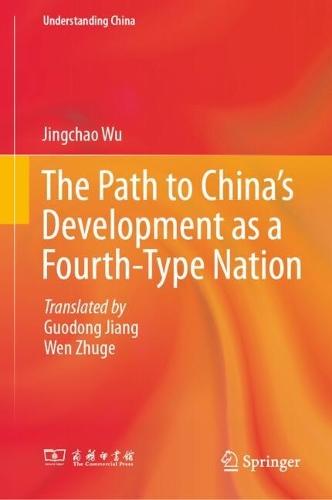
This book is widely regarded as a seminal work in the field of Chinese sociology, dating back to the 1930s.The central argument posited in the text is that the only means through which China could surmount its challenging circumstances of the time and enhance the quality of life for its population was through the process of industrialisation and the integration of urban and rural development. In the Prologue, the author employs a categorisation of nations based on two dimensions, namely population density and occupational structure, thereby dividing them into four distinct types. China falls into the fourth category, distinguished by its high population density and a predominantly agricultural workforce. A hallmark of these nations is their persistent poverty, characterised by the lowest living standards and the greatest challenges in achieving improvement. The author contends that China should leverage its domestic resources, enhance production technology, implement fair distribution, and regulate population growth. His analysis centres on three pivotal domains: economic development, population policy, and distribution issues. The longest chapter, Economic Development, focuses on the theme of industrialisation, and the author identifies two paths for China: the first, the path of industrialisation, relies on mechanised production to bring wealth, intelligence, and longevity; the second, the agrarian path, depends on manual labour and results in poverty, ignorance, and short lifespans. The author asserts that for China to address the livelihood issues of its rural population and enhance the well-being of the working masses, it must adopt the new path of industrialization and take an ""urban-based approach to aid rural areas"". To accelerate urbanisation, the author advocates for the establishment of industries, the development of transportation, and the expansion of financial systems. The central argument of the third chapter, entitled 'Population Policy', is that birth control and the vocational retraining of surplus rural labour for non-agricultural employment are both necessary. In the fourth chapter, entitled Distribution, Wu puts forward the proposal that the tax system be utilised for the purpose of expanding the middle class and reducing the gap between social classes. This work is a poignant reflection of the profound patriotism and acute sense of crisis experienced by Chinese sociologists during a time of national peril.
Full Product Details
Author: Jingchao Wu ,
Guodong Jiang ,
Wen Zhuge
Publisher: Springer Verlag, Singapore
Imprint: Springer Verlag, Singapore
ISBN: 9789819554362
ISBN 10: 9819554365
Pages: 190
Publication Date: 22 November 2025
Audience:
College/higher education
,
Postgraduate, Research & Scholarly
Format: Hardback
Publisher's Status: Active
Availability: Not yet available

This item is yet to be released. You can pre-order this item and we will dispatch it to you upon its release.
Author Information
Wu Jingchao (1901-1968) pursued sociology at the University of Minnesota and the University of Chicago, obtaining his bachelor's, master's, and doctoral degrees. In 1928, he returned to China and assumed the position of Professor and Department Chair of Sociology at Jinling University in Nanjing. In 1931, he became a professor in the Department of Sociology at Tsinghua University, and in 1932, he concurrently served as the Dean of Academic Affairs at Tsinghua University. In 1952, he was elected as a member of the National Committee of the Chinese People's Political Consultative Conference (CPPCC) and appointed as a professor at Renmin University of China. Wu Jingchao is acknowledged as one of the prominent sociologists in 20th-century China. As a pioneer in Chinese sociological research, he holds the distinction of being the first scholar to write a book on urban sociology in China.