Overview
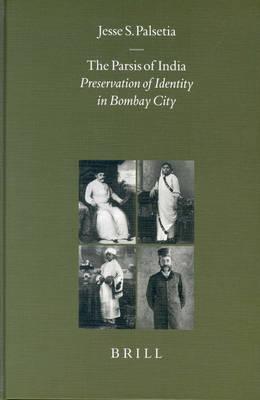
This volume examines a much-neglected area of Asian studies. In tracing keypoints in the development of the Parsi community, it depicts the Parsis' history, and accounts for their ability to preserve, maintain and construct a distinct identity. For a great part the story is told in the colonial setting of Bombay city. Attention is given to the Parsis' evolution from an insular minority group to a modern community of pluralistic outlook. Filling the lacunae in the literature on British colonialism, Indian society and history, and, last but not least, Zoroastrianism, this volume broadens our knowledge of the interaction of colonialism and colonial groups, and elucidates the significant role of the Parsis in the commercial, educational, and civic milieu of Bombay colonial society.
Full Product Details
Author: Jesse Palsetia
Publisher: Brill
Imprint: Brill
Volume: 17
Dimensions:
Width: 15.50cm
, Height: 3.00cm
, Length: 23.50cm
Weight: 0.791kg
ISBN: 9789004121140
ISBN 10: 9004121145
Pages: 400
Publication Date: 29 March 2001
Audience:
College/higher education
,
Professional and scholarly
,
Undergraduate
,
Postgraduate, Research & Scholarly
Format: Hardback
Publisher's Status: Active
Availability: Out of stock

The supplier is temporarily out of stock of this item. It will be ordered for you on backorder and shipped when it becomes available.
Reviews
'The Parsis of India must surely take a rightly deserved place at the very peak of studies on this dwindling but undaunted community. It is congruent with Kulke's 1974 classic which it now both supplements and surpasses'<br>Farrokh Vajifdar, Journal of the Royal Asiatic Society, 2002.<br>' Palsetia has produced a solid, well-informed, balanced, and highly readable [] account.'<br>Michael Stausberg, Numen, 2002.<br>
'The Parsis of India must surely take a rightly deserved place at the very peak of studies on this dwindling but undaunted community. It is congruent with Kulke's 1974 classic which it now both supplements and surpasses...' Farrokh Vajifdar, Journal of the Royal Asiatic Society, 2002. 'Palsetia has produced a solid, well-informed, balanced, and highly readable [...] account.' Michael Stausberg, Numen, 2002.
'The Parsis of India must surely take a rightly deserved place at the very peak of studies on this dwindling but undaunted community. It is congruent with Kulke's 1974 classic which it now both supplements and surpasses ' Farrokh Vajifdar, Journal of the Royal Asiatic Society , 2002. Palsetia has produced a solid, well-informed, balanced, and highly readable [ ] account. Michael Stausberg, Numen , 2002.
Author Information
Jesse S. Palsetia, Ph.D. (1996) in History, University of Toronto, is a research scholar who has published in the field of the history of the Parsis in India.