|
|
|||
|
||||
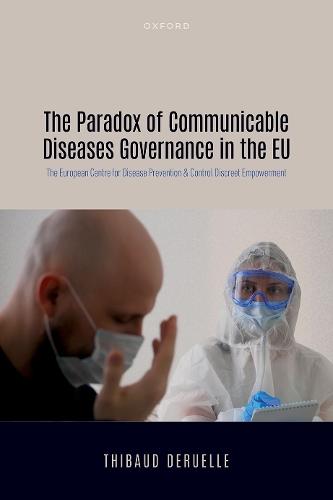
OverviewThe European Centre for Disease Prevention and Control (ECDC) has played a pivotal role in the EU's approach to infectious diseases, but its journey toward empowerment has been anything but straightforward. Historically limited by member states' reluctance to relinquish control over public health, the ECDC's mandate was confined to detecting and assessing communicable diseases, with no authority to offer advice on how to manage these risks. This paradox-assessing threats without the power to guide responses-has been a defining feature of the Centre's existence. However, during the Covid-19 pandemic, the ECDC's mandate was expanded, formally ending this contradiction and allowing the agency to take a more active role in public health decision-making. The Paradox of Communicable Diseases Governance in the EU traces the evolving role of the ECDC, highlighting its empowerment despite a restrictive legal framework. Drawing on over two decades of history of the Centre, the book shows how the ECDC navigated the complex landscape of communicable diseases governance. The book offers valuable insights into the dynamics of European health governance, demonstrating how reputation is key in the development of the most limited agencies. It examines the paradox of the ECDC's mandate-assessing health risks without the power to recommend actions-and how, over time, institutional entrepreneurs used the Centre's reputation as a useful resource to redefine its role. Deruelle offers a fresh perspective on the role of bureaucratic reputation in empowering European agencies, showing how, even with limited authority, institutions can shape policy and practice. Full Product DetailsAuthor: Thibaud DeruellePublisher: Oxford University Press Imprint: Oxford University Press Dimensions: Width: 16.00cm , Height: 2.00cm , Length: 24.00cm Weight: 0.605kg ISBN: 9780198951308ISBN 10: 0198951302 Pages: 304 Publication Date: 03 July 2025 Audience: Professional and scholarly , Professional & Vocational Format: Hardback Publisher's Status: Active Availability: To order Stock availability from the supplier is unknown. We will order it for you and ship this item to you once it is received by us. Table of ContentsList of Figures List of Tables List of Abbreviations 1: Introduction 2: Towards a Reputational Mechanism of Empowerment 3: Interpreting Reputation and Empowerment: Research Design 4: A Conceptual Power in the Making 5: Surveillance and Its Strategic Use: The Case of HIV/AIDS 6: Limited Empowerment amid Crisis: The 2009 H1N1 Crisis 7: Seizing the Rewards of Inter-Agency Cooperation in the Fight against Antimicrobial Resistance 8: When Empowerment Fails: The Unsuccessful Extension of the ECDC's Mandate to Non-communicable Diseases 9: From Stalemate to Formal Empowerment: The Covid-19 Crisis 10: Conclusion Sources and Bibliography IndexReviewsAuthor InformationThibaud Deruelle holds a doctorate in European politics from the University of Exeter as well as master's degrees from Science Po Strasbourg and the College of Europe. He held post-doctoral research positions at the Universities of Lausanne and Geneva, and worked at the European Parliament and the College of Europe. His areas of research include the role of expertise in the EU decision-making process, the management of health threats in the EU, and atypical work and the future of work. Tab Content 6Author Website:Countries AvailableAll regions |
||||