Overview
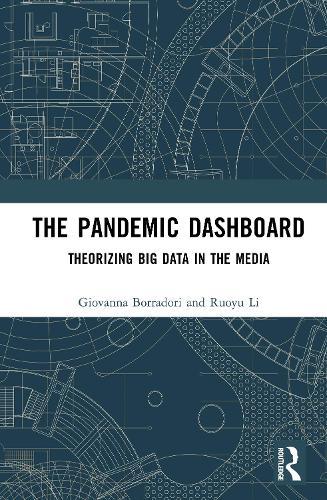
Examining mainstream media on COVID-19 across China, Italy, the United Kingdom, and the United States, and by drawing from various critical theoretical traditions, this book seeks answers to key questions about the experience of living and dying under COVID-19. The COVID-19 pandemic has been conceived, narrated, and visualized as a numerical crisis and a statistical exception – from the proliferation of COVID dashboards to the numbers of infections cited in news cycles, and the data literacy required to navigate the viral spread. How did these dashboards, along with other numerical images and narratives, condition the experience of living and dying under COVID-19? Is that experience still shaping how we perceive and communicate about the world today? In this book, the authors explore pandemic power - a form of power that declares the beginning and end of the pandemic as a statistically calculable exception, and that works in tandem with a Dashboard worldview. It also argues how that power dictates being-in-the-pandemic under a geospatial and biostatistical gaze, the military and political legacies of which have constructed the pandemic as we have come to know it and its persisting afterlives. This book will benefit students, teachers, and scholars interested in media and critical studies of COVID-19, as well as anyone interested in the political theorization of the changing forms of power during and after the pandemic.
Full Product Details
Author: Giovanna Borradori ,
Ruoyu Li
Publisher: Taylor & Francis Ltd
Imprint: Routledge
ISBN: 9781041075240
ISBN 10: 1041075243
Pages: 300
Publication Date: 02 March 2026
Audience:
College/higher education
,
Professional and scholarly
,
Tertiary & Higher Education
,
Professional & Vocational
Format: Hardback
Publisher's Status: Forthcoming
Availability: Not yet available

This item is yet to be released. You can pre-order this item and we will dispatch it to you upon its release.
Author Information
Giovanna Borradori is a Professor of Philosophy and Media Studies at Vassar College, USA. Her scholarship has investigated the relationship between aesthetics and politics, with particular attention to the visual cultures of neoliberalism, terrorism and collective memory, the philosophy of photography, the phenomenology of new media, the colonial and postcolonial imagination. Her Philosophy in the Time of Terror: Dialogues with Jürgen Habermas and Jacques Derrida (2003) was the first philosophical examination of the events of September 11, 2001, and the geopolitical transformation that followed. Translated into 22 languages, this book generated the historical rapprochement between Critical Theory and deconstruction. Ruoyu Li is an Assistant Professor of Peace and Conflict Studies at Colgate University, USA. She was a Henry A. Kissinger Predoctoral Fellow at the Jackson School of Global Affairs at Yale University (2024-2025). Her research focuses on US nuclear testing in the Pacific Ocean, captured at the intersection of Critical International Relations, Pacific Studies, and Science and Technology Studies. Her articles have appeared on Security Studies and International Politics.