Overview
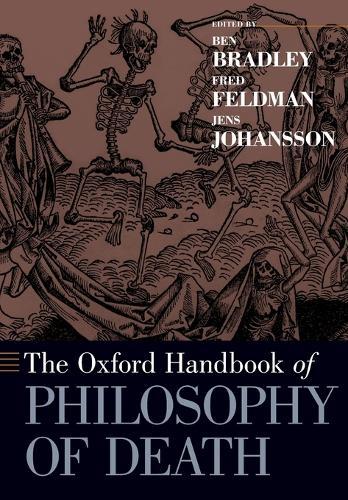
Death has long been a pre-occupation of philosophers, and this is especially so today. The Oxford Handbook of Philosophy of Death collects 21 newly commissioned essays that cover current philosophical thinking of death-related topics across the entire range of the discipline. These include metaphysical topics--such as the nature of death, the possibility of an afterlife, the nature of persons, and how our thinking about time affects what we think about death--as well as axiological topics, such as whether death is bad for its victim, what makes it bad to die, what attitude it is fitting to take towards death, the possibility of posthumous harm, and the desirability of immortality. The contributors also explore the views of ancient philosophers such as Aristotle, Plato and Epicurus on topics related to the philosophy of death, and questions in normative ethics, such as what makes killing wrong when it is wrong, and whether it is wrong to kill fetuses, non-human animals, combatants in war, and convicted murderers. With chapters written by a wide range of experts in metaphysics, ethics, and conceptual analysis, and designed to give the reader a comprehensive view of recent developments in the philosophical study of death, this Handbook will appeal to a broad audience in philosophy, particularly in ethics and metaphysics.
Full Product Details
Author: Ben Bradley (Associate Professor of Philosophy, Associate Professor of Philosophy, Syracuse University) ,
Fred Feldman (Professor of Philosophy, Professor of Philosophy, University of Massachusetts Amherst) ,
Jens Johansson (postdoctoral fellow, postdoctoral fellow, Uehiro Centre, Oxford University)
Publisher: Oxford University Press Inc
Imprint: Oxford University Press Inc
Dimensions:
Width: 16.00cm
, Height: 2.30cm
, Length: 23.60cm
Weight: 0.590kg
ISBN: 9780190271459
ISBN 10: 0190271450
Pages: 528
Publication Date: 17 September 2015
Audience:
College/higher education
,
Professional and scholarly
,
Postgraduate, Research & Scholarly
,
Professional & Vocational
Format: Paperback
Publisher's Status: Active
Availability: To order

Stock availability from the supplier is unknown. We will order it for you and ship this item to you once it is received by us.
Reviews
As a collection on cutting-edge work in metaphysics of death and, to a lesser extent, related ethical issues, this is a solid collection that both engages recent debates and furnishes multiple possible directions that these debates may take. * James Bodington, Metapsychology Online Reviews * This handbook offers a diverse survey of contemporary work with some discussion of its historical touchstones (particularly the thought of Epicurus and Lucretius). Topics range from ordinary-language analysis of the concept of death, and the associated problems personal identity and temporal persistence, to value-oriented examination of whether death is bad or evil, the possibility and value of immortality, and what constitutes the wrongness of killing. Contributors make frequent and helpful use of thought experiments and references to popular culture to ensure that difficult concepts and arguments are clear. The argumentation will be accessible for those possessing basic familiarity with analytic methodology. * D.A. Forbes, CHOICE *
""This handbook offers a diverse survey of contemporary work with some discussion of its historical touchstones (particularly the thought of Epicurus and Lucretius). Topics range from ordinary-language analysis of the concept of death, and the associated problems personal identity and temporal persistence, to value-oriented examination of whether death is bad or evil, the possibility and value of immortality, and what constitutes the wrongness of killing. Contributors make frequent and helpful use of thought experiments and references to popular culture to ensure that difficult concepts and arguments are clear. The argumentation will be accessible for those possessing basic familiarity with analytic methodology.""--D.A. Forbes, CHOICE ""As a collection on cutting-edge work in metaphysics of death and, to a lesser extent, related ethical issues, this is a solid collection that both engages recent debates and furnishes multiple possible directions that these debates may take."" -- Metapsychology Online Reviews
"""This handbook offers a diverse survey of contemporary work with some discussion of its historical touchstones (particularly the thought of Epicurus and Lucretius). Topics range from ordinary-language analysis of the concept of death, and the associated problems personal identity and temporal persistence, to value-oriented examination of whether death is bad or evil, the possibility and value of immortality, and what constitutes the wrongness of killing. Contributors make frequent and helpful use of thought experiments and references to popular culture to ensure that difficult concepts and arguments are clear. The argumentation will be accessible for those possessing basic familiarity with analytic methodology.""--D.A. Forbes, CHOICE ""As a collection on cutting-edge work in metaphysics of death and, to a lesser extent, related ethical issues, this is a solid collection that both engages recent debates and furnishes multiple possible directions that these debates may take."" -- Metapsychology Online Reviews"
This handbook offers a diverse survey of contemporary work with some discussion of its historical touchstones (particularly the thought of Epicurus and Lucretius). Topics range from ordinary-language analysis of the concept of death, and the associated problems personal identity and temporal persistence, to value-oriented examination of whether death is bad or evil, the possibility and value of immortality, and what constitutes the wrongness of killing. Contributors make frequent and helpful use of thought experiments and references to popular culture to ensure that difficult concepts and arguments are clear. The argumentation will be accessible for those possessing basic familiarity with analytic methodology. D.A. Forbes, CHOICE
This handbook offers a diverse survey of contemporary work with some discussion of its historical touchstones (particularly the thought of Epicurus and Lucretius). Topics range from ordinary-language analysis of the concept of death, and the associated problems personal identity and temporal persistence, to value-oriented examination of whether death is bad or evil, the possibility and value of immortality, and what constitutes the wrongness of killing. Contributors make frequent and helpful use of thought experiments and references to popular culture to ensure that difficult concepts and arguments are clear. The argumentation will be accessible for those possessing basic familiarity with analytic methodology. D.A. Forbes, CHOICE As a collection on cutting-edge work in metaphysics of death and, to a lesser extent, related ethical issues, this is a solid collection that both engages recent debates and furnishes multiple possible directions that these debates may take. James Bodington, Metapsychology Online Reviews
Author Information
Ben Bradley is Allan and Anita Sutton Professor of Philosophy at Syracuse University. Fred Feldman is Professor Emeritus of Philosophy at the University of Massachusetts Amherst. Jens Johannson is Associate Professor in the Department of Philosophy at Uppsala Universitet.