Overview
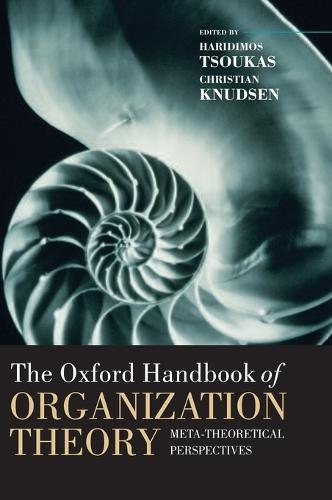
This book provides a forum for leading scholars in As globalization explodes, so does international businession scholarship. This handbook synthesizes all the relevante literature of the last forty years in twenty-eight original. chapters by the world's most distinguished scholars. Thetus coverage is split into five main areas: the history and theory of the multinational enterprise; the political andate policy environment of international business; strategies oft multinational enterprises; financial areas of the multinational enterprise; and business systems in Asia, South America, and the transitional economies. a practical social activity, this handbook reviews and evaluates important epistemological developments in the discipline. More specifically, the focus is on issues related to the nature of knowledge claims put forward in organization theory and the controversies surrounding the generation, validation, and utilization of such knowledge. Five sets of questions are raised in the handbook, each one of which is dealt with in a separate section: 1) What does a science of organizations consist of? What counts as valid knowledge in organization theory and why? How do different paradigms view organization theory as a science? 2) How has organization theory developed over time, and what structure has the field taken? What assumptions does knowledge produced in organization theory incorporate, and what forms do its knowledge claims take as they are put forward for public adoption? 3) How have certain well-known controversies in organization theory, such as for example, the structure/agency dilemma, the study of organizational culture, the different modes of explanation, the micro/macro controversy, and the differnet explanations produced by organizational economists and sociologists, been dealt with? 4) How, and in what ways, is knowledge generated in organization theory related to action? What features must organization theory knowledge have in order to be actionable, and of relevance to the world 'out there'? How have ethical concerns been taken into account in organization theory? 5) What is the future of organization theory? What direction should the field take? What must change in the way research is conducted and key theoretical terms are conceptualized so that organization theory enhances its capacity to generate valid and relevant knowledge?
Full Product Details
Author: Haridimos Tsoukas (, Professor of Organization Theory and Behaviour, Warwick Business School and and Alba, Greece) ,
Christian Knudsen (, Department of Industrial Economics and Strategy, Copenhagen Business School) ,
George D. Mavros
Publisher: Oxford University Press
Imprint: Oxford University Press
Dimensions:
Width: 17.50cm
, Height: 4.10cm
, Length: 25.40cm
Weight: 1.222kg
ISBN: 9780199258321
ISBN 10: 0199258325
Pages: 668
Publication Date: 20 March 2003
Audience:
Professional and scholarly
,
Professional & Vocational
Format: Hardback
Publisher's Status: Active
Availability: To order

Stock availability from the supplier is unknown. We will order it for you and ship this item to you once it is received by us.
Reviews
...brings together an extraordinary and erudite range of conributions to which I expect to refer for many years to come. There is not a single chapter from which I did not learn something, and from many I learnt a great deal. Organization, Vol 12 (6) Imagine a restaraunt where all your favourite dishes are prepared, each by a master chef, and unknown delights also await your pleasure. You do not have to go anywhere to get to this restaraunt, it is right in your own kitchen. You can even take it to the office with you. Without too much exaggeration, this is the rough equivalent of what is offered to the student of organization theory in The Oxford Handbook of Organization Theory Management Learning ...the Oxford Handbook of Organization Theory serves vital intellectual and political functions, tacitly affirming the coherence and legitimacy of OT as a discipline even as it critically examines the state of the field. Karen Lee Ashcraft (University of Utah), Organization 12(6) The Oxford Handbook [of Organization Theory] can be returned to many times to reflect on assumptions held on what organizations are, on what good science is, and on who should be the end customer for ones scientific activities ... This is the big tent depiction of organizational studies as a civilized community building an increasingly relevant narrative on organizations pertinent to more and more people. It is hip. It is current. It is self-consciously aware of the forces that shape as it grows. Organization Studies
...brings together an extraordinary and erudite range of conributions to which I expect to refer for many years to come. There is not a single chapter from which I did not learn something, and from many I learnt a great deal. Organization, Vol 12 (6) Imagine a restaraunt where all your favourite dishes are prepared, each by a master chef, and unknown delights also await your pleasure. You do not have to go anywhere to get to this restaraunt, it is right in your own kitchen. You can even take it to the office with you. Without too much exaggeration, this is the rough equivalent of what is offered to the student of organization theory in The Oxford Handbook of Organization Theory Management Learning ...the Oxford Handbook of Organization Theory serves vital intellectual and political functions, tacitly affirming the coherence and legitimacy of OT as a discipline even as it critically examines the state of the field. Karen Lee Ashcraft (University of Utah), Organization 12(6) The Oxford Handbook [of Organization Theory] can be returned to many times to reflect on assumptions held on what organizations are, on what good science is, and on who should be the end customer for ones scientific activities ... This is the big tent depiction of organizational studies as a civilized community building an increasingly relevant narrative on organizations pertinent to more and more people. It is hip. It is current. It is self-consciously aware of the forces that shape as it grows. Organization Studies
Author Information
Haridimos Tsoukas is the George D. Mavros Research Professor of Organization and Management at ALBA in Greece, and Professor of Organization Theory and Behaviour at the University of Strathclyde Graduate School of Business, UK. Previous positions held include Lecturer at Warwick Business School (1990-5), and Associate Professor at the University of Cyprus. Christian Knudsen is a Research Fellow at Copenhagen University and Århus Business School, Associate Professor at Copenhagen Business School, Visiting Professor at the Swedish Collegium for Advanced Studies in the Social Sciences, and Visiting Fellow at the London School of Economics and Stanford University.